Lincoln Financial Field for FIFA World Cup 2026: Philadelphia's Cathedral of Working-Class Football
Lincoln Financial Field hosts FIFA 2026 in Philadelphia. Inside guide to seats, SEPTA transit, cheesesteaks, fan culture and matchday tips for World Cup fans.

Investigado y editado por Abdullah Mashuk. Redactado con investigación asistida por IA según nuestra Metodología.
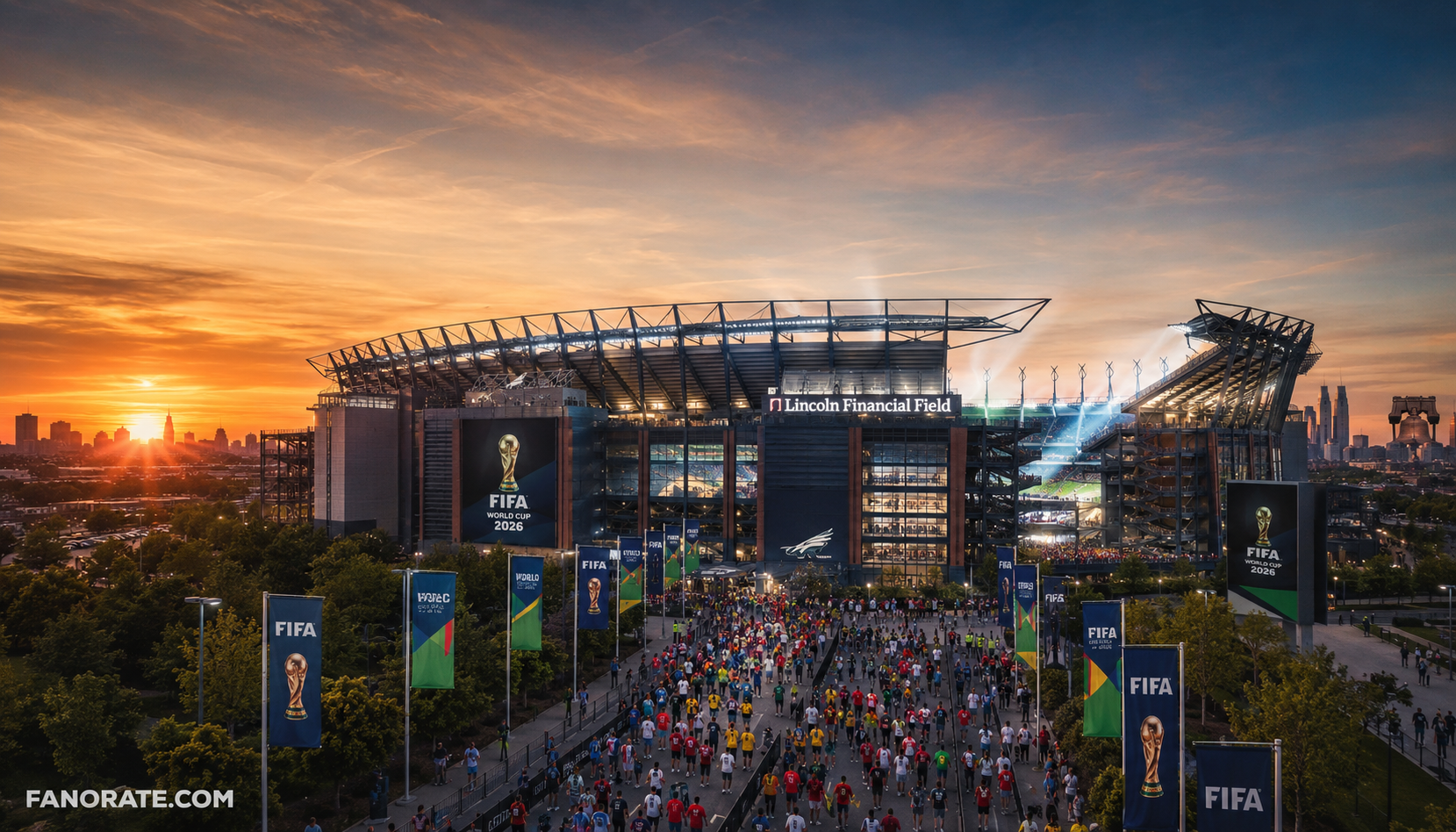
Ilustración generada por IA. No es una fotografía real.
Lincoln Financial Field for FIFA World Cup 2026: Philadelphia’s Cathedral of Working-Class Football
There’s a Philadelphia phrase you’ll hear a lot during World Cup summer: “the Linc.”
Lincoln Financial Field. The Linc. Just three letters, but they carry a particular weight in this city. Philadelphia is a sports town in the deepest American sense — the kind of city where strangers debate the Eagles’ depth chart at the deli counter, where bar owners write trade rumors on the daily specials board, and where a Sunday loss can affect the mood at Monday morning office meetings.
Drop a 48-team FIFA World Cup into that environment and you get one of the most uncompromisingly enthusiastic crowds of the entire tournament. Lincoln Financial Field will host six matches during FIFA 2026. Philadelphia’s deeply layered football culture — built around the Union, around generations of Italian, Irish, Polish, Caribbean, West African, Vietnamese and Mexican supporter communities — is about to host the world.
Here’s the full guide.
Quick Venue Snapshot
- Stadium: Lincoln Financial Field (commonly “the Linc”)
- City / Region: Philadelphia, Pennsylvania
- Country: United States
- Capacity: Approximately 69,000
- Opened: 2003
- Primary tenant: NFL’s Philadelphia Eagles; also hosts Temple Owls football and the annual Army-Navy Game
- FIFA 2026 matches hosted: Six matches, including group-stage games and a knockout-round fixture
- Location: South Philadelphia Sports Complex, alongside Citizens Bank Park (MLB) and Wells Fargo Center (NBA/NHL)
- Surface for FIFA 2026: Natural grass installed for the tournament
- Roof: Open-air
- Climate considerations: Humid mid-Atlantic summer. Afternoon thunderstorms possible.
- Transit: SEPTA Broad Street Line runs directly to the sports complex.
The Story of the Stadium
For decades, the Philadelphia Eagles played at Veterans Stadium — the cookie-cutter concrete bowl of the 1970s that became famous for its terrible field, terrible weather, and a fan culture so notoriously rowdy it once required an in-stadium courtroom. When the Vet came down, two new buildings rose in the same South Philly sports complex: Citizens Bank Park for the Phillies, and Lincoln Financial Field for the Eagles.
The Linc opened in 2003. The architecture was deliberately modern — exposed structural steel, glass-fronted club spaces, a wide concourse system that gave the building a more open feel than its predecessor. The seating bowl was steeply pitched to give fans a closer connection to the field. The building was designed to host the Eagles, Temple Owls college football, and the annual Army-Navy Game, which has become a national tradition at this venue.
Since opening, Lincoln Financial Field has hosted multiple Eagles playoff runs (including the 2017 championship season), concerts from some of the biggest names in American music, the College Football Playoff, the annual Army-Navy spectacle, and a steady calendar of international football. The Philadelphia Union plays at Subaru Park in Chester — a smaller, soccer-specific stadium — but for major international fixtures, the Linc has been the city’s go-to venue. Concacaf, Copa America and several USMNT matches have routed through.
For FIFA 2026, the six-match assignment confirms what Philadelphia football fans have argued for years: this city deserves a big-stage World Cup role.
What Makes Lincoln Financial Field Unique
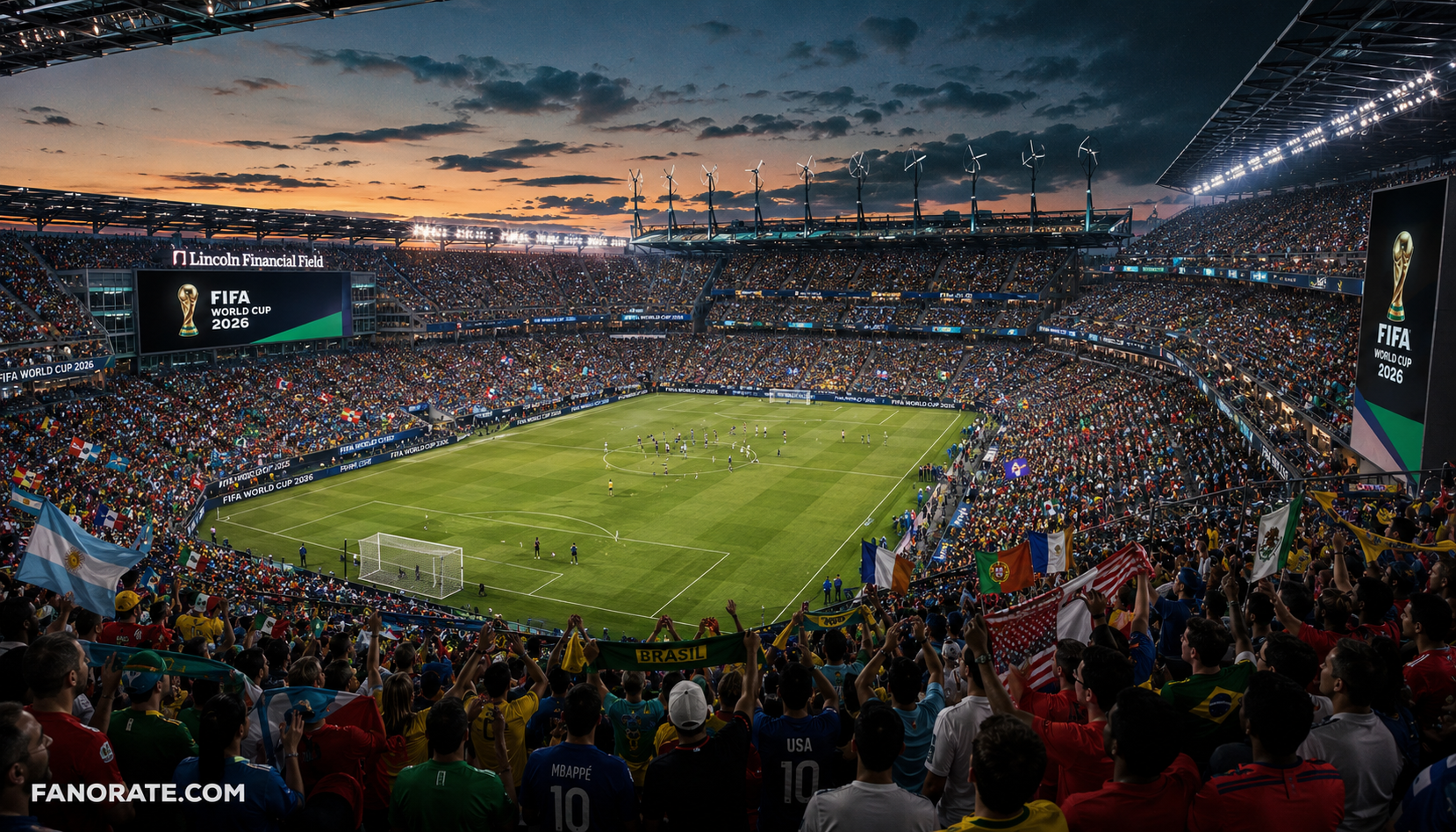
The building’s identity is shaped by three things: its sightlines, its sound profile, and its fan culture.
The seating bowl is steep. Front-row fans are noticeably closer to the field than at most American stadiums. The upper deck reaches into a dramatic vertical slope that produces a particular kind of crowd intensity — when 69,000 Philadelphia fans want to make noise, the building amplifies them. Sound concentrates back toward the field.
Other distinctive features:
- The “Eagles Nest” — large open-air party decks behind one end zone that have become tailgate-style social spaces inside the stadium.
- Wide concourses with views into the bowl and out toward the broader sports complex.
- A noise-reflecting design that gives the building a reputation as one of the louder open-air venues in the NFL.
- The shared sports-complex footprint allows for unusually dense pre- and post-match social options.
The Linc isn’t an architectural showpiece. It’s a fan-experience workhorse. For the 2026 World Cup, that personality is going to translate directly into one of the most atmospheric venues of the tournament.
Why FIFA Picked Philadelphia
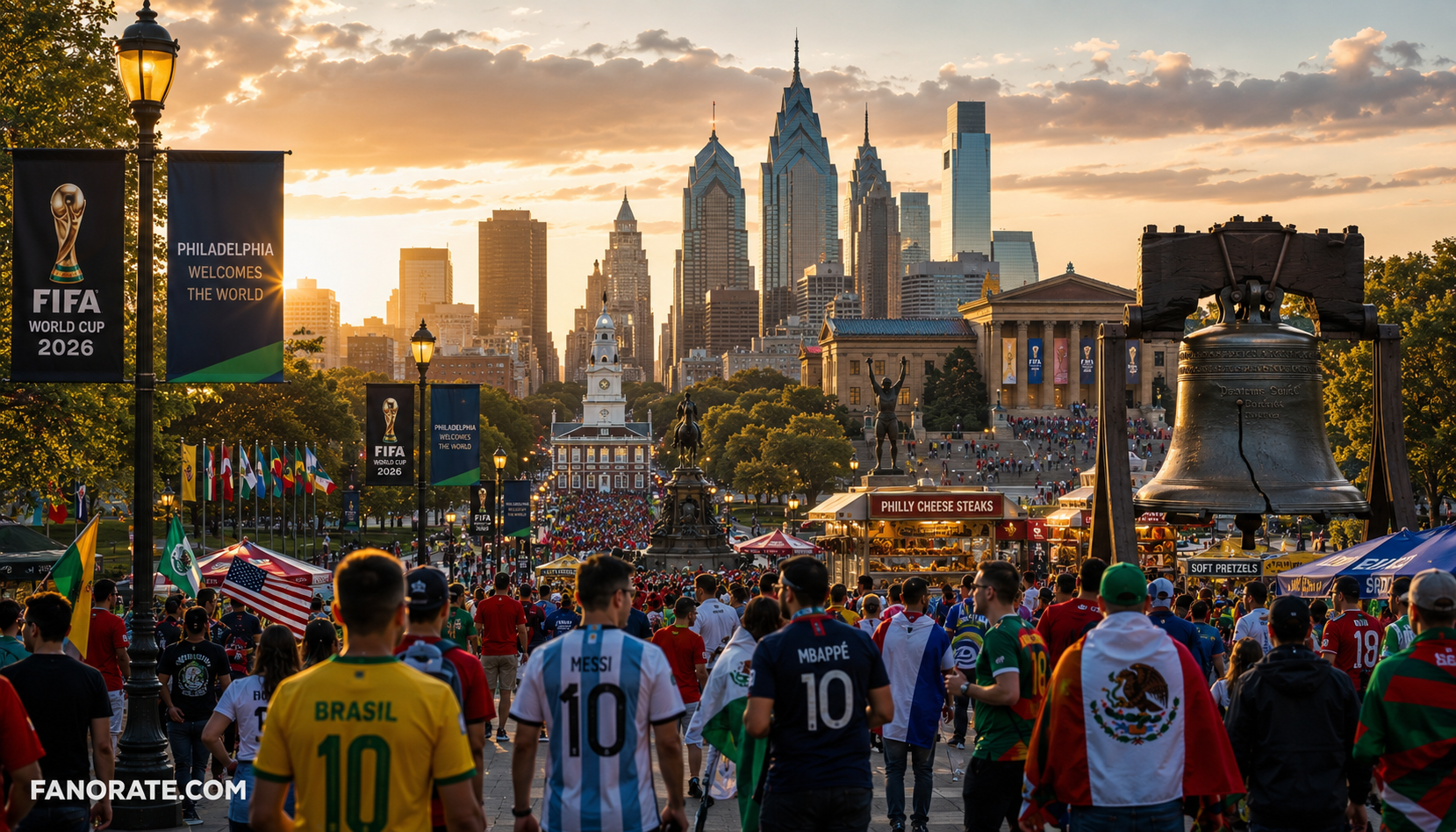
Three reasons.
First, the market. Philadelphia is one of the largest American media markets and one of the most concentrated metropolitan sports audiences in the country.
Second, the location. Philly sits in the corridor between New York, Washington DC, Boston and Baltimore — a transit-accessible region with substantial international fan demand and high-quality hospitality infrastructure.
Third, the football culture. The Philadelphia Union has built one of MLS’s most loyal supporter cultures, anchored by the Sons of Ben supporter group. The city’s broader football diaspora — Italian, Irish, Mexican, Salvadoran, West African, Caribbean, Vietnamese, Korean — is substantial. Mexico, Argentina, Brazil and major European national-team supporter groups will travel here in significant numbers.
The six-match schedule includes group-stage games and at least one knockout fixture. Expect Philadelphia matches to be loud, fully sold and unmistakably itself.
Iconic Matches and Historic Moments
Philadelphia Eagles’ 2017 NFC Championship run came through this building. Multiple Temple Owls upsets have been played here. The annual Army-Navy Game, one of the most-watched college football traditions in the country, has been hosted here multiple times.
In football specifically:
- Multiple USMNT and Concacaf Gold Cup fixtures.
- Mexico national-team friendlies with capacity crowds.
- European club preseason tours.
- Copa America 2024 matches.
The 2026 World Cup matches will sit at the top of the football résumé.
Football Culture in Philadelphia
Philadelphia’s football identity has multiple layers.
The Italian-American community in South Philly has a long-standing connection to Italian football. AS Roma, Juventus, Inter Milan and Napoli jerseys are visible across the neighborhood on any given Saturday. The Mexican-American community, concentrated in South Philly’s Italian Market corridor and parts of West Philly, has produced one of the most underrated Liga MX fan audiences on the East Coast. The Irish-American population, historically substantial across the metro, has supported Premier League fixtures for decades.
Beyond that, Philadelphia’s West African (Senegalese, Liberian, Nigerian, Ghanaian) and Caribbean (Haitian, Jamaican, Trinidadian) communities have grown rapidly. The city’s Vietnamese, Korean and Cambodian populations have built their own football fan cultures.
The Philadelphia Union has anchored modern fandom. Sons of Ben, the supporter group founded before the team even existed, has built a passionate following. The Union Academy has become one of the most respected youth player development pipelines in American soccer, producing national-team players with regularity.
For 2026, Philadelphia is going to feel like one of the most authentically football-supportive U.S. host cities.
Matchday at Lincoln Financial Field: What to Expect
A typical rhythm:
- Morning in Center City Philadelphia. Coffee on Walnut, breakfast at Reading Terminal Market.
- SEPTA Broad Street Line to the sports complex. Direct ride from Center City to a stop within walking distance of the stadium. Travel time around 15–20 minutes.
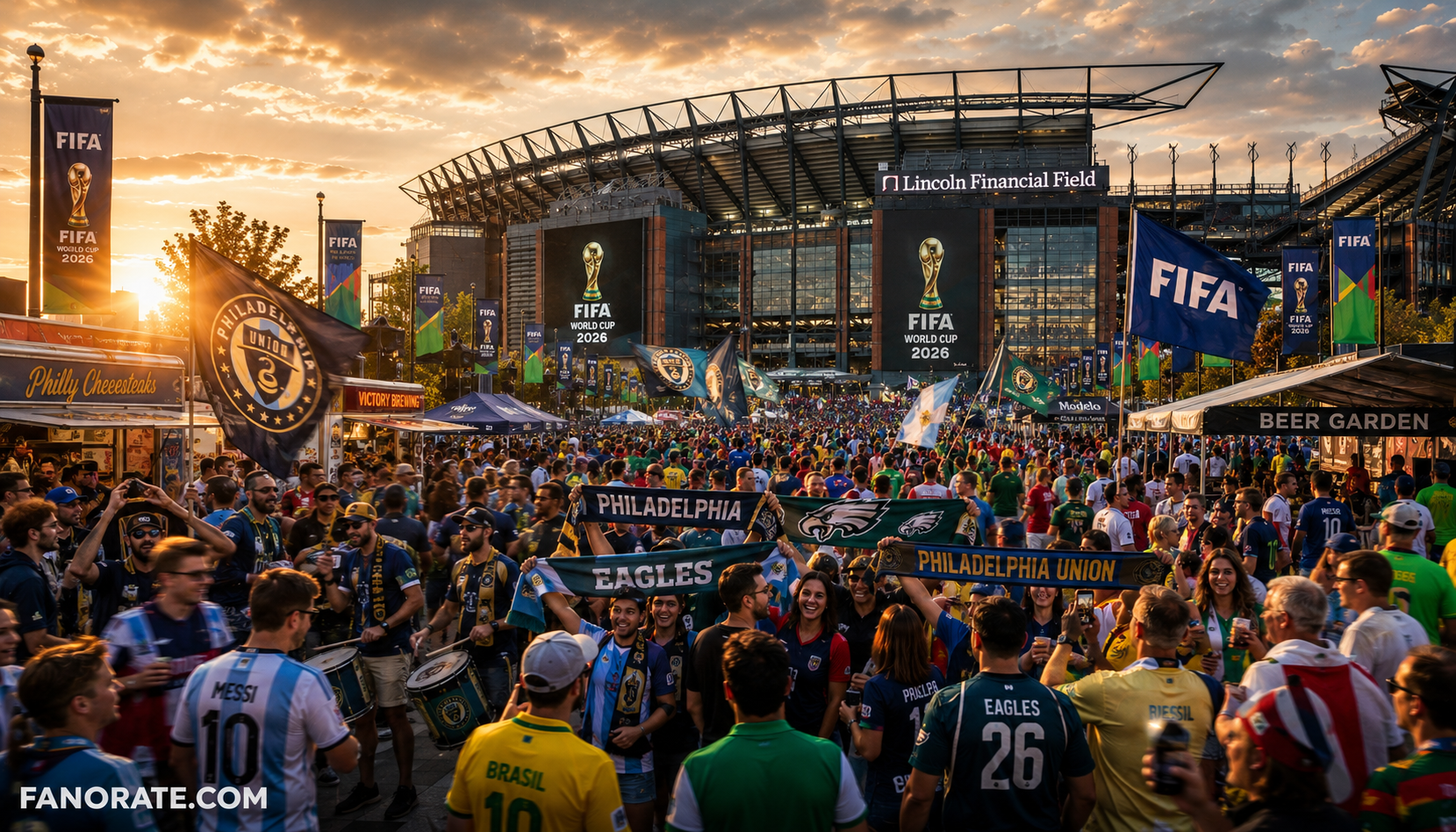
- Tailgating in the sports complex. Philadelphia takes tailgating seriously. Expect grills, flags, full-volume sound systems, and unspoken rules about generosity between strangers.
- Entry. Clear-bag policy. Security is efficient.
- Inside the bowl. Listen for the noise pattern. Philadelphia crowds are vocal from the opening minute.
- Concessions. Try the cheesesteak.
- Post-match. SEPTA back to Center City is the simplest path. Pre-arranged rideshare is an alternative.
Best Seating Guide
- For atmosphere: Lower bowl behind the goals. The most intense supporter sections traditionally cluster here.
- For tactical viewing: Mid-tier sideline seats. The steep bowl gives a clean perspective across the pitch.
- For photography: Upper-deck corners with the Philadelphia skyline visible to the north.
- For families: Mid-bowl seats away from the most vocal sections.
- Budget options: Upper-deck end-zone seats.
- Premium experience: Field-level clubs and the indoor lounges connected to the seating bowl.
A Linc-specific tip: the steep upper deck offers some of the best in-stadium visual experiences for tactical viewing in the NFL. Don’t avoid those seats for football matches.
Transportation and Access Guide
- From Philadelphia International Airport (PHL): Roughly 15 minutes by car. SEPTA Airport Line connects to the city, with transfers to the Broad Street Line south to the sports complex.
- From Center City Philadelphia: SEPTA Broad Street Line direct to the AT&T Station, walking distance from the stadium. About 15 minutes.
- From New York City: Amtrak Northeast Regional or Acela to 30th Street Station in Philadelphia (around 1.5 hours), then SEPTA to the sports complex.
- From Washington DC: Amtrak Northeast Regional to 30th Street Station (around 2 hours), then SEPTA.
- From Baltimore: Amtrak or MARC + Northeast Corridor (around 1.5 hours), then SEPTA.
- Driving: Multiple lots in the sports complex. Pre-paid parking is recommended.
- Rideshare: Designated zones at the stadium. Surge pricing post-match.
- Walking: From Center City, walking is technically possible but takes 60+ minutes.
- Accessibility: ADA-compliant routes and seating. Coordinate accessibility services with FIFA in advance.
Where Fans Should Stay
- Center City Philadelphia: Closest to SEPTA Broad Street Line, walkable to most attractions, deep hotel inventory.
- Old City: Historic district near Independence Hall, walkable, with strong nightlife.
- University City (West Philly): Near 30th Street Station, with quick access to Center City.
- Fishtown and Northern Liberties: Hip, walkable neighborhoods with strong dining and bar scenes. Easy SEPTA access.
- South Philly: Closest to the stadium, with classic Italian-American restaurants and a deeply local feel.
- New Jersey side (Cherry Hill, Camden): Cheaper alternatives with SEPTA or PATCO access into Philadelphia.
If you’re staying for multiple matches, Center City strikes the best balance between location and amenities.
Food, Drink and Nightlife
Philadelphia is one of the most underrated food cities in America.
- Cheesesteaks: Order one. Maybe two. The Pat’s-versus-Geno’s debate is mostly tourist theater; better cheesesteaks are everywhere across the city.
- Italian-American cuisine: South Philly’s Italian Market is a multi-generational neighborhood for pasta, sandwiches, gelato and old-school bakeries.
- Reading Terminal Market: One of the great American food halls. Amish bakery, oyster bar, Pennsylvania Dutch staples, Caribbean food, vegan options.
- Mexican food: Strong scene in South Philly. Birria, mole, breakfast tacos.
- Vietnamese food: Washington Avenue corridor.
- West African cuisine: Distributed across West and North Philadelphia.
- Caribbean cuisine: West Philadelphia and parts of North Philadelphia.
- BYOB restaurants: Philadelphia has one of the largest BYOB dining cultures in the country.
- Beer scene: Strong craft beer culture across the city.
Bars and viewing parties: Fishtown, Northern Liberties, South Philly and Center City all have soccer-specific bars running early-morning international matches.
Things To Do Near the Stadium
- Independence National Historical Park (Liberty Bell, Independence Hall)
- Philadelphia Museum of Art (yes, the Rocky steps)
- The Barnes Foundation
- Reading Terminal Market
- South Street and the Italian Market
- Mural Arts Philadelphia walking tours
- The Franklin Institute
- Penn Museum (University of Pennsylvania)
- Fairmount Park and the Schuylkill River Trail
- Day trip to Atlantic City or Cape May
- Brandywine Valley wine country
Weather and Match Conditions
- Temperature: Daily highs in June and July commonly 80–90°F (27–32°C).
- Humidity: High. Mid-Atlantic summer humidity is real.
- Rain: Possible afternoon thunderstorms.
- Heat index: Frequently 90°F+ in midsummer.
- Wind: Moderate.
Practical kit:
- Reusable water bottle
- Light, breathable clothing
- High-SPF sunscreen
- Compact rain poncho
- Hat and sunglasses
Interesting and Fun Facts
- The Linc is famous in NFL circles for an unusually steep upper deck, which produces a particular kind of crowd intensity.
- The Army-Navy Game has been played here multiple times and is one of the most-watched non-NFL American football events at the venue.
- Philadelphia Eagles fans famously broke parts of the city’s pole-greasing strategy after their 2017 championship celebration.
- The Linc shares a parking lot footprint with Citizens Bank Park and Wells Fargo Center, creating one of the densest pro sports complexes in North America.
- The stadium’s wind tower system was designed to manage airflow through the bowl on hot days.
- The Sons of Ben supporter group, founded before the Philadelphia Union even existed, is widely credited with persuading MLS to award the city a franchise.
One Thing Most Fans Don’t Know
Philadelphia has one of the oldest amateur soccer leagues in the United States — the United Soccer League of Pennsylvania — which has been running continuously since the 1920s. Multiple historic clubs in the league have produced national-team players over the decades. Even before MLS existed, Philadelphia was producing professional footballers in a quiet, sustained way. The 2026 World Cup matches at the Linc connect to a soccer history that predates the modern American game by nearly a century.
Photo and Social Media Spots
- Stadium exterior at golden hour with the South Philly skyline behind.
- Inside the bowl during pre-match with the steep upper deck visible.
- The Rocky steps at the Philadelphia Museum of Art with a national team scarf.
- Reading Terminal Market crowd shots.
- Independence Hall with World Cup-themed accessories.
Fan Experience and Atmosphere
A packed Linc is loud. The steep bowl, the vocal crowd culture and the noise-reflecting design produce a sound profile that rivals some of the louder open-air NFL stadiums. For international fixtures, expect the volume to scale with the stakes. The Sons of Ben tradition has trained a generation of Philly soccer fans to chant in coordinated patterns.
The post-match scene is unusually social. Philadelphia is a walking city. The Italian Market is close. Center City is close. The neighborhoods around Fishtown and Northern Liberties are close. The matchday doesn’t have to end when the final whistle blows.
Sustainability and Technology
Lincoln Financial Field has implemented sustainability upgrades including LED conversions, solar arrays on adjacent structures and recycling programs across concessions. Wind turbines installed atop the stadium produce a portion of operational energy.
Technology: high-density Wi-Fi, mobile-app ticketing and concessions, modernized broadcast infrastructure.
Future Legacy
The 2026 World Cup matches will deepen Philadelphia’s status as one of the most authentic football cities on the East Coast. The Philadelphia Union and youth academy systems will benefit. Investment in soccer-specific infrastructure across the metro will increase. The Sons of Ben tradition will be amplified globally.
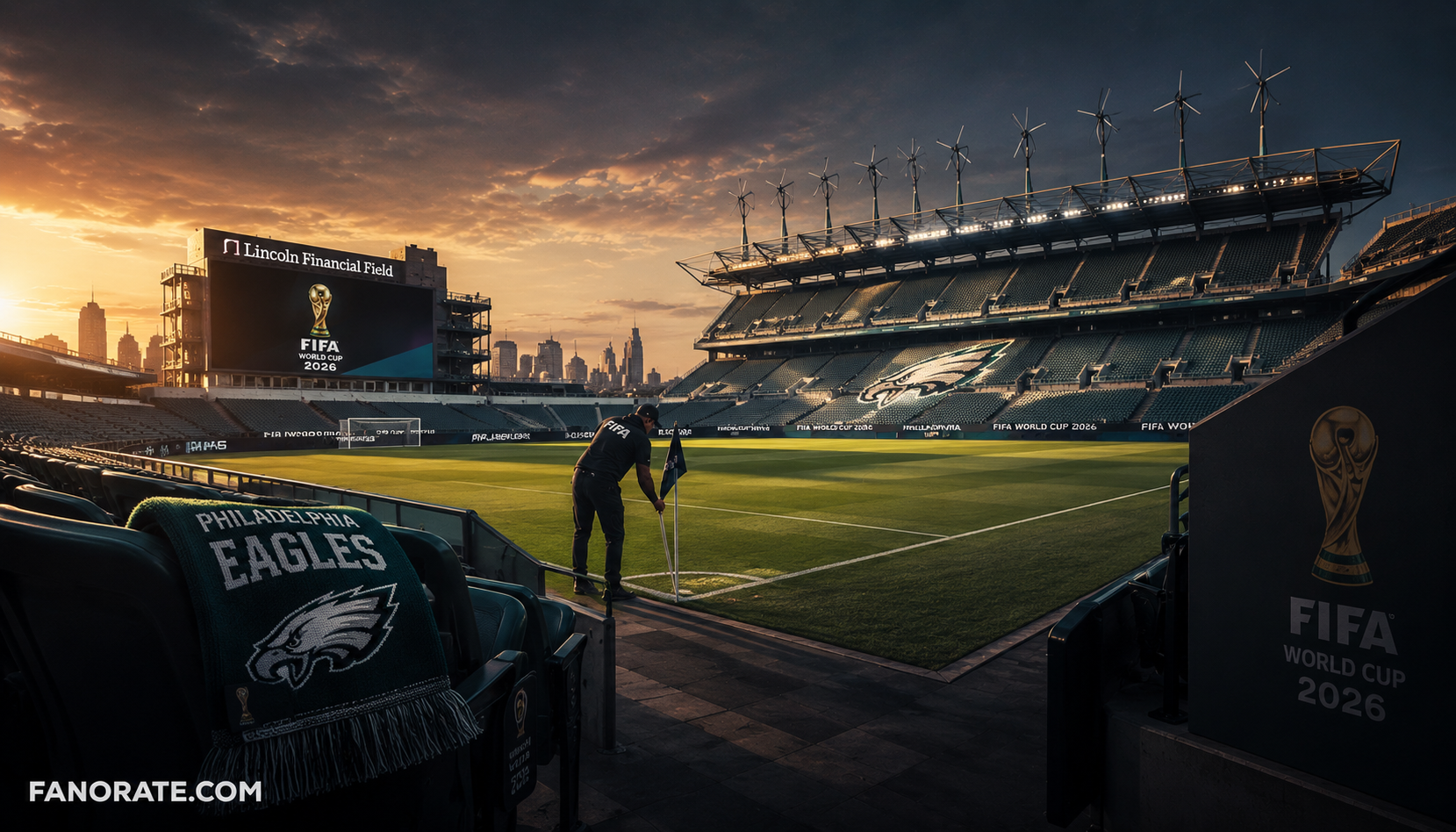
Final Thoughts
A Philadelphia World Cup is going to be unpretentious, loud, generous and deeply local. Take SEPTA. Eat a cheesesteak. Drink a beer at a corner bar. Walk through the Italian Market on a Saturday morning. Sit in the upper deck and listen to 69,000 Philadelphians decide to make a song out of a chant they invented on the spot.
Six matches at the Linc. Some of the most underrated atmospheres of the entire 2026 tournament. By the time you leave Philadelphia, you’ll wonder why this city’s role in American football culture isn’t talked about more often.
FAQ
How many people does Lincoln Financial Field hold? Approximately 69,000.
Which FIFA 2026 matches will be played at Lincoln Financial Field? Six matches, including group-stage games and at least one knockout-round fixture.
Is the stadium covered or open-air? Open-air. There is no roof.
How do I get to the stadium from Center City? SEPTA Broad Street Line direct to AT&T Station. About 15 minutes.
What’s the closest airport? Philadelphia International (PHL), about 15 minutes by car or via SEPTA Airport Line.
Will the field be grass or turf? Natural grass installed for the tournament.
What weather should fans expect? Humid mid-Atlantic summer. Daily highs in the 80s and 90s Fahrenheit. Possible afternoon thunderstorms.
Can I take Amtrak from New York or DC? Yes. Amtrak Northeast Regional or Acela to 30th Street Station, then SEPTA to the sports complex.
What’s the best fan section for atmosphere? Lower bowl behind the goals. The upper deck is also famously loud.
Are there fan-festival areas nearby? Yes. Expect FIFA Fan Festivals in Center City and other major districts.