Levi's Stadium for FIFA World Cup 2026: Silicon Valley's High-Tech Football Theater
Levi's Stadium hosts FIFA 2026 in the Bay Area. Inside guide to seats, transit, Silicon Valley culture, food and matchday tips for traveling World Cup fans.

Investigado y editado por Abdullah Mashuk. Redactado con investigación asistida por IA según nuestra Metodología.
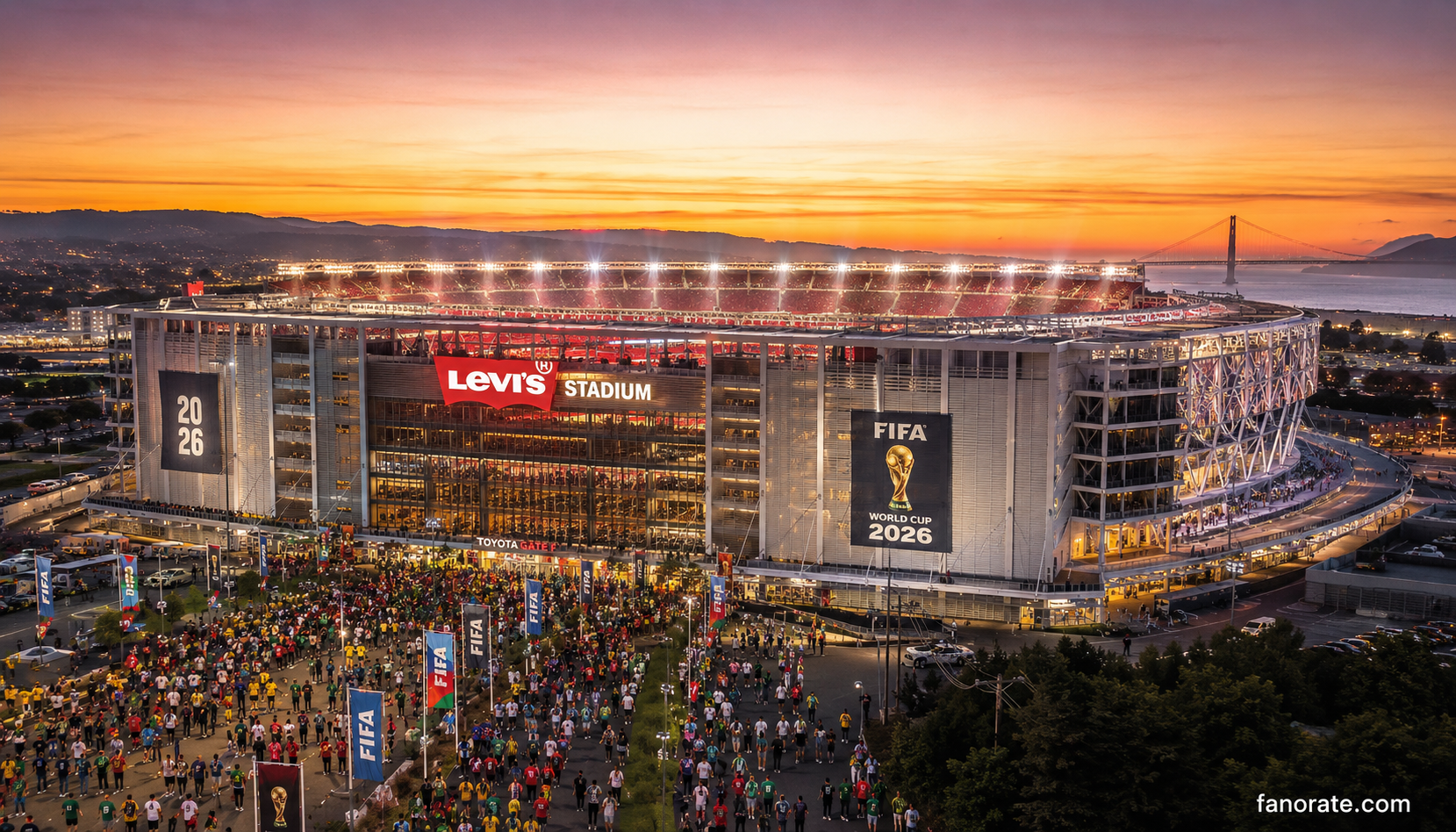
Ilustración generada por IA. No es una fotografía real.
Levi’s Stadium for FIFA World Cup 2026: Silicon Valley’s High-Tech Football Theater
If you’ve ever driven Highway 101 between San Francisco and San Jose, you’ve passed Levi’s Stadium without realizing it — a sleek, low-profile bowl tucked into the suburban grid of Santa Clara, the kind of building you’d miss if you weren’t looking for it. From outside, it doesn’t dominate the landscape the way some American stadiums do. It blends in.
But step into the bowl on a packed evening, with the South Bay sky catching that particular golden-hour orange that only Northern California seems to produce, and the building reveals itself for what it actually is: one of the most fan-considered, technology-forward stadiums in the world.
In the summer of 2026, that stadium hosts six FIFA World Cup matches, including a Round of 16 knockout fixture. The Bay Area’s polyglot football audience — Silicon Valley’s tech diaspora layered over generations of Mexican, Vietnamese, Filipino, Indian, Korean, Ethiopian and African football communities — is about to get its biggest single sports moment in decades.
Here’s the full guide.
Quick Venue Snapshot
- Stadium: Levi’s Stadium
- City / Region: Santa Clara, California — Silicon Valley / San Francisco Bay Area
- Country: United States
- Capacity: Approximately 68,500
- Opened: 2014
- Primary tenants: NFL’s San Francisco 49ers
- FIFA 2026 matches hosted: Six matches, including group-stage games and a Round of 16 knockout fixture
- Location: Santa Clara, roughly 70 km (45 miles) south of downtown San Francisco
- Surface for FIFA 2026: Natural grass installed and conditioned specifically for the tournament
- Roof: Open-air, no covering
- Climate considerations: Warm, dry Mediterranean summer. Wind in the late afternoons. Sun exposure is significant on the eastern side of the bowl.
- Transit: VTA light rail stops directly adjacent to the stadium. Caltrain commuter rail connects San Francisco to the broader South Bay.
The Story of the Stadium
For nearly half a century, the San Francisco 49ers played at Candlestick Park — a cold, windy, beloved old building on a peninsula south of downtown San Francisco. Candlestick had a wild personality. The fog rolled in. The wind blew flags sideways. Joe Montana, Jerry Rice, Steve Young and a generation of championship teams played their home games there. But it was aging, hard to access, and increasingly impractical for modern operations.
The replacement, Levi’s Stadium, opened in 2014 — and represented a complete inversion of Candlestick’s personality. New construction. South Bay location. Tech-forward design. Sustainability built into every system. The naming rights belonged to the jeans manufacturer headquartered just up the freeway, which gave the building a very California identity from day one.
Since opening, the venue has hosted Super Bowl 50 (the 2016 Super Bowl marking the league’s golden anniversary), College Football Playoff Championships, College Football Playoff semifinals, multiple WrestleManias, NHL Stadium Series matches, major concerts and an established calendar of international football. Mexico’s national team has played here repeatedly to capacity crowds. Multiple European clubs have toured through. The Concacaf Gold Cup, Copa America 2024 and various USMNT/USWNT fixtures have all routed through the bowl.
For FIFA 2026, six matches at Levi’s Stadium will include group-stage games and a Round of 16 knockout fixture. The building’s quiet design philosophy is about to get loud.
What Makes Levi’s Stadium Unique
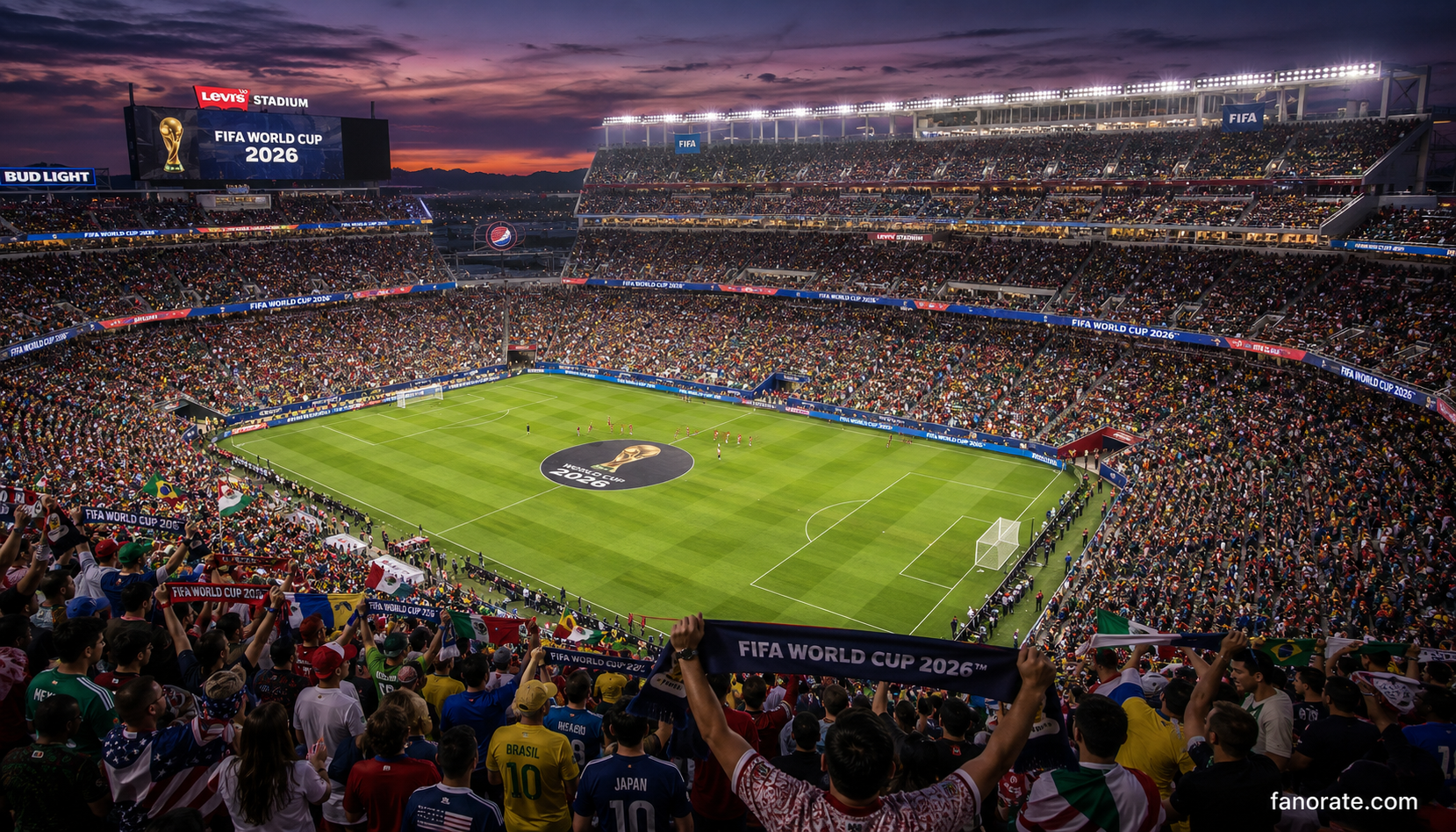
The building’s defining feature isn’t a single architectural moment — it’s the integrated design philosophy.
Levi’s Stadium was the first NFL stadium to achieve LEED Gold certification. It includes a green roof on the suite tower planted with native California species, on-site solar panels, water reclamation systems, and recycled construction materials throughout the structure. The building was designed by HNTB and built to be as environmentally responsible as a 70,000-seat stadium can be.
The fan technology layer is unusual. Levi’s was one of the first stadiums to push aggressively into in-app ordering, seat-side delivery, replays on demand, app-based concession pickup and integrated wayfinding. Walking concourses are wide. The wireless infrastructure is dense. The whole building was built around the assumption that fans would have phones in their hands.
Other distinctive features:
- The asymmetrical seating bowl — the western side is taller than the eastern side — gives an unusual visual character and reflects sun-management planning.
- The integrated 49ers Museum, accessible to ticket holders, is one of the better sports museums in any American stadium.
- The South Lounge and adjacent club spaces have direct outdoor terrace views of the surrounding Santa Clara skyline.
- The bowl is generally praised for sightline quality across most price tiers.
A note on the playing surface: Levi’s Stadium has had a complicated history with grass quality over the years. For the World Cup, FIFA has invested in a tournament-specific surface upgrade and conditioning program. By kickoff, the field will be at international standards.
Why FIFA Picked the Bay Area
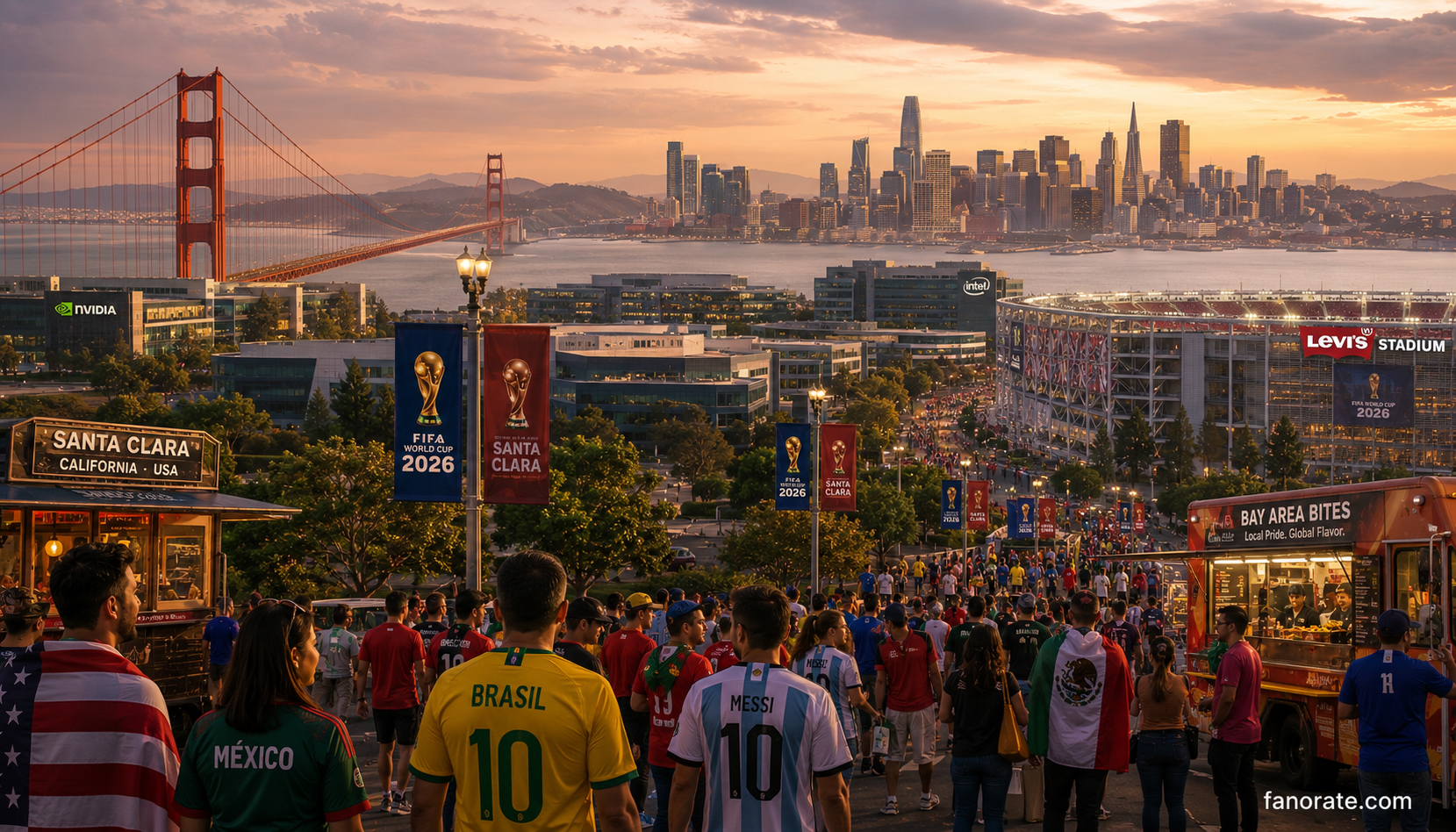
Three reasons.
First, the population. The Bay Area is one of the largest, wealthiest and most internationally connected metro regions in the United States. San Francisco, San Jose and Oakland together represent over 7 million residents. The tech industry has imported football fans from Europe, Asia, Latin America and Africa for two decades. Demand for World Cup tickets here will be enormous.
Second, the venue. Levi’s Stadium has hosted Super Bowl 50, multiple College Football Playoff Championship matches, and dozens of large-scale international events. The operational maturity is real.
Third, the geography. San Francisco International Airport and San Jose International Airport are both major hubs. The Bay Area’s broader infrastructure — public transit, hospitality, technology services, security operations — is well-prepared for global events.
The six-match schedule will give Levi’s Stadium a substantial role in the tournament. Expect Bay Area World Cup matches to feel international, technologically sophisticated, and quietly excellent.
Iconic Matches and Historic Moments
Super Bowl 50 in 2016 — the league’s golden anniversary — gave the building its highest-profile NFL moment. WrestleMania 31 in 2015 drew a massive global wrestling audience. The 2019 College Football Playoff National Championship between Clemson and Alabama was hosted here. Multiple major concerts have set Bay Area attendance records.
In football specifically:
- Multiple Mexico national-team fixtures with crowds approaching capacity.
- USMNT and USWNT matches.
- Concacaf Champions Cup fixtures.
- High-profile European club friendlies during summer preseason tours.
- Copa America 2024 group and knockout matches.
Football Culture in the Bay Area
The Bay Area’s football identity is built on layers.
The historic Mexican-American football community across the East Bay, South Bay and parts of San Francisco has been organizing amateur leagues for generations. Liga MX broadcasts have substantial weekly audiences. Mexican national-team matchdays are mainstream events in this metro.
Beyond that, the tech-industry international population has imported football fan culture from every continent. Premier League, La Liga, Bundesliga, Serie A and Brazilian Serie A all have active Bay Area supporter clubs. The cosmopolitan diaspora — Indian, Pakistani, Filipino, Vietnamese, Korean, Chinese, Ethiopian, Nigerian, Argentine, Brazilian, French — produces some of the most varied World Cup fan audiences in the country.
The San Jose Earthquakes in MLS have one of the league’s oldest fan bases and supporter section histories. The Bay FC team in NWSL has built a strong women’s football audience. Youth football across the metro produces a steady stream of national-team-caliber players.
For 2026, expect the Bay Area to host one of the most cosmopolitan, well-traveled, multilingual fan audiences of any U.S. host city.
Matchday at Levi’s Stadium: What to Expect
A typical rhythm:
- Morning in San Francisco or San Jose. Coffee, breakfast burrito, walk along the Embarcadero or the Guadalupe River Trail.
- Travel to Santa Clara. Caltrain south to a stop near the stadium, then a short VTA light rail connection. Driving and rideshare are also viable.
- Pre-match in the stadium plazas. Live music, food trucks, supporter group meetups.
- Entry. Clear-bag policy. Security is technologically integrated and efficient.
- Inside the bowl. First-time visitors should explore the concourses — the design philosophy rewards walking around before kickoff.
- Concessions. App-based ordering is widely available. Food quality is above the American stadium average.
- Post-match. Pre-arrange your departure. Light rail and Caltrain are the best options for fans not driving.
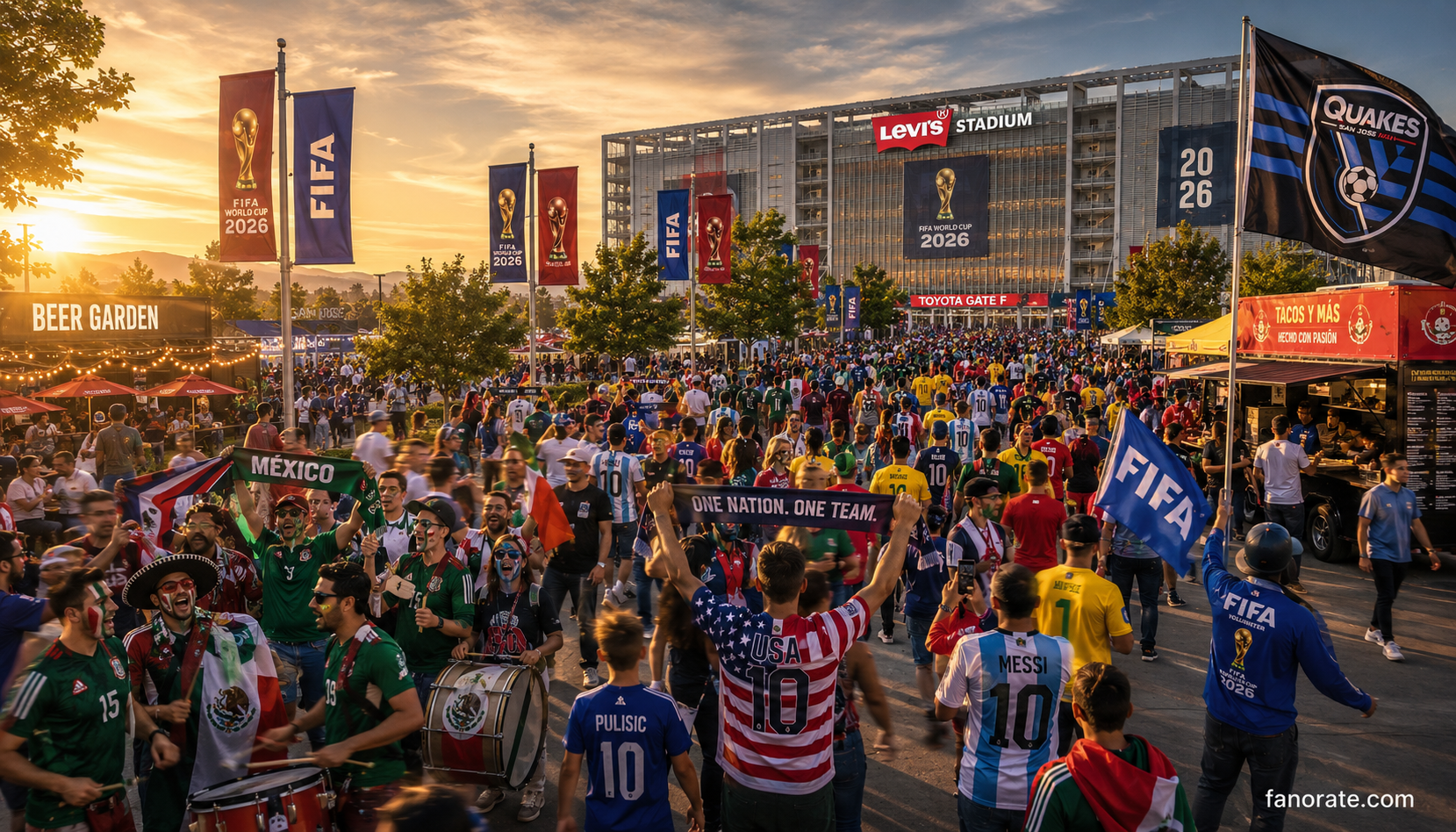
Best Seating Guide
- For atmosphere: Lower bowl behind the goals, where supporter sections traditionally cluster.
- For tactical viewing: Mid-tier sideline seats on the eastern (shorter) side of the bowl.
- For photography: Upper-deck corners on the taller western side, capturing the South Bay skyline at sunset.
- For families: Mid-bowl seats away from the most vocal supporter sections.
- Budget options: Upper-deck end-zone seats. Watch resale platforms for late-release inventory.
- Premium experience: Field-level clubs and indoor lounges on the suite tower side.
A Levi’s-specific tip: late-afternoon kickoffs put the sun directly into the eastern-side seats. If you have a choice, sit on the western side or higher in the bowl to avoid direct sun.
Transportation and Access Guide
- From San Francisco International Airport (SFO): Roughly 45–60 minutes by car. Caltrain and BART connections are available with transfers.
- From San Jose International Airport (SJC): Roughly 15 minutes by car. Closer than SFO for most fans.
- From Oakland International (OAK): Roughly 45–60 minutes by car. BART connections available.
- From Downtown San Francisco: Caltrain south to Mountain View or Santa Clara, then connecting transit. About 90 minutes door-to-door.
- From Downtown San Jose: VTA light rail directly to the stadium. About 20–25 minutes.
- Driving: Pre-paid parking lots around the stadium. Walk-up parking is risky on matchday.
- Rideshare: Designated zones. Surge pricing post-match is moderate.
- Light rail: VTA’s Mountain View-Winchester line stops at a station directly adjacent to the stadium.
- Walking: Within Santa Clara and from local hotels, walking is practical.
- Accessibility: ADA-compliant routes and seating. Coordinate accessibility services with FIFA in advance.
Where Fans Should Stay
You have three meaningful choices: San Francisco, San Jose, or somewhere closer to the stadium.
- San Francisco: The iconic visit. Hotel inventory is deep. Nightlife, food and tourism options are unmatched. Long matchday commute.
- San Jose: Closer to the stadium, with strong VTA light rail access. The downtown is walkable and has a growing dining scene. Cheaper than San Francisco.
- Santa Clara: Closest to the stadium. Hotel inventory is functional rather than glamorous. Best for fans planning multiple matches.
- Mountain View, Palo Alto, Sunnyvale: South Bay tech-corridor cities with hotel options and growing food scenes. Easy stadium access.
- Oakland and Berkeley: East Bay alternatives with strong food and music scenes. BART and Caltrain connections to Santa Clara.
If you’re staying for multiple matches, San Jose strikes the best balance between accessibility, affordability and city life.
Food, Drink and Nightlife
The Bay Area is one of the great food regions on earth, full stop.
- Mexican food: The Mission District in San Francisco. Multiple South Bay neighborhoods. East Bay taquerias.
- Vietnamese food: San Jose has one of the largest Vietnamese populations outside Vietnam. Pho, banh mi, bun bo Hue.
- Filipino food: Strong scene in the South Bay and Daly City.
- Indian food: Sunnyvale, Fremont and parts of the East Bay.
- Korean food: San Francisco, Oakland and the South Bay.
- Chinese food: San Francisco Chinatown, Oakland Chinatown, the South Bay.
- Japanese food: San Francisco Japantown, San Jose Japantown.
- Ethiopian food: San Francisco and Oakland.
- Vegan and vegetarian: The Bay Area has one of the densest non-meat dining scenes in the country.
- Coffee: Third-wave coffee origins are partly here. Pick a respected roaster.
- Wine country: Napa and Sonoma are accessible as day trips.
Bars and viewing parties: international football pubs in San Francisco, Oakland and San Jose run early-morning matches every weekend.
Things To Do Near the Stadium
The Santa Clara area itself is functional rather than glamorous. The Bay Area, however, is one of the great American regions to visit.
- Golden Gate Bridge and the Marin Headlands
- Alcatraz Island
- Cable cars and the historic San Francisco neighborhoods
- The Mission District for food and street art
- Painted Ladies and Alamo Square
- Ferry Building and the Embarcadero
- Mission Dolores
- The de Young Museum and SFMOMA
- Stanford University in Palo Alto
- Computer History Museum in Mountain View
- Santa Cruz Beach Boardwalk as a day trip
- Wine country (Napa and Sonoma) as a day trip
- Big Basin Redwoods and Muir Woods
Weather and Match Conditions
Mediterranean climate, characterized by dry summers and mild evenings.
- Temperature: Daily highs in June and July range from 75–90°F (24–32°C). Heat waves above 95°F (35°C) occur but are uncommon.
- Humidity: Low.
- Rain: Essentially zero in June and July.
- Wind: Late-afternoon breezes are common. Can be strong.
- Marine layer: San Francisco’s coastal fog (“Karl the Fog”) rarely reaches Santa Clara, which is inland and significantly warmer than the city.
- Sun exposure: Significant on the open eastern side of the bowl for late-afternoon kickoffs.
Practical kit:
- Reusable water bottle
- High-SPF sunscreen and a hat
- Light jacket for night kickoffs
- Sunglasses
- Comfortable walking shoes
Interesting and Fun Facts
- Levi’s Stadium was the first NFL stadium to achieve LEED Gold certification.
- The green roof on the suite tower is planted with native California species and was one of the first of its kind in major American stadium construction.
- The 49ers Museum inside the building is one of the more curated sports museums in any American venue.
- The stadium’s app was an early industry leader in mobile concessions and seat-side delivery.
- The asymmetrical bowl design — taller on the west, shorter on the east — was a deliberate sun-management choice.
- The original Candlestick Park, the 49ers’ previous home, hosted some of the most famous moments in NFL history before being demolished.
- The Bay Area has hosted multiple Super Bowls and World Series, but FIFA 2026 will mark its first men’s World Cup matches since the 1994 tournament.
One Thing Most Fans Don’t Know
The Bay Area’s tech industry has been quietly building soccer-specific data and analytics tools for global clubs for over a decade. Companies based in Mountain View, Palo Alto and San Francisco have produced analytics platforms used by Premier League, La Liga and Bundesliga teams. The 2026 World Cup will see Bay Area-built technology supporting the broadcast experience, fan engagement and tactical analysis — at a tournament being hosted partly in their own backyard.
Photo and Social Media Spots
- Stadium exterior at sunset with the South Bay skyline behind.
- Inside the bowl during pre-match warmup with the asymmetrical seating tiers visible.
- The green roof of the suite tower.
- Golden Gate Bridge at sunrise.
- Mission District murals with World Cup scarves.
- Alcatraz from the Embarcadero.
Fan Experience and Atmosphere
Bay Area crowds are generous, well-traveled and surprisingly knowledgeable. The cosmopolitan diaspora means almost every visiting team will have fans in the bowl. Expect multilingual chants, organized supporter sections, and a polite-but-passionate culture that takes football seriously without taking itself too seriously.
The bowl’s sound behavior is moderate — sound disperses easily in the open-air, asymmetrical design — but the noise concentrates effectively during high-stakes moments. Late winning goals at Levi’s Stadium hit with full force.
Sustainability and Technology
Levi’s Stadium is one of the most sustainable major stadiums in North America. Green roof. Solar arrays. Water reclamation. Recycled materials. LEED Gold certification. The building’s environmental commitment is genuine.
Technology: high-density Wi-Fi, app-based ordering, integrated wayfinding, mobile ticketing, and one of the more mature in-stadium digital experiences in the country.
Future Legacy
The 2026 World Cup matches will deepen the Bay Area’s status as one of the most internationally connected football regions in North America. The San Jose Earthquakes, Bay FC and youth football networks will all benefit. Investment in stadium infrastructure, sustainability technology and broadcast capability will continue.
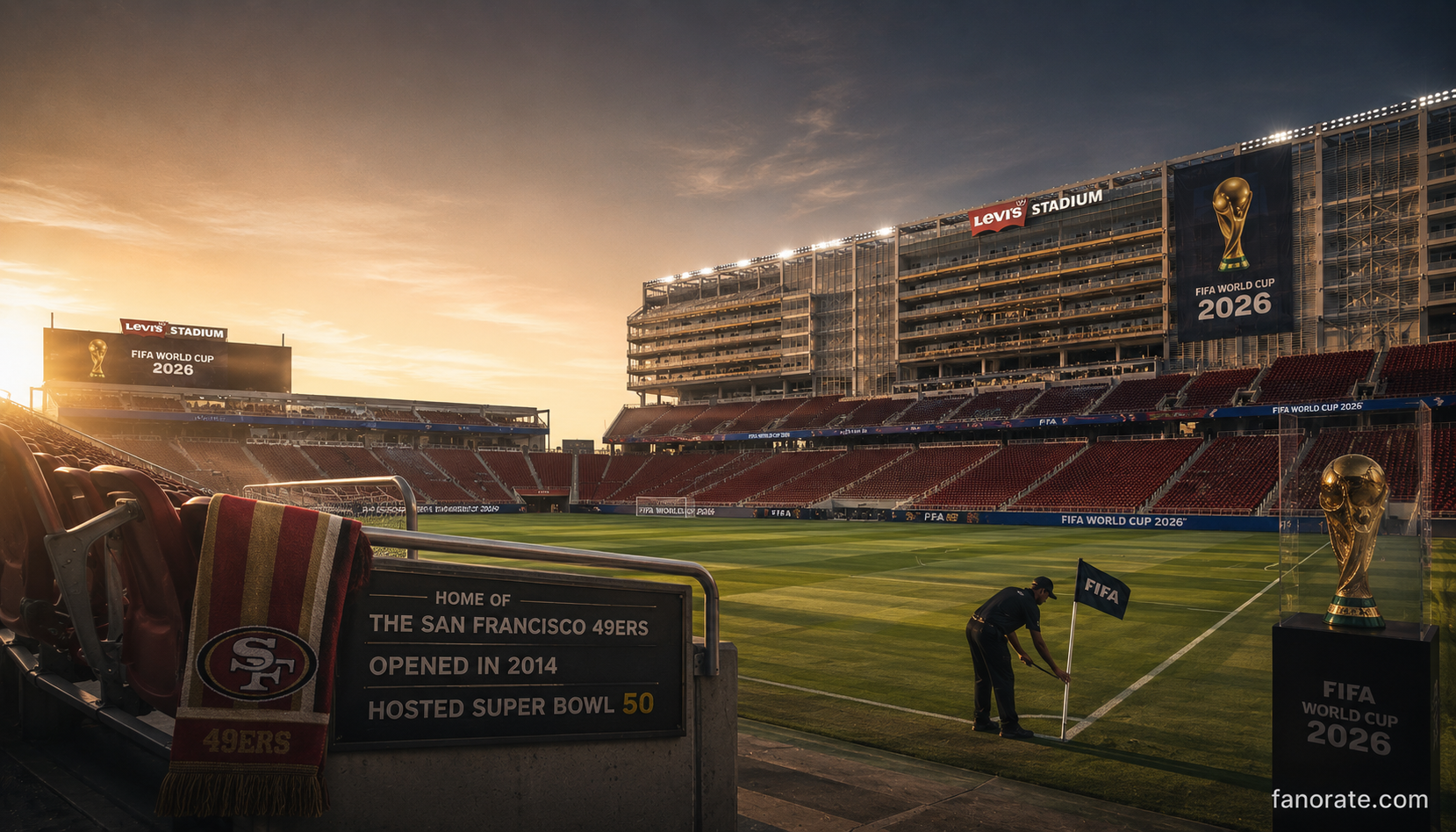
Final Thoughts
A Bay Area World Cup is going to be a quietly excellent affair. Less theatrical than Miami. Less spectacle-driven than SoFi. Less expansive than AT&T. But the Bay Area’s six matches at Levi’s Stadium will likely produce some of the most technologically sophisticated, internationally diverse, well-traveled fan atmospheres of the entire tournament.
If you’re going, take Caltrain or BART. Stay in San Jose for transit convenience, San Francisco for the iconic experience. Eat in the Mission. Eat in San Jose’s Vietnamese neighborhoods. Drink a coffee at a roaster you’ve never heard of. Watch a World Cup match from a seat that has Wi-Fi faster than your home network.
By the time you leave, you’ll understand why the Bay Area was always going to host part of the 2026 World Cup.
FAQ
How many people does Levi’s Stadium hold? Approximately 68,500.
Which FIFA 2026 matches will be played at Levi’s Stadium? Six matches, including group-stage games and a Round of 16 knockout fixture.
Is Levi’s Stadium covered or open-air? Open-air. There is no roof.
How do I get to the stadium from San Francisco? Caltrain south, then connecting VTA light rail or rideshare. About 90 minutes door-to-door.
What’s the closest airport? San Jose International (SJC) is closest. San Francisco International (SFO) is the larger international hub.
Will the field be grass or turf? Natural grass installed and conditioned specifically for the tournament.
What weather should fans expect? Warm, dry Mediterranean summer. Daily highs in the 70s and 80s Fahrenheit. Late-afternoon breezes are common.
What’s the best fan section for atmosphere? Lower bowl behind the goals, traditional supporter section gathering point.
Is the stadium accessible? Yes. Step-free routes, accessible seating and parking, full accessibility services.
Are there fan-festival areas nearby? Yes, primarily in San Jose and San Francisco. Local Santa Clara plazas around the stadium also host activations.