Hard Rock Stadium for FIFA World Cup 2026: Inside Miami's Tropical Stage for the Third-Place Final
Hard Rock Stadium hosts FIFA 2026 and the third-place match. Inside guide to seats, transit, Miami nightlife, weather and matchday tips for World Cup fans.

Investigado y editado por Abdullah Mashuk. Redactado con investigación asistida por IA según nuestra Metodología.
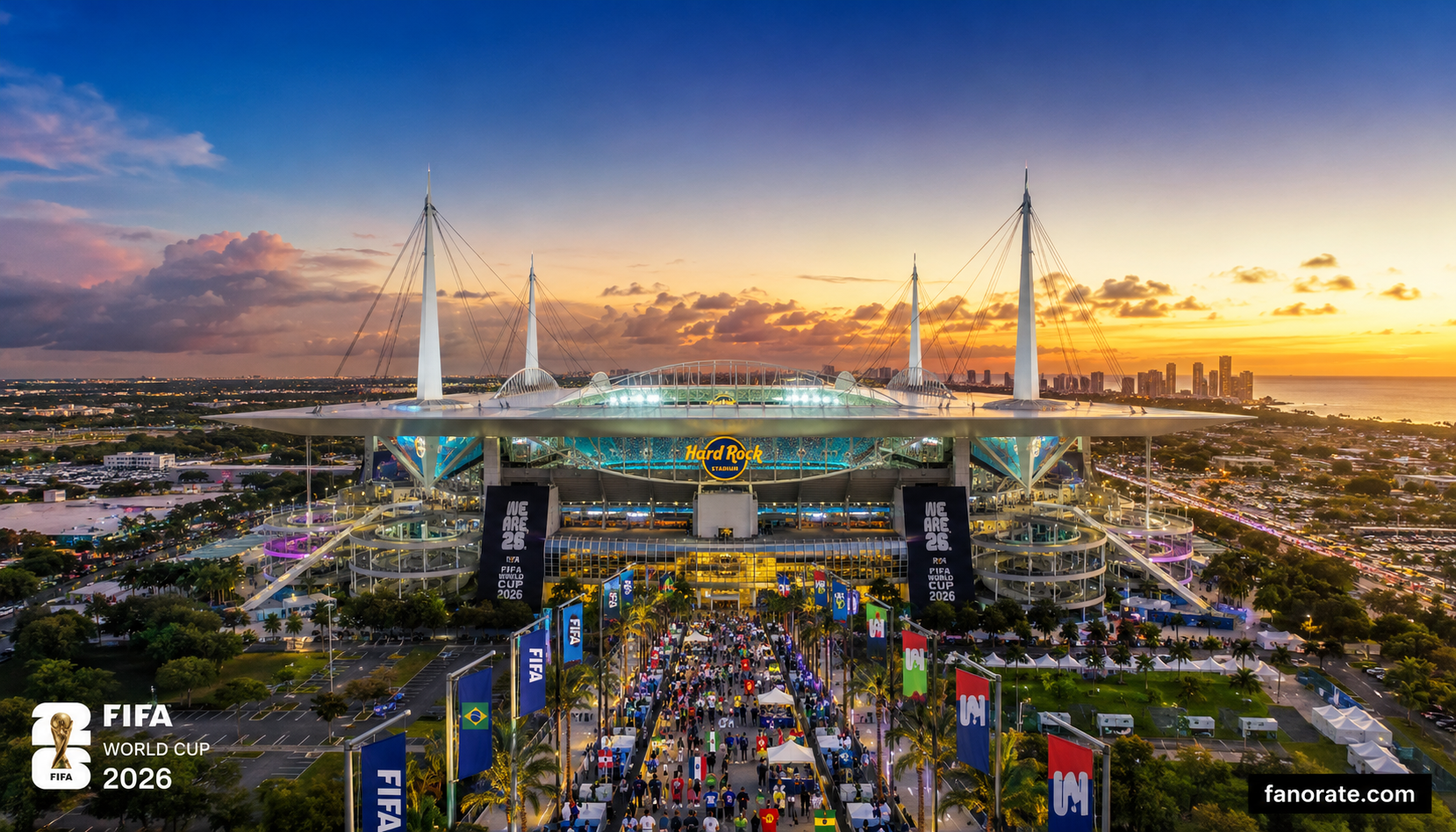
Ilustración generada por IA. No es una fotografía real.
Hard Rock Stadium for FIFA World Cup 2026: Inside Miami’s Tropical Stage for the Third-Place Final
There’s a reason Miami feels different from every other American city.
It’s the heat. The bilingual coffee orders. The street art in Wynwood that changes every six months. The way the air smells like salt and citrus when a thunderstorm passes through. The fact that you can walk into a Cuban café in Little Havana at 11 p.m. on a Saturday night, order a colada and a pastelito, and find yourself in a conversation about a Champions League match before you’ve finished sweetening your espresso.
This is the city that will host the FIFA World Cup 2026 third-place match. The setting for the most international, polyglot, sun-baked party on the tournament’s North American leg. And the stadium at the center of it — Hard Rock Stadium in Miami Gardens — has been quietly transforming itself into one of the most adaptable major sports venues in the United States for nearly a decade.
Here’s the full guide for traveling fans, viewing-party hosts and anyone who’s ever dreamed of doing a World Cup match in Miami.
Quick Venue Snapshot
- Stadium: Hard Rock Stadium
- City / Region: Miami Gardens, Florida — Greater Miami metro area
- Country: United States
- Capacity: Approximately 65,000 for football configuration
- Opened: 1987 (with major renovations completed in 2016)
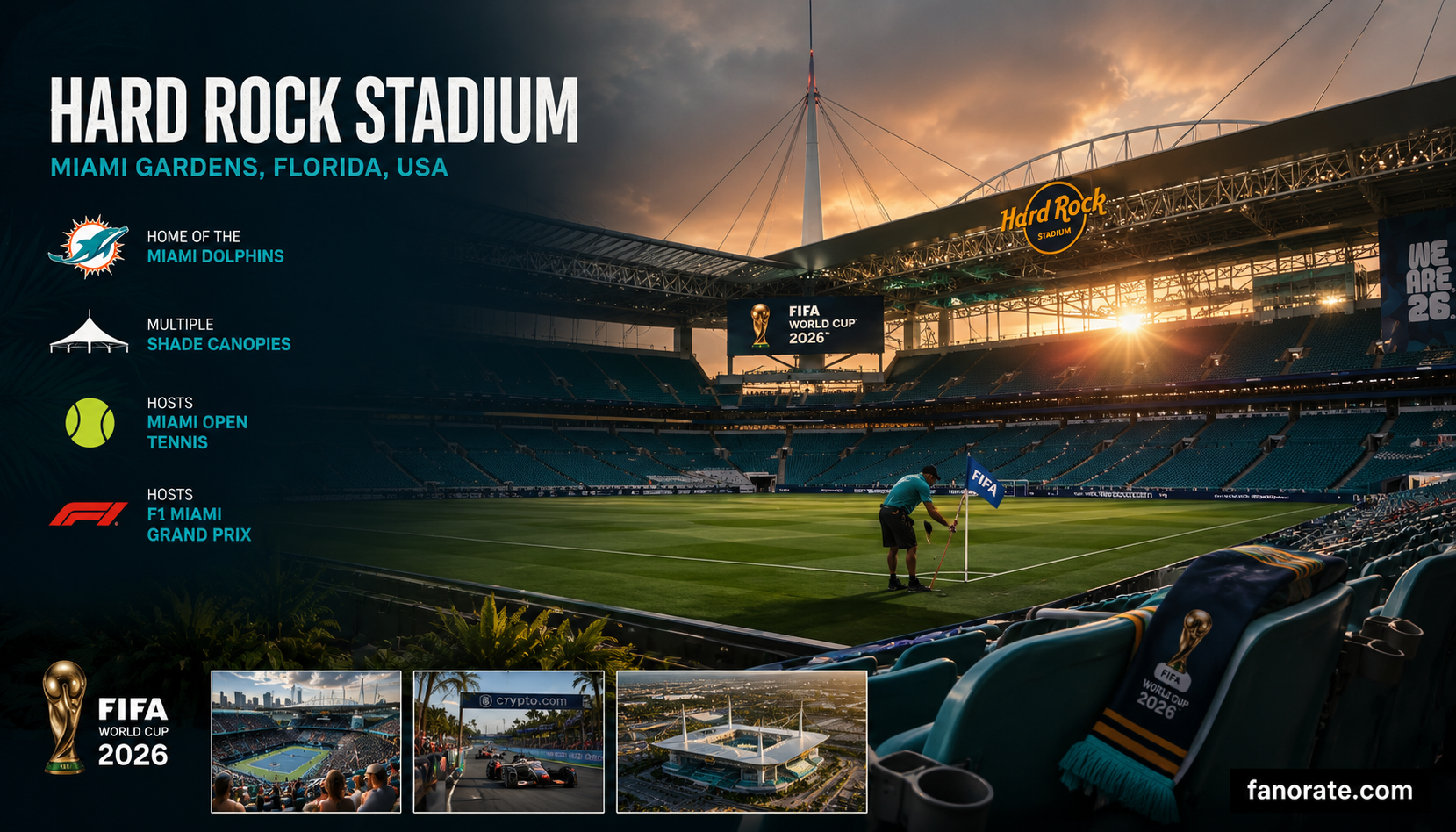
- Primary tenants: NFL’s Miami Dolphins; University of Miami Hurricanes football; Formula 1 Miami Grand Prix (using a custom circuit around the stadium)
- FIFA 2026 matches hosted: Seven matches, including group-stage games, knockout fixtures, and the third-place playoff
- Location: Miami Gardens, roughly 25 km (16 miles) north of downtown Miami
- Surface for FIFA 2026: Natural grass installed for the tournament
- Roof: Partial. A massive canopy covers all seating areas but the field itself remains open to the sky.
- Climate considerations: Tropical. Hot, humid, with daily afternoon thunderstorms common in summer.
- Transit: No direct rail to the stadium. Tri-Rail and Metrorail connect to the broader metro; matchday shuttles and rideshare are the practical paths.
The Story of the Stadium
When Joe Robbie Stadium opened in 1987, it was envisioned as the modern alternative to the Orange Bowl. It would host the Dolphins, eventually the Marlins, the University of Miami Hurricanes for big-stage college football, and a long list of major events. Over the decades that followed, the building was renamed several times — Pro Player Stadium, Dolphin Stadium, Sun Life Stadium, and finally Hard Rock Stadium in 2016, in a partnership with the entertainment brand.
That 2016 rebrand coincided with the most significant renovation in the stadium’s history. The bowl was reshaped to bring seating closer to the field. A massive canopy roof was added, shading every seat from direct sun and rain. The video boards were upgraded. Premium clubs and field-level hospitality were reimagined. The cumulative effect was a stadium that, while not new, became operationally and aesthetically modern.
Since then, Hard Rock Stadium has hosted Super Bowl LIV (2020), College Football Playoff National Championships, multiple Copa America matches (including the controversial 2024 Copa America Final security challenges that became international news), the Miami Open tennis tournament, the Formula 1 Miami Grand Prix (on a circuit that loops around the stadium complex), and an annual rotation of major concerts.
For FIFA 2026, the building hosts seven matches, including the third-place playoff. That assignment is significant — the third-place match is one of the most-watched non-Final matches in any World Cup, and Miami’s role as host means the city will be the focus of global broadcast attention in the final stretch of the tournament.
What Makes Hard Rock Stadium Unique
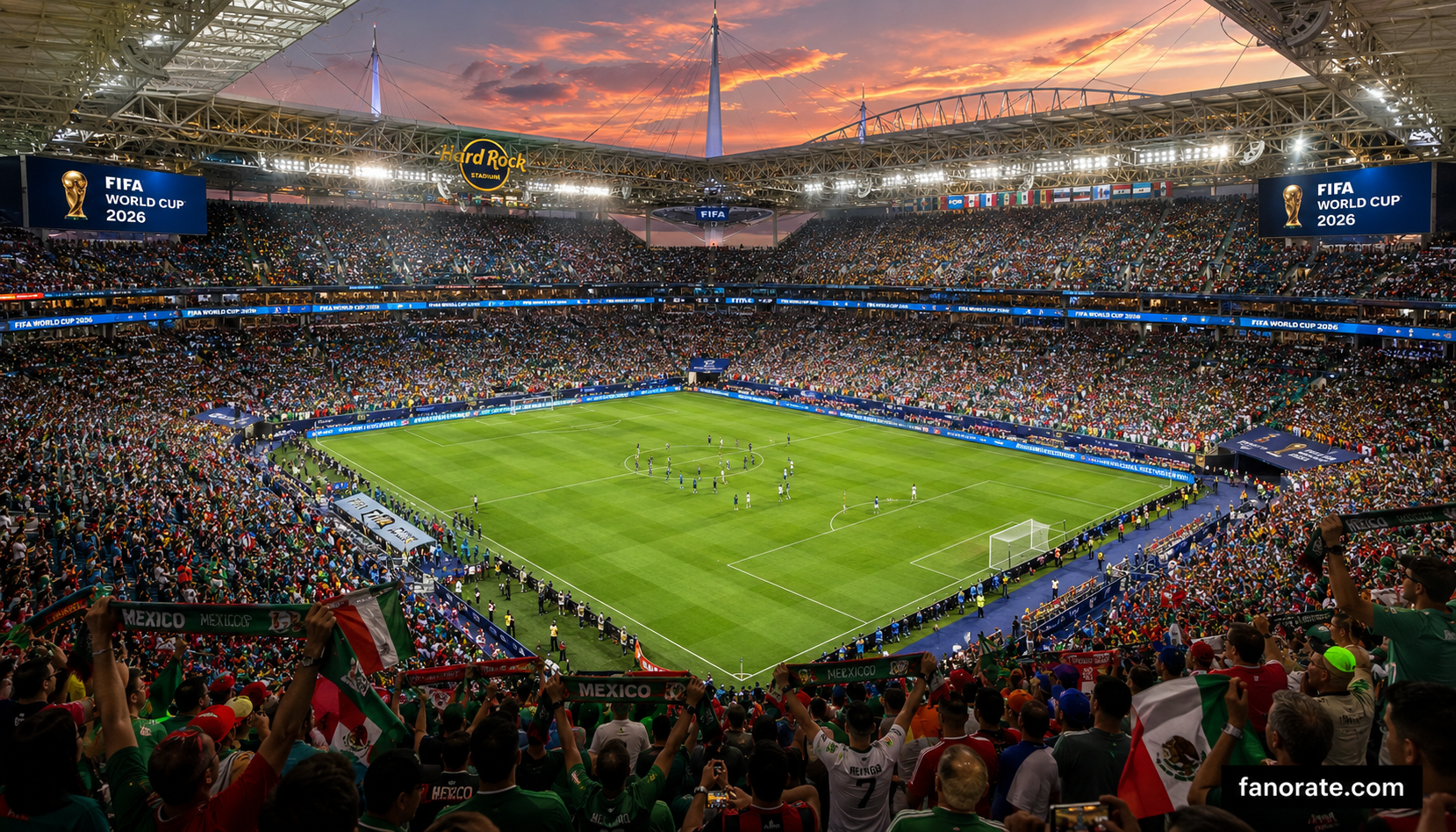
The canopy roof is the most defining post-renovation feature. From inside, looking up, you see a curved sweep of shading structure that covers every seat in the building. Direct sun never lands on a fan. Rain doesn’t either. But the field itself remains open to the Florida sky, which preserves the outdoor stadium feel for players while protecting the crowd from the most punishing aspects of South Florida summer weather.
Other distinctive features:
- The seating bowl is one of the more compact among American host venues. Sight lines are intimate by NFL standards.
- The premium club levels include indoor lounges, outdoor terraces with views of the surrounding parkland, and direct access to lower-bowl seating.
- Two enormous video boards behind the end zones, plus integrated ribbon displays throughout the bowl.
- The Formula 1 Miami Grand Prix circuit weaves around the stadium complex. Most weeks it’s invisible. On race weekends — and during certain World Cup days — the surrounding precinct transforms.
- The Hard Rock branding integration includes themed entrances and live entertainment activations that change with the event.
The combination delivers a hybrid identity: a tropical outdoor stadium with the comfort of a covered one.
Why FIFA Picked Miami
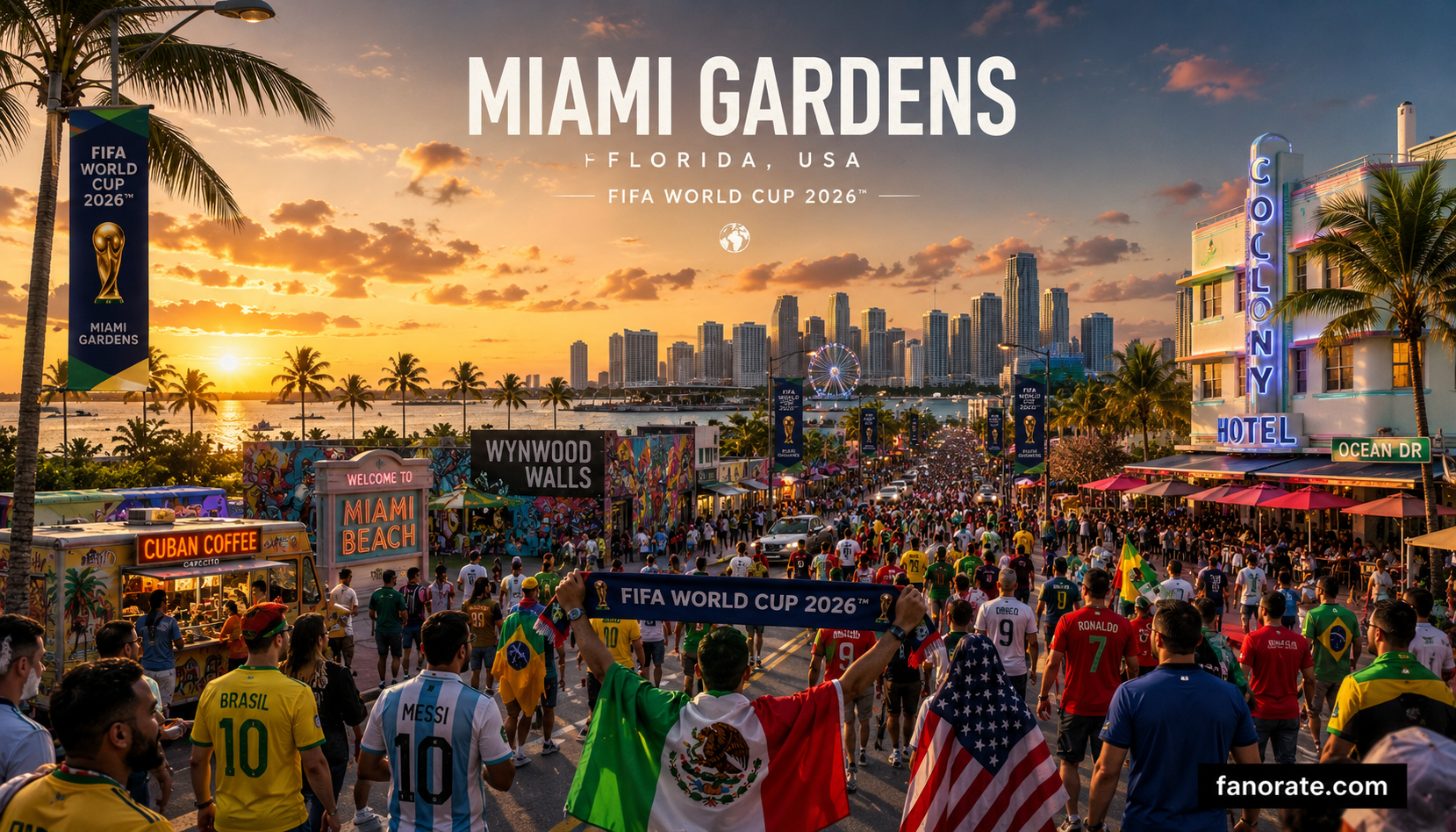
The reasoning is straightforward.
First, Miami is one of the most internationally connected American cities. Miami International Airport is a major Latin American hub. The Caribbean diaspora is enormous. Brazilian, Argentine, Colombian, Venezuelan, Cuban, Haitian, Honduran, Salvadoran and Mexican-American populations are all substantial. Almost every team in the World Cup will have a built-in supporter base in Miami before a single match is played.
Second, the venue. Hard Rock Stadium has hosted dozens of major events at the post-renovation standard. The hospitality infrastructure, security operation and broadcast capability are mature.
Third, the city’s brand. Miami is one of the most globally recognized American urban brands. Putting World Cup matches here, including the third-place playoff, broadcasts South Florida to a planetary audience at the precise moment the tournament’s emotional peak is taking shape.
Seven matches at Hard Rock Stadium, ending with the third-place match. Expect Miami to feel like the closing party of the entire North American leg of the tournament.
Iconic Matches and Historic Moments
Super Bowl LIV in 2020 — Kansas City Chiefs’ first championship in fifty years — gave the building its most-watched NFL moment. Multiple College Football Playoff Championships, the Orange Bowl (originally played here in its modern era), and multiple Miami Hurricanes title nights have left their marks.
In football specifically:
- Copa America 2024 quarterfinal and Final matches.
- Multiple Mexico, Argentina, Brazil and Colombia friendlies.
- USMNT and Concacaf tournament fixtures.
- High-profile European club preseason matches.
The 2026 World Cup matches, especially the third-place playoff, will add to a deepening football legacy at the venue.
Football Culture in Miami
If Los Angeles is North America’s most diverse football city, Miami is the most globally connected.
Miami is functionally a Latin American capital with an English-language overlay. Spanish is the primary language on the streets in many neighborhoods. Liga MX, Brazilian Serie A, Argentine Primera and Colombian Categoria Primera all have substantial weekly audiences. International transfer windows are local news. Lionel Messi’s arrival at Inter Miami in 2023 turned the city into the most-watched MLS franchise overnight.
The football identity is built on layers:
- Cuban diaspora: Cafeterias and bars across Little Havana, Hialeah and Westchester broadcast every major international fixture.
- Brazilian diaspora: Strong in Pompano Beach, Aventura and parts of South Beach.
- Argentine diaspora: Concentrated in Miami Beach and Doral.
- Caribbean diaspora: Haitian community in North Miami and Little Haiti; Jamaican community across Broward County; Trinidadian and Bahamian populations dispersed metro-wide.
- Colombian and Venezuelan populations: Massive and growing.
- MLS audience: Inter Miami’s home crowd has reshaped the city’s relationship with American club football.
By the time the World Cup arrives, expect Miami matches to feel like global derby fixtures. Every team has fans here.
Matchday at Hard Rock Stadium: What to Expect
A typical rhythm:
- Morning in Miami Beach, Wynwood or Brickell. Cuban coffee, beach walk, Wynwood Walls.
- Travel to Miami Gardens. Rideshare is the most common path. Allow 30–45 minutes from downtown Miami; longer on matchday.
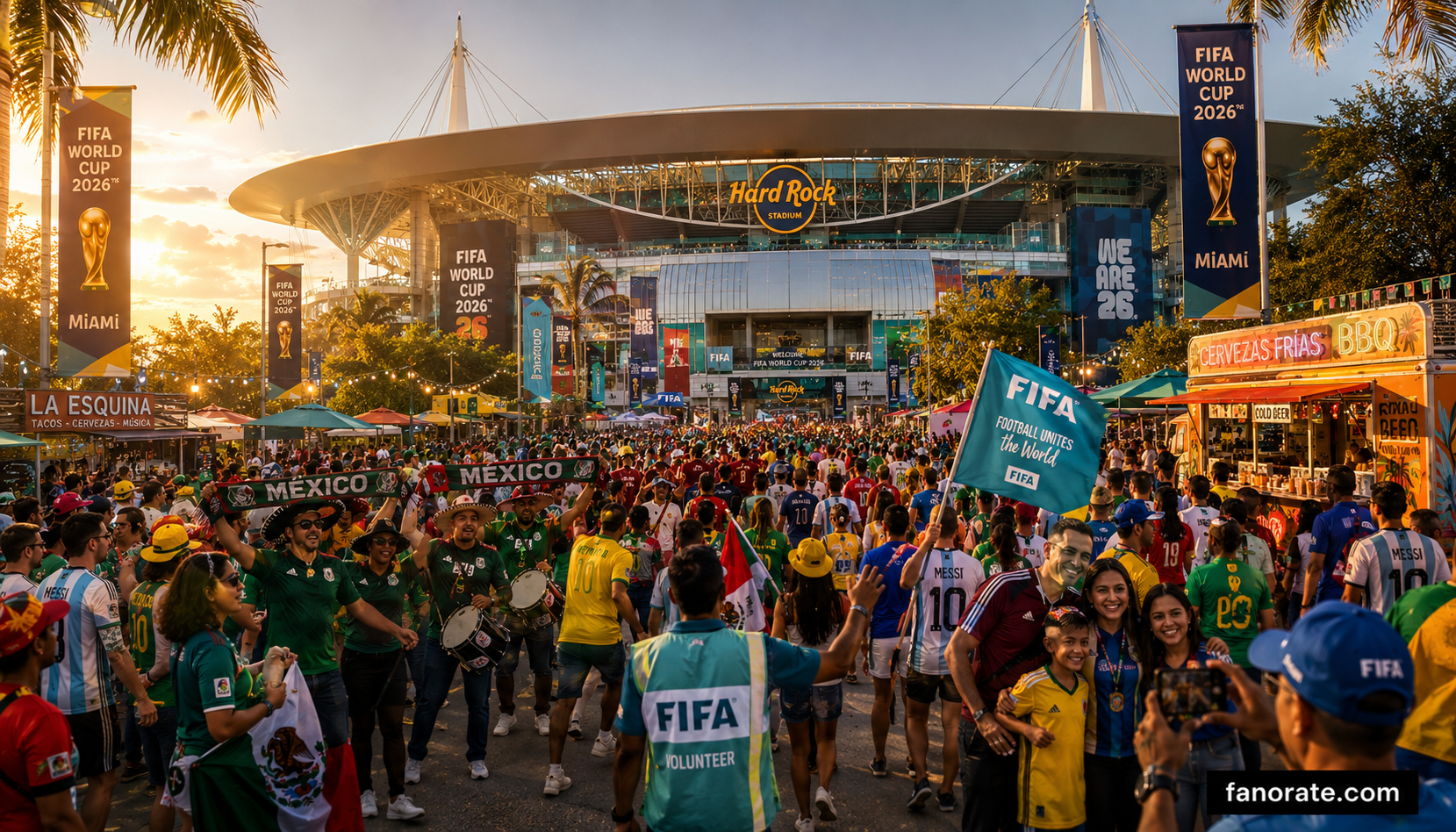
- Pre-match in the stadium complex. Plazas around Hard Rock Stadium host tailgate culture, food trucks and supporter group meetups.
- Entry. Clear-bag policy is strict. Security has been substantially reinforced after past tournament incidents in the building.
- Inside the bowl. Look up at the canopy. Feel the breeze. The bowl is designed to feel open and breathable despite the partial cover.
- Concessions. Strong Latin American food options alongside American stadium staples.
- Post-match. Pre-arrange your departure. Rideshare surge pricing is significant. The drive back to Miami Beach or downtown can take longer than you expect.
Best Seating Guide
- For atmosphere: Lower bowl behind the goals. Latino supporter sections traditionally cluster here.
- For tactical viewing: Mid-tier sideline seats.
- For photography: Upper-deck corners with the canopy curve in the frame.
- For families: Mid-bowl seats away from the most vocal supporter sections.
- Budget options: Upper-deck end-zone seats.
- Premium experience: Field-level clubs and the multiple indoor lounges available at the building.
A Miami-specific tip: the canopy means every seat is shaded. There are no “bad weather” seats in this stadium. Use that to your advantage when choosing budget options.
Transportation and Access Guide
- From Miami International Airport (MIA): Roughly 25–35 minutes by car. Rideshare is the most common option.
- From Fort Lauderdale-Hollywood International (FLL): Roughly 25–30 minutes by car.
- From Downtown Miami: Roughly 30–45 minutes by car. No direct rail to the stadium; rideshare is standard.
- From Miami Beach: Roughly 40–60 minutes by car on a matchday.
- From Fort Lauderdale: Roughly 30–40 minutes by car.
- Driving and parking: Pre-paid lots in the stadium complex are essential.
- Rideshare: Designated zones at the stadium. Surge pricing is significant post-match.
- Public transit: Tri-Rail and Metrorail serve the metro but not the stadium directly. Matchday shuttle programs typically run from designated transit hubs.
- Accessibility: ADA-compliant routes and seating. Coordinate accessibility services with FIFA in advance.
Where Fans Should Stay
- Miami Beach: The iconic option. Beaches, nightlife, Art Deco district. Long matchday commute.
- Brickell: Downtown Miami’s high-rise financial and dining district. Walkable, with strong nightlife. Easier rideshare access to the stadium.
- Wynwood: Arts and bar district. Walkable, vibrant, fan-friendly. Decent matchday commute.
- Downtown Miami: Hotel inventory hub with Metrorail access to broader transit.
- Coral Gables: Quieter, upscale, with strong restaurant scene.
- Doral: Heavily Latino, walkable in pockets, closer to the stadium than most of Miami.
- Fort Lauderdale: A reasonable alternate base, with cheaper hotels and good airport access.
Food, Drink and Nightlife
Miami is one of the most distinctive food cities in the United States.
- Cuban food: Croquetas, ropa vieja, vaca frita, pastelitos, café con leche. Multi-generational restaurants in Little Havana and Hialeah.
- Colombian food: Bandeja paisa, arepas, sancocho. Strong scene in Doral.
- Venezuelan food: Arepas, cachapas, tequeños. Massive growth in the Doral corridor.
- Argentine and Uruguayan steakhouses: Distributed across Miami Beach and Aventura.
- Brazilian churrascarias: Across the metro.
- Haitian cuisine: Little Haiti and North Miami.
- Caribbean and Bahamian food: Throughout the metro.
- Stone crab and seafood: A Miami specialty.
- Cuban coffee: Order a colada to share with the table.
- Nightlife: Miami Beach is the headline. Wynwood, Brickell and downtown all offer alternatives.
Bars and viewing parties: international football pubs throughout Miami, especially in Brickell, Wynwood, Doral and Aventura.
Things To Do Near the Stadium
- South Beach and Ocean Drive
- Art Deco Historic District
- Wynwood Walls and the Wynwood arts district
- Pérez Art Museum Miami
- Vizcaya Museum & Gardens
- The Everglades National Park as a day trip
- Bayside Marketplace in downtown
- The Design District
- Little Havana — Calle Ocho, Domino Park, Cuban coffee crawls
- Beaches at Bal Harbour, Surfside and beyond
- Day trips to the Florida Keys
Weather and Match Conditions
Tropical climate with a summer rainy season.
- Temperature: Daily highs commonly 85–92°F (29–33°C). Heat index frequently above 100°F (38°C).
- Humidity: Extremely high. The air is consistently heavy.
- Rain: Daily afternoon thunderstorms are normal in June and July. Storms can be intense but usually pass quickly.
- Inside the stadium: The canopy shields fans from sun and rain. The bowl breathes naturally in the breeze.
Practical kit:
- Reusable water bottle
- Electrolyte plan
- Light, breathable clothing
- High-SPF sunscreen
- Compact rain poncho
- Light jacket optional
Interesting and Fun Facts
- Hard Rock Stadium was the first NFL stadium to host both a Super Bowl and a College Football National Championship Game in the same season.
- The Formula 1 Miami Grand Prix circuit loops around the stadium complex, making Hard Rock Stadium the only major American football venue to also host an annual F1 race.
- The 2016 renovation reshaped the seating bowl to bring fans closer to the field — a rare structural reconfiguration for an existing stadium.
- The canopy was engineered to shade every seat regardless of sun angle, which is unusual in American venues.
- The stadium has hosted multiple Miami Open tennis tournaments using temporary courts within the complex.
One Thing Most Fans Don’t Know
Miami’s football audience is older than most outsiders realize. The original North American Soccer League (NASL) had a Miami franchise — the Toros and later the Strikers — in the 1970s and early 1980s, hosting players like Gordon Banks and George Best. Decades before MLS, Inter Miami or Lionel Messi, this city was already hosting world-class footballers in front of large crowds. The 2026 World Cup isn’t introducing Miami to global football. It’s coming home.
Photo and Social Media Spots
- Stadium exterior with the canopy roof catching late afternoon light.
- Inside the bowl during pre-match warmup with the open sky above the field and the canopy framing the seats.
- Wynwood Walls with a national team jersey.
- South Beach sunrise.
- Calle Ocho during Cuban coffee crawl.
- Miami skyline from the MacArthur Causeway.
Fan Experience and Atmosphere
A Miami matchday is bilingual, loud, generous and well-dressed. Latino supporter culture sets the tone. The bowl is shaded and breathable, which keeps fans comfortable for the duration of long pre-match arrivals.
Expect chants in Spanish, Portuguese, Haitian Creole and English on the same row. Expect families. Expect dance breaks during stoppage time. Expect the entire stadium to erupt in coordinated unity for some moments and split cleanly into rival supporter blocks for others. The third-place match in particular will draw fans from teams that just lost in the semifinals — meaning two emotionally vulnerable supporter groups in a single bowl, often producing one of the most cathartic crowd atmospheres of any tournament.
Sustainability and Technology
Hard Rock Stadium has implemented incremental sustainability upgrades including water-efficient field maintenance, LED conversions and recycling programs across concessions. The canopy itself reduces heat exposure for fans and players, which improves operational sustainability during summer events.
Technology: high-density Wi-Fi, mobile-app integration, modernized video boards and broadcast infrastructure.
Future Legacy
The 2026 World Cup matches will further consolidate Miami’s status as one of the most internationally connected football cities in North America. Inter Miami’s audience will continue to grow. The youth football scene across South Florida will accelerate further. Tourism from football fans will outlast the tournament by years.
Final Thoughts
A FIFA 2026 third-place match in Miami is going to feel like a tournament reunion. Both semifinal losers will travel here. Both fan bases will spend a couple of days nursing emotional wounds in Wynwood bars and Little Havana cafés. By kickoff, the bowl will be full, the canopy will be glowing, the field will be open to the Florida sky, and the entire stadium will be ready to give one of the most emotionally complicated matches in the tournament a proper sendoff.
If you’re going, pack light, stay hydrated, embrace the rain, and don’t try to plan every dinner in advance. Miami’s food and music scenes are best discovered by accident.
FAQ
How many people does Hard Rock Stadium hold? Approximately 65,000 in football configuration.
Which FIFA 2026 matches will be played at Hard Rock Stadium? Seven matches total, including group-stage games, knockout fixtures and the third-place playoff.
Is Hard Rock Stadium covered or open-air? Partially covered. The canopy shades every seat, but the field remains open to the sky.
How do I get to the stadium from Miami Beach? Rideshare is the most practical option. Allow 40–60 minutes on a matchday.
What’s the closest airport? Miami International (MIA) is closest, with Fort Lauderdale-Hollywood International (FLL) as an alternate.
Will the field be grass or turf? Natural grass installed for the tournament.
What weather should fans expect? Hot, humid, with daily afternoon thunderstorms common in summer.
Where should I stay for matches? Miami Beach, Brickell, Wynwood or Doral are all viable. Doral is closest to the stadium.
What’s the best fan section for atmosphere? Lower bowl behind the goals, where Latino supporter sections traditionally gather.
Is the third-place match worth attending? Yes. It is one of the most-watched non-Final matches at any World Cup, and Miami’s bilingual, international crowd is built for the occasion.