Lumen Field for FIFA World Cup 2026: Seattle's Roar Meets the World Cup
Lumen Field hosts FIFA 2026 in Seattle. Inside guide to seats, light rail transit, Sounders culture, food and matchday tips for traveling World Cup fans.

Ricerca e revisione di Abdullah Mashuk. Redatto con ricerca assistita dall'IA secondo la nostra Metodologia.
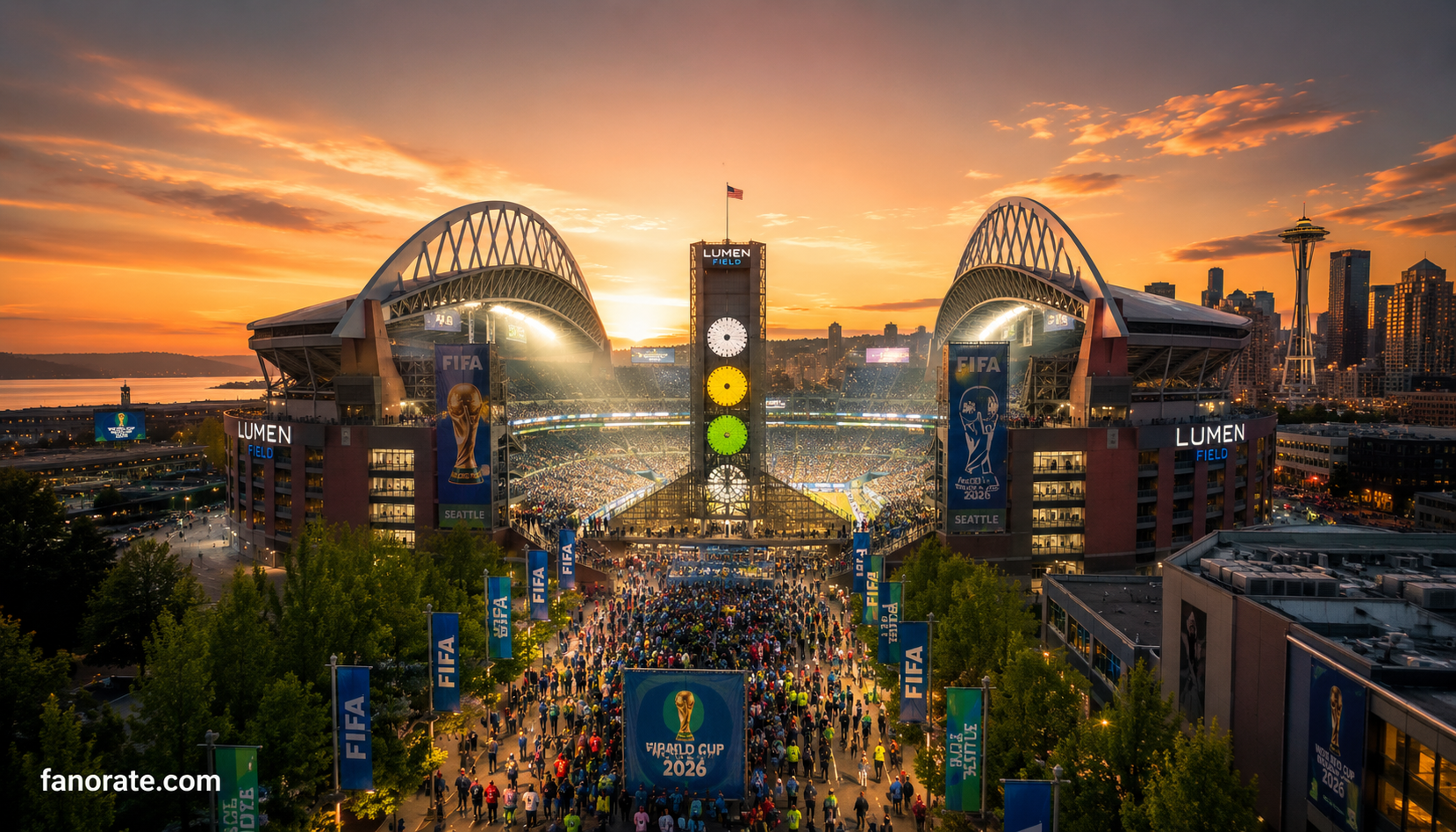
Illustrazione generata dall'IA. Non è una fotografia reale.
Lumen Field for FIFA World Cup 2026: Seattle’s Roar Meets the World Cup
There’s a particular sound that comes out of Lumen Field on a Sounders matchday.
It rolls in waves down from the north end, where the Emerald City Supporters have been chanting for hours, builds across the lower bowl, hits the roof’s underside and bounces back into a single sustained pressure that fans physically feel as much as they hear. Visiting teams have famously prepared with crowd-noise audio in training. Players have struggled to communicate. The Seahawks fan tradition calls it the 12s. The Sounders supporters have built their own version of it. The building has been registering some of the loudest crowd-noise readings in modern American sports for nearly two decades.
In the summer of 2026, that noise is going to belong to a 48-team FIFA World Cup. Seattle’s Lumen Field will host six matches. The Pacific Northwest’s deep, well-organized, decidedly weird football culture is about to host the world.
Here’s the full guide.
Quick Venue Snapshot
- Stadium: Lumen Field
- City / Region: Seattle, Washington
- Country: United States
- Capacity: Approximately 69,000 for football configuration; expandable for major events
- Opened: 2002
- Primary tenants: NFL’s Seattle Seahawks; MLS’s Seattle Sounders FC
- FIFA 2026 matches hosted: Six matches, including group-stage games and a knockout-round fixture
- Location: SoDo neighborhood, just south of downtown Seattle
- Surface for FIFA 2026: Natural grass installed for the tournament (replacing the synthetic surface used for normal operations)
- Roof: Partial. A massive canopy covers most seating areas but not the field itself.
- Climate considerations: Mild Pacific Northwest summer. Light rain possible. Comfortable temperatures.
- Transit: Link Light Rail’s Stadium station is adjacent to the stadium. Multiple bus routes serve the area.
The Story of the Stadium
Lumen Field opened in 2002, originally as Seahawks Stadium, replacing the demolished Kingdome that had hosted the Seahawks since 1976. The new building was designed by Ellerbe Becket with an explicit goal: keep fans dry under the partial roof, keep the field open to Seattle’s mild summer climate, and reflect sound back into the bowl to amplify crowd noise. All three goals were achieved.
The naming rights have changed multiple times — Seahawks Stadium, Qwest Field, CenturyLink Field, and finally Lumen Field in 2020 — but the building’s identity has remained consistent. It is one of the loudest open-air stadiums in the world. It is the home of the Seahawks’ famous 12th Man tradition. And, since 2009, it is the home of the Seattle Sounders FC, an MLS expansion franchise that immediately set North American attendance records.
Since opening, Lumen Field has hosted multiple Seahawks Super Bowl runs, including their 2014 championship season. It has hosted the MLS Cup Final multiple times (the Sounders won at home in 2016). It has hosted concerts, NCAA championships, motocross, X Games, USMNT and USWNT fixtures, Concacaf tournaments and a steady flow of major international friendlies.
For FIFA 2026, six matches at Lumen Field will add the World Cup to a stadium résumé that already includes some of the most-watched single-event nights in American sports.
What Makes Lumen Field Unique
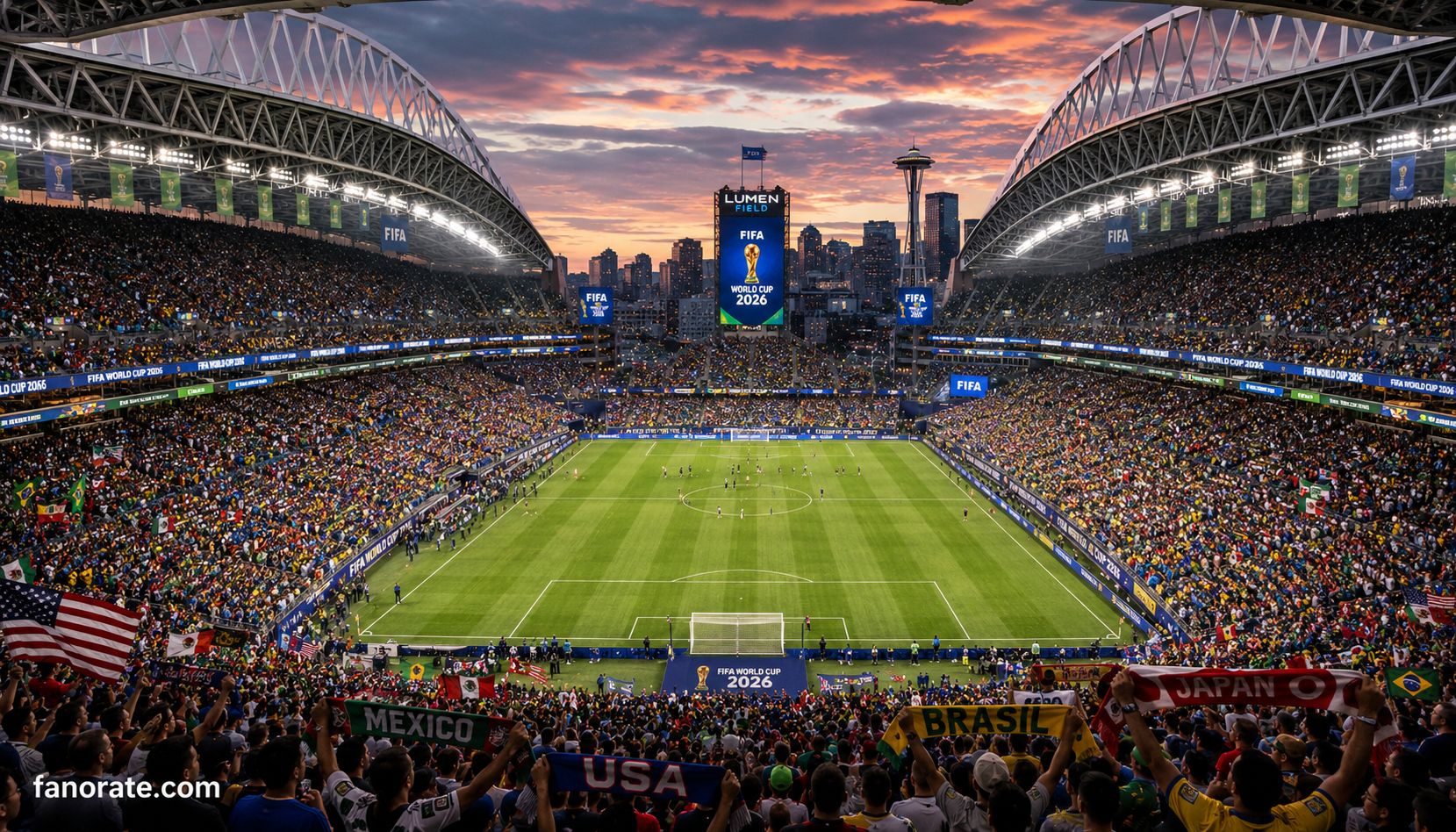
The sound. As at Arrowhead Stadium and a small number of other venues, Lumen Field’s bowl design produces extraordinary crowd-noise behavior. The partial roof reflects sound back toward the field. The steep seating geometry concentrates noise in the lower bowl. The result is one of the most documented loud-stadium experiences in modern professional sports.
Other distinctive features:
- The “Hawks Nest” and similar standing-room sections behind the south end zone create an unusually theatrical fan environment.
- The roof structure includes covered seating that protects fans from Seattle’s iconic light rain, which keeps the bowl operational regardless of weather.
- The downtown Seattle skyline is visible above the open end of the stadium.
- The integrated public-transit access via Link Light Rail is among the best of any American stadium.
- Multiple supporter group standing sections, particularly the Emerald City Supporters area, have been credited with influencing supporter culture across MLS.
Why FIFA Picked Seattle
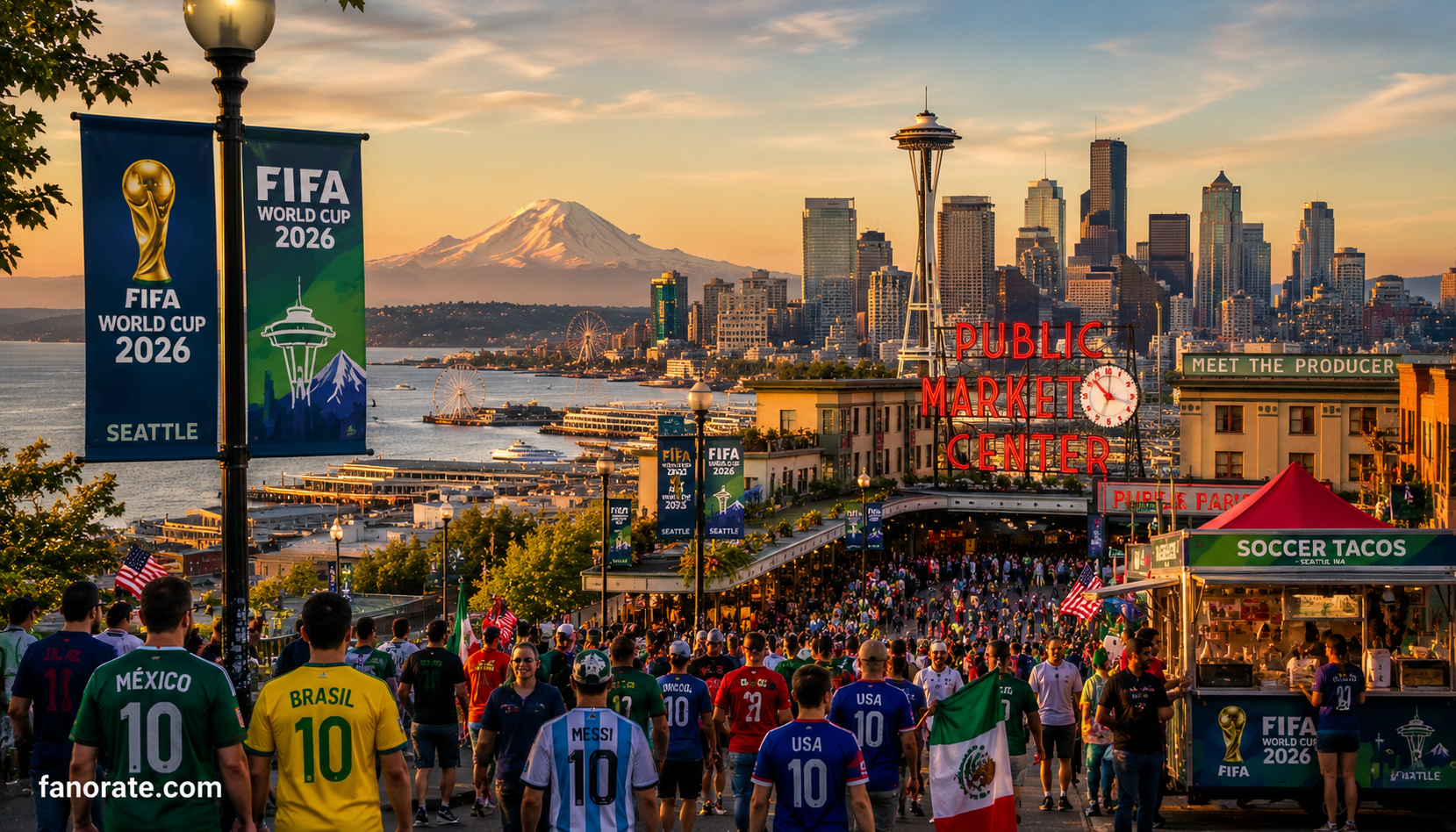
Three reasons.
First, the football market. The Seattle Sounders have set North American club soccer attendance records on multiple occasions. Average regular-season attendances have been among the highest in MLS history. The supporter culture is deep, organized and visible.
Second, the city’s international identity. Seattle is a major Pacific Rim hub, with substantial East Asian, South Asian, Latin American and African diaspora populations. The Microsoft/Amazon tech corridor has imported global football fan culture from every continent.
Third, the geography. Seattle is the natural Pacific Northwest gathering point for fans traveling from Vancouver, Portland and the broader region. Sea-Tac International Airport is a major Asia-Pacific hub.
The six-match assignment will give Seattle a substantial role in the tournament. Expect Lumen Field matches to be among the loudest atmospheric experiences of FIFA 2026.
Iconic Matches and Historic Moments
In American football, Lumen Field has hosted multiple Seahawks playoff classics and the team’s 2014 Super Bowl championship season. Beast Mode runs, the Legion of Boom defense and Russell Wilson’s playoff runs all came through this bowl.
In football specifically:
- Multiple MLS Cup Finals, including the Sounders’ 2016 and 2019 championships at home.
- USMNT and USWNT international fixtures.
- Concacaf Champions Cup matches with Mexican and Costa Rican clubs.
- Copa America 2024 matches.
- High-profile European club preseason tours.
The 2026 World Cup matches will join an already impressive football résumé at the venue.
Football Culture in Seattle
This is one of the most committed football cities in the United States.
The Seattle Sounders FC, founded in 2009 as the league expanded, has been an MLS attendance powerhouse from the start. The supporter march from Occidental Park to the stadium before every home match has become one of the most famous matchday traditions in American club soccer. The Emerald City Supporters, the largest of the Sounders’ supporter groups, has built a long-running organized vocal culture that influences crowd behavior across the bowl.
Beyond the Sounders, Seattle’s football identity is layered. The substantial Mexican-American community across South Seattle, Kent and the broader region has produced multiple supporter clubs. The East African community — particularly Ethiopian, Eritrean and Somali populations — has built football fan cultures around their respective national teams. The South Asian community has supported Premier League and Champions League viewership. The growing Brazilian, Korean and Vietnamese populations have all built their own fan cultures.
The OL Reign in NWSL has built one of the most committed women’s football fanbases in North America. Youth football across the Pacific Northwest has produced multiple national-team players.
For 2026, expect Seattle to host one of the most authentically football-supportive U.S. host city audiences.
Matchday at Lumen Field: What to Expect
A typical rhythm:
- Morning in downtown Seattle. Coffee at Pike Place Market. Walk along the Elliott Bay waterfront.
- Pre-match in Pioneer Square or SoDo. Bars, restaurants, the iconic supporter march route.
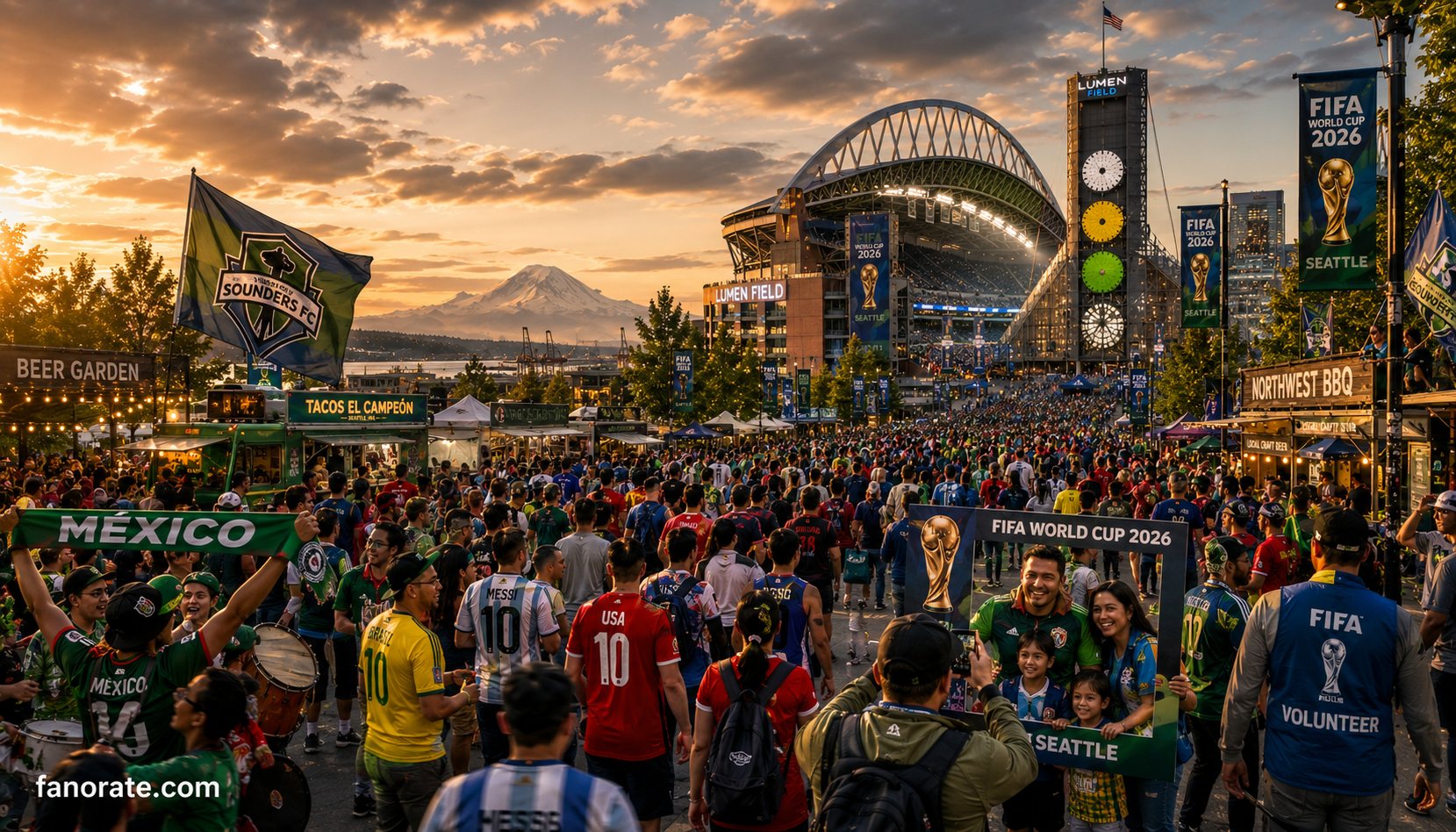
- The march. If you can time it, walk with the Emerald City Supporters from Occidental Park to the stadium. It’s one of the great matchday rituals in American club soccer.
- Link Light Rail. The Stadium station is steps from the venue.
- Entry. Clear-bag policy. Security is efficient.
- Inside the bowl. Listen. The sound is the show.
- Concessions. Seattle’s coffee and seafood culture is reflected in upgraded stadium options.
- Post-match. Link Light Rail back to downtown, or walk into Pioneer Square for post-match drinks.
Best Seating Guide
- For atmosphere: Lower bowl behind the goals. The Emerald City Supporters traditionally cluster in the north end.
- For tactical viewing: Mid-tier sideline seats.
- For photography: Upper-deck corners with the Seattle skyline visible above the open end of the bowl.
- For families: Mid-bowl seats away from the most vocal sections.
- Budget options: Upper-deck end-zone seats.
- Premium experience: Field-level clubs and indoor lounges.
A Seattle-specific tip: seats under the roof canopy stay dry. Open-end seats are exposed. Plan accordingly if rain is in the forecast.
Transportation and Access Guide
- From Seattle-Tacoma International Airport (SEA): Link Light Rail direct to the Stadium station, about 35 minutes.
- From Downtown Seattle: Link Light Rail or a short rideshare, about 10–15 minutes.
- Driving and parking: Multiple lots in the SoDo neighborhood. Pre-paid parking is recommended.
- Rideshare: Designated zones at the stadium. Surge pricing post-match.
- Walking: From downtown Seattle, walking is practical. Pioneer Square is steps away.
- Public transit: Link Light Rail is the path of least resistance. Multiple bus routes serve SoDo.
- Accessibility: ADA-compliant routes and seating. Coordinate accessibility services with FIFA in advance.
The honest advice for Seattle: take Link Light Rail. It is the cleanest, fastest path on matchday, and connects directly to the airport.
Where Fans Should Stay
- Downtown Seattle: Hotel inventory hub. Walkable to Pike Place Market, the waterfront and Pioneer Square. Easy stadium access.
- Pioneer Square: Historic district adjacent to the stadium. Walkable to the match.
- Belltown: Trendy, walkable, with strong dining and nightlife.
- Capitol Hill: Seattle’s cultural heart. Bars, restaurants, music venues. Link Light Rail connects to the stadium.
- South Lake Union: Tech corridor with hotels and dining.
- Bellevue: Across Lake Washington with hotel options and quick driving access.
If you’re staying for multiple matches, downtown Seattle strikes the best balance between access and city life.
Food, Drink and Nightlife
Seattle has one of the most distinctive food cultures in America.
- Seafood: Pacific Northwest salmon, oysters, Dungeness crab, geoduck. Pike Place Market is the iconic destination.
- Coffee: Seattle invented modern American coffee culture. Visit a respected independent roaster, not just Starbucks.
- Asian food: The International District includes Vietnamese, Chinese, Japanese, Korean and Filipino restaurants of high quality.
- East African food: Strong Ethiopian, Eritrean and Somali scene across the city.
- Mexican food: Strong Mexican-American food culture, particularly in South Seattle.
- Pacific Northwest cuisine: Foraged ingredients, regional fish, local craft beverages.
- Craft beer: Seattle is one of the most beer-rich cities in the United States.
- Tea: A small but growing matcha and Asian tea scene.
Bars and viewing parties: Pioneer Square, Capitol Hill, Ballard and Fremont all have soccer-specific bars running early-morning international matches every weekend.
Things To Do Near the Stadium
- Pike Place Market and the original Starbucks
- The Space Needle and Seattle Center
- Chihuly Garden and Glass
- The Museum of Pop Culture (MoPOP)
- The Seattle Aquarium
- The Olympic Sculpture Park
- Pioneer Square’s historic district
- Capitol Hill’s nightlife and arts scene
- Ballard’s neighborhood food and beer
- Discovery Park
- Day trips to Mount Rainier, the San Juan Islands or Olympic National Park
- The Bainbridge Island ferry as a quick scenic excursion
Weather and Match Conditions
Seattle’s weather is famously moderate.
- Temperature: Daily highs in June and July commonly 70–80°F (21–27°C). Heat waves above 90°F (32°C) happen but are uncommon.
- Humidity: Low to moderate.
- Rain: Light rain is possible even in summer. The roof canopy protects most seating from precipitation.
- Wind: Generally mild.
- Daylight: Long. The Pacific Northwest summer has very late sunsets, which means evening matches can begin in full daylight.
Practical kit:
- Reusable water bottle
- Light, breathable clothing
- Light rain shell or packable jacket
- Comfortable walking shoes
- Hat and sunglasses for sunny periods
Interesting and Fun Facts
- Lumen Field’s partial roof was specifically designed to reflect crowd noise back into the bowl, contributing to its reputation as one of the loudest stadiums in the world.
- The Seattle Sounders’ “March to the Match” supporter procession from Occidental Park has been credited as one of the most influential traditions in modern American soccer fan culture.
- The Seahawks’ “12th Man” identity has produced multiple decibel readings near the top of the league’s loudest crowd recordings.
- The Sounders set North American club soccer single-game attendance records on multiple occasions in the 2010s.
- Lumen Field’s adjacent property, Lumen Field Event Center, is one of the largest convention and event spaces in the Pacific Northwest.
- The stadium’s Link Light Rail integration is one of the most successful examples of public-transit-anchored stadium access in the United States.
One Thing Most Fans Don’t Know
Seattle’s pre-Sounders soccer history is far deeper than most outsiders realize. The original Seattle Sounders franchise in the NASL — playing in the 1970s and early 1980s — drew some of the largest soccer crowds in North American history at the Kingdome. The current MLS franchise revived a name that already carried decades of supporter loyalty. The 2026 World Cup matches at Lumen Field connect to a continuous Seattle football tradition that, in some neighborhoods, goes back four generations.
Photo and Social Media Spots
- Stadium exterior at golden hour with the downtown Seattle skyline behind.
- Inside the bowl during pre-match with the open end revealing the skyline.
- The March to the Match from Occidental Park.
- Pike Place Market with a national team scarf.
- The Space Needle from Kerry Park.
- Mount Rainier from various Seattle vantage points if visible.
Fan Experience and Atmosphere
Seattle’s matchday culture is generous, intelligent and unmistakably itself. The Emerald City Supporters bring chants, drums and tifos that have been studied as a model for organized American supporter culture. The broader Sounders fan base has been credited with influencing MLS norms around march culture, sustained vocal support and supporter group autonomy.
For 2026, expect the bowl to be loud. Expect chants in multiple languages. Expect the city around the stadium — Pioneer Square, downtown, the waterfront — to feel like a fan festival even on non-match days.
Sustainability and Technology
Lumen Field has implemented sustainability upgrades including extensive on-site solar panels, water-efficient field maintenance, recycling and composting programs, and energy-efficient lighting. The integrated public-transit access reduces matchday emissions compared to car-dependent stadiums.
Technology: high-density Wi-Fi, mobile-app ticketing and concessions, modernized broadcast infrastructure, and ongoing investment in fan-experience technology.
Future Legacy
The 2026 World Cup matches will deepen Seattle’s status as one of the most authentic football cities in North America. The Sounders, OL Reign and youth academy systems will benefit. Investment in soccer-specific infrastructure across the Pacific Northwest will increase. Seattle’s broader Pacific Rim connections will make the city an even more important football media market.
Final Thoughts
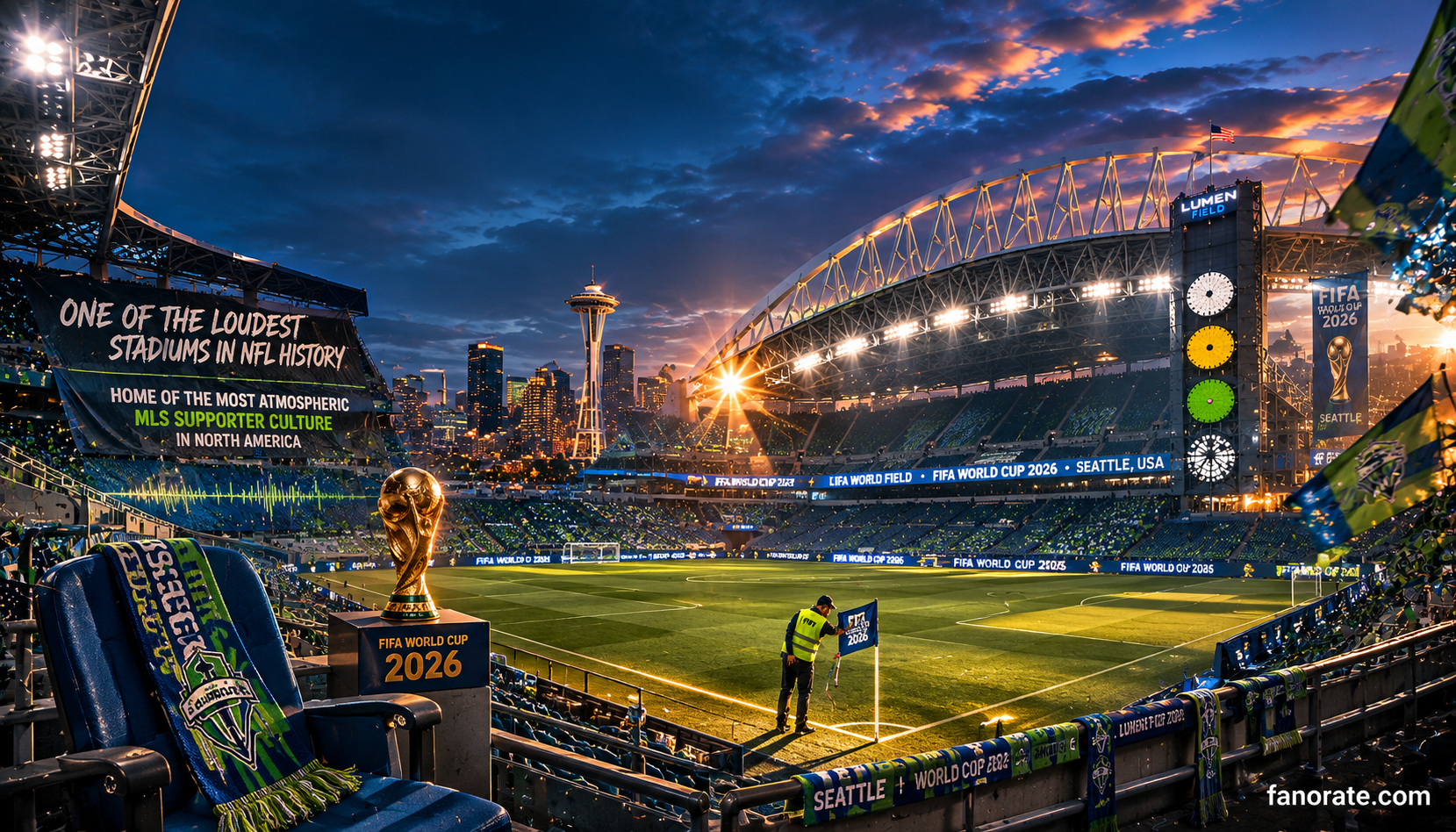
A Seattle World Cup is going to be intelligent, civilized and loud. Take Link Light Rail. Stay downtown. Walk the March to the Match if your timing aligns. Eat at Pike Place. Drink coffee from a roaster you’ve never heard of. Sit in the lower bowl on the north end and let the Emerald City Supporters teach you what an American supporter section sounds like.
Six matches at Lumen Field. Some of the most authentically football-flavored atmospheres of the entire tournament.
FAQ
How many people does Lumen Field hold? Approximately 69,000 for football configuration. Expandable for major events.
Which FIFA 2026 matches will be played at Lumen Field? Six matches, including group-stage games and a knockout-round fixture.
Is the stadium covered or open-air? Partially covered. A canopy covers most seating areas but the field is open to the sky.
How do I get to the stadium from Sea-Tac Airport? Link Light Rail direct to the Stadium station. About 35 minutes.
Will the field be grass or turf? Natural grass installed for the tournament, replacing the synthetic surface used for normal operations.
What weather should fans expect? Mild Pacific Northwest summer. Daily highs in the 70s Fahrenheit. Possible light rain.
What’s the March to the Match? A pre-game supporter procession from Occidental Park in Pioneer Square to the stadium, led by the Emerald City Supporters. One of the most famous traditions in American club soccer.
What’s the best fan section for atmosphere? The north end behind the goal, where the Emerald City Supporters traditionally cluster.
Where should I stay for matches? Downtown Seattle, Pioneer Square or Capitol Hill for the best access and city experience.
Is the stadium accessible? Yes. Step-free routes, accessible seating and parking, full accessibility services.