Estadio Akron for FIFA World Cup 2026: Guadalajara's Modern Football Cathedral
Estadio Akron hosts FIFA 2026 in Guadalajara. Inside guide to the Chivas stadium, seats, transit, Jalisco culture and matchday tips for World Cup fans.

Ricerca e revisione di Abdullah Mashuk. Redatto con ricerca assistita dall'IA secondo la nostra Metodologia.
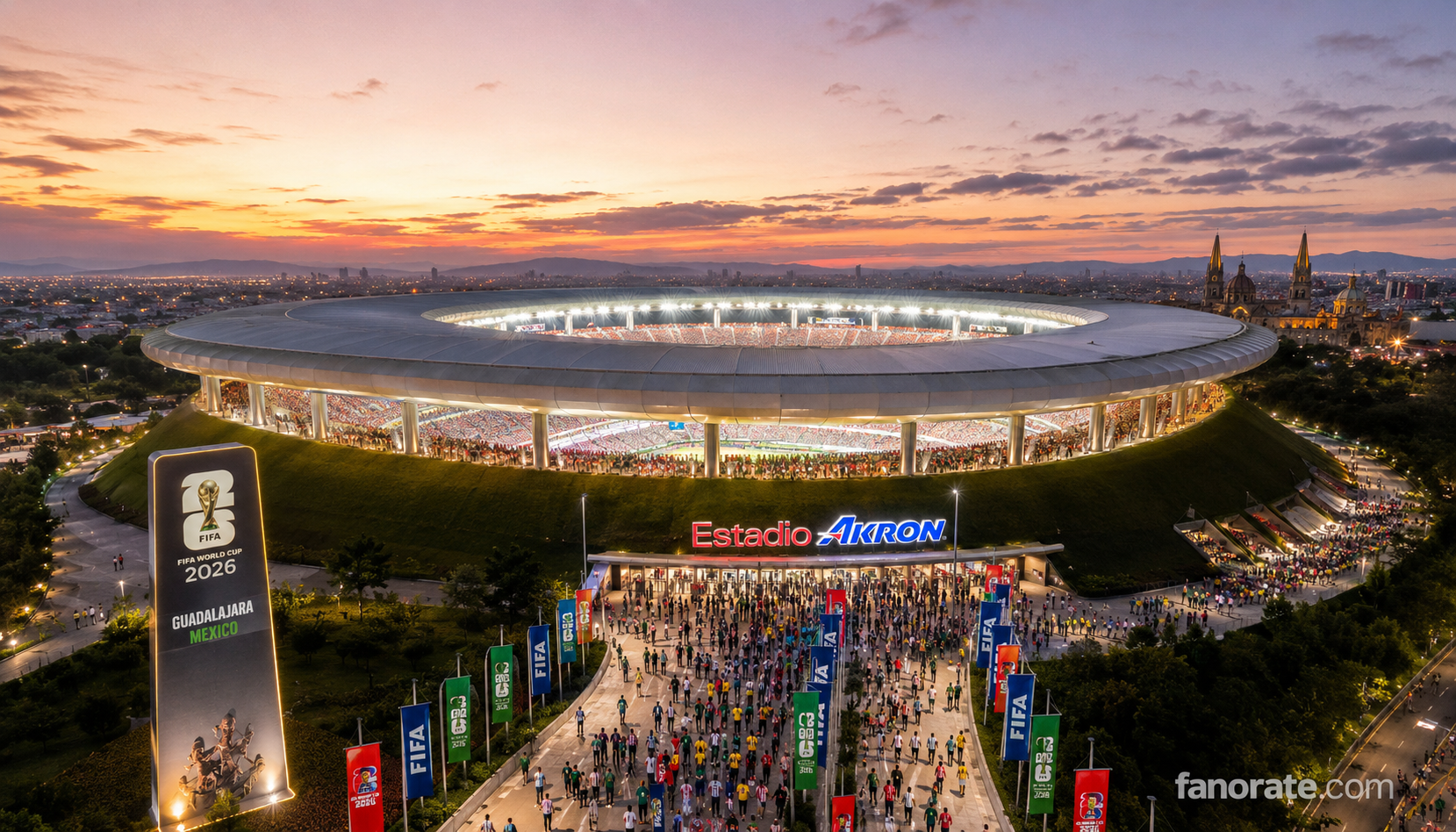
Illustrazione generata dall'IA. Non è una fotografia reale.
Estadio Akron for FIFA World Cup 2026: Guadalajara’s Modern Football Cathedral
Guadalajara is, in many ways, the most Mexican city in Mexico.
This is the birthplace of mariachi music, tequila, charrería (Mexican rodeo) and ranchera culture. It’s the city where the country’s traditional identity has been most carefully preserved and most loudly celebrated. It’s also one of the great football cities in the Western Hemisphere — home to CD Guadalajara, popularly known as Chivas, the most beloved club in Mexico and a national institution that, by club policy, fields only Mexican-born players.
In the summer of 2026, Guadalajara will host four matches of the FIFA World Cup at Estadio Akron — Chivas’ purpose-built modern stadium on the northwestern edge of the metropolitan area. The most authentically Mexican host city in the entire tournament is about to welcome the world.
Here’s the full guide.
Quick Venue Snapshot
- Stadium: Estadio Akron (also widely known as Estadio Chivas or Estadio Guadalajara)
- City / Region: Zapopan, Jalisco (Greater Guadalajara metropolitan area)
- Country: Mexico
- Capacity: Approximately 46,000
- Opened: 2010
- Primary tenant: Liga MX’s CD Guadalajara (Chivas)
- FIFA 2026 matches hosted: Four matches, including group-stage games
- Location: Northwestern edge of the Guadalajara metropolitan area, roughly 10 km (6 miles) from central Guadalajara
- Surface for FIFA 2026: Natural grass
- Roof: Open-air, but the upper bowl has a curved canopy that provides partial shade. The pitch is open to the sky.
- Climate considerations: Warm, often clear summer climate at moderate altitude. Afternoon thunderstorms possible during the rainy season.
- Altitude: Approximately 1,560 meters (5,120 feet) — substantially lower than Mexico City but still moderate altitude.
- Transit: Limited public transit options near the stadium. Most fans arrive by car, rideshare or matchday shuttle.
The Story of the Stadium
For most of the modern era, Chivas played at Estadio Jalisco — the historic municipal stadium in central Guadalajara that hosted matches during the 1970 and 1986 FIFA World Cups. Estadio Jalisco was, and remains, an iconic Mexican football venue. But by the 2000s, Chivas had outgrown the operational arrangements of a shared municipal stadium and decided to build their own.
The result was Estadio Akron — originally called Estadio Omnilife, then Estadio Chivas — designed by Populous and opened in 2010. The architecture is striking: a low-profile, organic-shaped bowl that emerges from the surrounding parkland like a giant volcanic stone. The upper-tier seating is partially shaded by a continuous curved canopy. The exterior is wrapped in a custom landscape of grass berms that integrate the stadium with the surrounding green space.
Since opening, Estadio Akron has hosted Liga MX matches across multiple seasons, including high-stakes Clásico Nacional fixtures against Club América. Mexican national team fixtures have been played here. International friendlies, concerts and major civic events have all routed through.
For FIFA 2026, the four-match assignment confirms what Guadalajara football fans have known for years: this is one of the most culturally important football cities in the world.
What Makes Estadio Akron Unique
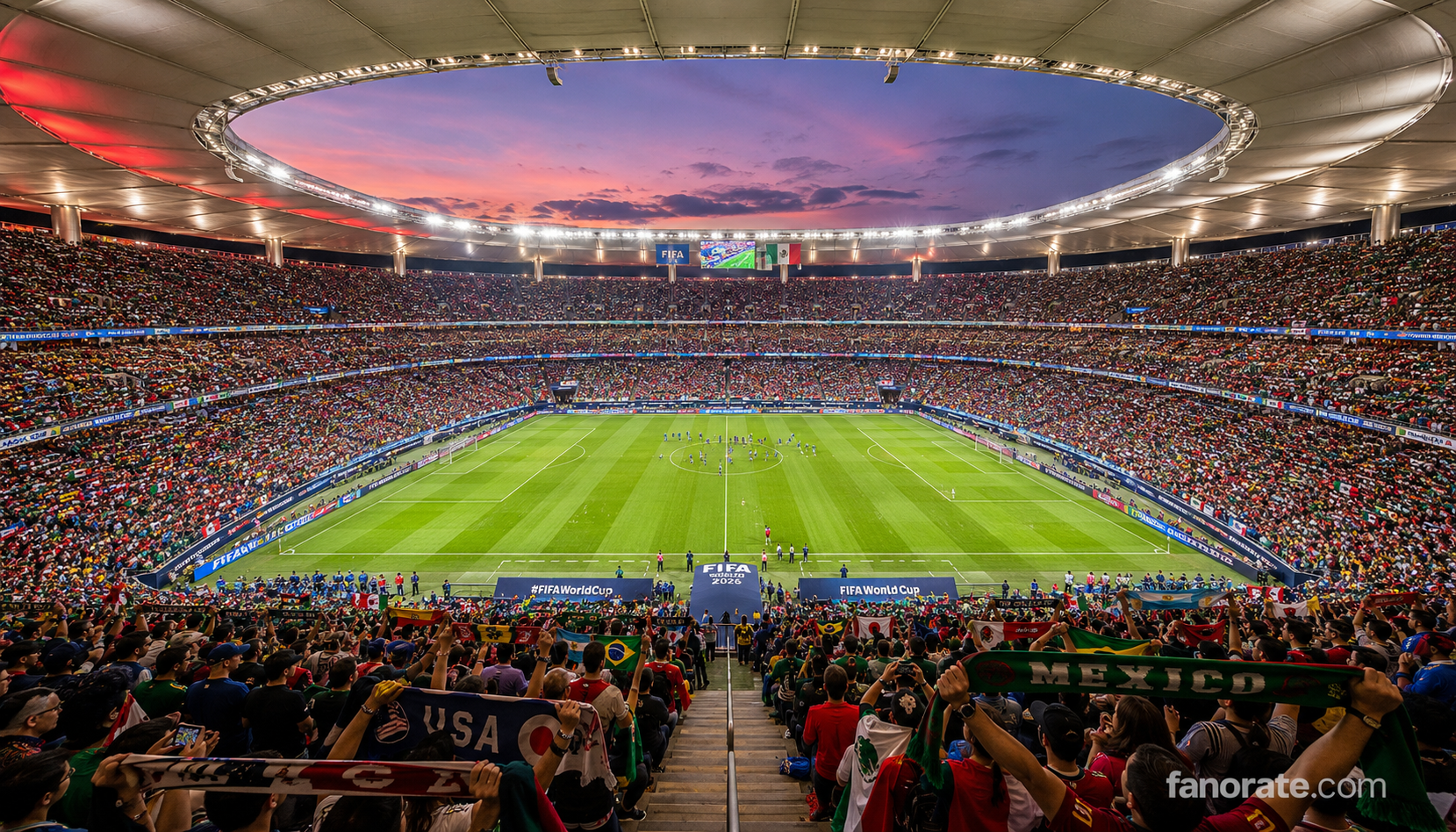
The architecture is the most distinctive feature.
The bowl design integrates the stadium into the surrounding landscape in a way few major venues attempt. The exterior of the building is wrapped in grass berms, native plant landscaping and curved organic shapes that make the stadium feel less like a sports complex and more like a piece of contemporary land art. The cantilevered canopy over the upper tier provides shade without visually dominating the structure.
Other distinctive features:
- The seating bowl is tight to the field, producing one of the more intimate matchday environments among large Mexican stadiums.
- The interior architecture uses warm wood and natural-tone finishes alongside the concrete structure.
- The surrounding precinct includes integrated parkland and parking infrastructure spaced across the green setting.
- The stadium’s identity is closely tied to Chivas — the club’s branding, history and supporter culture are visible throughout the venue.
Compared to Estadio Azteca’s monumental presence, Estadio Akron offers a more intimate, modern football experience.
Why FIFA Picked Guadalajara

Three reasons.
First, Mexican football tradition. Guadalajara is one of the most important football cities in the Western Hemisphere. Chivas is a national institution. Estadio Jalisco hosted matches during two prior FIFA World Cups. Mexican football culture flows through this city in a way that demands World Cup recognition.
Second, the venue. Estadio Akron is a modern, purpose-built football stadium with mature operational infrastructure and a respected supporter culture.
Third, geographic and cultural balance. Guadalajara is roughly midway between Mexico City and the northern Mexico region. Including Guadalajara in the World Cup host roster balances the geographic distribution of Mexican matches and showcases the country’s most traditional cultural city.
The four-match assignment includes group-stage games. Expect Guadalajara matches to feature substantial Liga MX fan presence and authentically Mexican atmosphere.
Iconic Matches and Historic Moments
While Estadio Akron itself is a younger venue, the football history of Guadalajara is enormous.
- Estadio Jalisco’s role in the 1970 FIFA World Cup, including the famous Brazil group-stage matches.
- Estadio Jalisco’s role in the 1986 FIFA World Cup, including West Germany’s quarterfinal run.
- Multiple Liga MX championships involving Chivas, including their historic 2017 Apertura title.
- Clásico Nacional matches between Chivas and Club América, some of the most-watched fixtures in Mexican football.
- Mexican women’s national team development matches.
- The 2011 Pan American Games opening ceremony and football events.
The 2026 World Cup matches will be Estadio Akron’s most significant international football moments to date.
Football Culture in Guadalajara
This is the most distinctly Mexican football city in the country.
Chivas is the central cultural identity. The club’s policy of fielding only Mexican-born players is unusual in modern football and has made Chivas a national symbol of Mexican identity. Supporter group culture — including the Legion 1908 and Barra Insurgencia — has built sustained vocal traditions that rival the most theatrical fan environments in CONCACAF.
Atlas, the city’s second major club, has its own deeply loyal fan base. The Rojinegros’ 2021–22 Liga MX championships ended a 70-year title drought and produced some of the most emotionally significant moments in modern Mexican football.
Beyond the professional clubs, Guadalajara’s amateur football culture is everywhere. Sunday league matches, neighborhood tournaments, youth football academies and the surrounding pueblos of Jalisco all contribute to a deep football ecosystem. Many of Mexico’s most decorated national team players have come from the broader Guadalajara region.
For 2026, Guadalajara matches will feature some of the most fervent Mexican football supporter culture in the entire tournament.
Matchday at Estadio Akron: What to Expect
A typical rhythm:
- Morning in central Guadalajara. Café in the historic district, a walk through the Centro Histórico, breakfast at a traditional Mexican market.
- Travel to Zapopan and the stadium. Rideshare or driving is the most common path. About 30–45 minutes from central Guadalajara on a matchday.
- Pre-match in the stadium precinct. Food stalls, supporter group meetups, jersey vendors.
- Entry. Security is firm. Allow extra time for high-profile matches.
- Inside the bowl. Look around. The architecture rewards attention to the curved canopy and the bowl geometry.
- Concessions. Mexican food traditions are reflected in concessions.
- Post-match. Rideshare or pre-arranged transport back to central Guadalajara. The roads can crowd quickly.
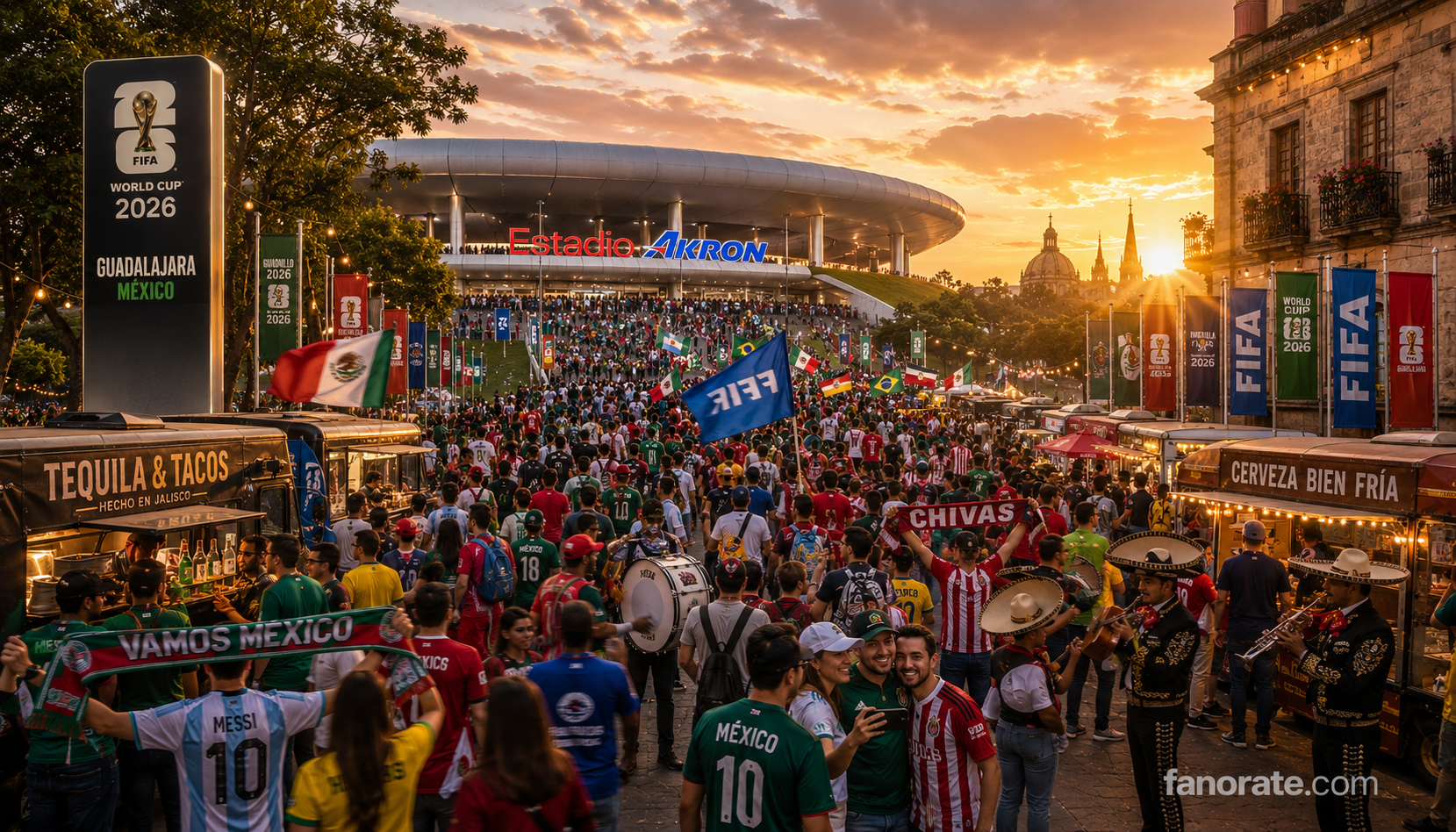
Best Seating Guide
- For atmosphere: Lower-bowl seats behind the goals. Chivas supporter sections traditionally cluster here. World Cup visiting team supporters will likely consolidate in similar geographic patterns.
- For tactical viewing: Mid-tier sideline seats.
- For photography: Upper-deck corners with the curved canopy and surrounding green landscape in frame.
- For families: Mid-bowl seats away from the most vocal sections.
- Budget options: Upper-deck end-zone seats.
- Premium experience: Field-level clubs and the boxes integrated into the upper tier.
Transportation and Access Guide
- From Guadalajara International Airport (GDL): Roughly 45 minutes by car. Rideshare or pre-arranged transport is typical.
- From Central Guadalajara: About 30–45 minutes by car on a matchday.
- From Zapopan center: About 15–20 minutes by car.
- Driving: Parking lots are available around the stadium. Pre-paid parking is recommended.
- Rideshare: Uber and DiDi operate. Surge pricing post-match.
- Public transit: Limited near the stadium. Matchday shuttle services may operate from designated downtown hubs.
- Walking: Not realistic from outside the immediate area.
- Accessibility: Accessible routes and seating available. Coordinate accessibility services with FIFA in advance.
Where Fans Should Stay
- Centro Histórico (Guadalajara): Historic downtown with major attractions, museums and the Cathedral. Walkable.
- Chapultepec / Lafayette: Trendy area with restaurants, bars and boutique hotels.
- Providencia: Upscale residential and dining district.
- Zapopan center: Closer to Estadio Akron with a quieter pace.
- Tlaquepaque: Charming colonial neighborhood famous for handicrafts and food, about 20 minutes from central Guadalajara.
If you’re staying for multiple matches and want to experience the city, Chapultepec/Lafayette or Centro Histórico strike the best balance.
Food, Drink and Nightlife
Guadalajara is one of the great Mexican food cities.
- Tortas ahogadas: A Guadalajara specialty — a sandwich drowned in spicy tomato sauce. Pilgrimage-worthy.
- Birria: Originated in Jalisco. Goat or beef stewed in a chile-laden broth.
- Carne en su jugo: A regional beef and bean dish.
- Pozole rojo and pozole blanco: Classic Mexican hominy soups.
- Tequila and mezcal: Tequila is named for the town of Tequila, about an hour outside Guadalajara. Day trips to tequila distilleries are popular.
- Mariachi performances: Plaza de los Mariachis is a Guadalajara institution where mariachi bands perform nightly.
- Tlaquepaque cuisine: Traditional Mexican food in an outdoor patio setting.
- Coffee: A growing third-wave scene in Chapultepec and Lafayette.
Bars and viewing parties: cantinas throughout Centro Histórico, bars in Chapultepec and Lafayette, and outdoor terraces across the metro.
Things To Do Near the Stadium
- The Guadalajara Cathedral and Plaza de Armas
- Hospicio Cabañas (UNESCO World Heritage Site with Orozco murals)
- Plaza de los Mariachis
- Mercado San Juan de Dios
- Tlaquepaque colonial neighborhood for handicrafts and food
- Tonalá for ceramics and traditional crafts
- Day trip to Tequila town and tequila distilleries
- Day trip to Lake Chapala
- Bosque Los Colomos for parkland and recreation
- Casa de Cultura Sergio Magaña for cultural events
- The Cabañas Cultural Institute for art exhibitions
- Festival de Mayo if timing aligns
Weather and Match Conditions
Guadalajara’s elevation and climate produce one of the more comfortable Mexican summer environments.
- Temperature: Daily highs in June commonly 80–85°F (27–29°C).
- Humidity: Moderate.
- Rain: Daily afternoon thunderstorms are common during June and July.
- Altitude: 1,560 meters above sea level. Less pronounced than Mexico City but still moderate altitude.
- Sun exposure: Strong UV at altitude.
Practical kit:
- Reusable water bottle
- Light, breathable clothing
- Layer for cool evenings
- High-SPF sunscreen
- Hat and sunglasses
- Compact rain poncho or umbrella
Interesting and Fun Facts
- Chivas, the primary tenant of Estadio Akron, is the only major Liga MX club that by official policy fields only Mexican-born players.
- The stadium’s design, by Populous, was praised internationally for its integration with the surrounding landscape.
- Estadio Jalisco, the historic Guadalajara venue, hosted matches during both the 1970 and 1986 FIFA World Cups.
- The Guadalajara metropolitan area is the second-largest in Mexico after Mexico City.
- Mariachi music, declared a UNESCO Intangible Cultural Heritage, originated in Jalisco.
- The town of Tequila, about an hour from Guadalajara, is the historical home of the spirit that bears its name and is a UNESCO World Heritage Site.
- Atlas, the city’s second major club, ended a 70-year championship drought by winning back-to-back Liga MX titles in 2021–22.
One Thing Most Fans Don’t Know
Many of Mexico’s most iconic World Cup players over the past 50 years grew up in the small towns surrounding Guadalajara — Tlaquepaque, Tonalá, Tlajomulco, Tequila, the broader Jalisco countryside. The Mexican national team’s bench in any given World Cup typically includes multiple players whose youth football was shaped by Jalisco’s particular football culture. The 2026 matches at Estadio Akron will be played in the heart of Mexico’s most consistent football talent-producing region.
Photo and Social Media Spots
- Stadium exterior at golden hour with the curved canopy and green berms visible.
- Inside the bowl during pre-match with the architectural geometry visible.
- The Guadalajara Cathedral at dusk.
- Plaza de los Mariachis with live mariachi performers.
- Tlaquepaque colonial streets and patios.
- Tequila distillery tours if you have a day trip planned.
Fan Experience and Atmosphere
Chivas supporter culture is one of the most theatrical, sustained vocal traditions in CONCACAF. Multilingual chants, drum sections, organized tifos and a deep emotional connection to Mexican identity. International fixtures at Estadio Akron typically produce full bowls and high-intensity atmospheres.
For 2026, expect Guadalajara matches to feel like genuine Mexican football experiences. The supporter culture will be deeply local even as the visiting fan base brings international flavor.
Sustainability and Technology
Estadio Akron’s design philosophy emphasizes integration with the surrounding landscape. The grass berms, native plantings and natural-material finishes contribute to a sustainability-conscious presence. The canopy structure provides shade while reducing direct sun exposure for fans and players.
Technology: integrated video boards, mobile-app ticketing and modernized broadcast infrastructure.
Future Legacy
The 2026 World Cup matches at Estadio Akron will accelerate Guadalajara’s profile as one of the most important football cities in the Western Hemisphere. Chivas, Atlas and the broader Liga MX ecosystem will benefit from the tournament’s global reach. Youth football across Jalisco will see investment. Tourism focused on Mexican cultural identity will grow.
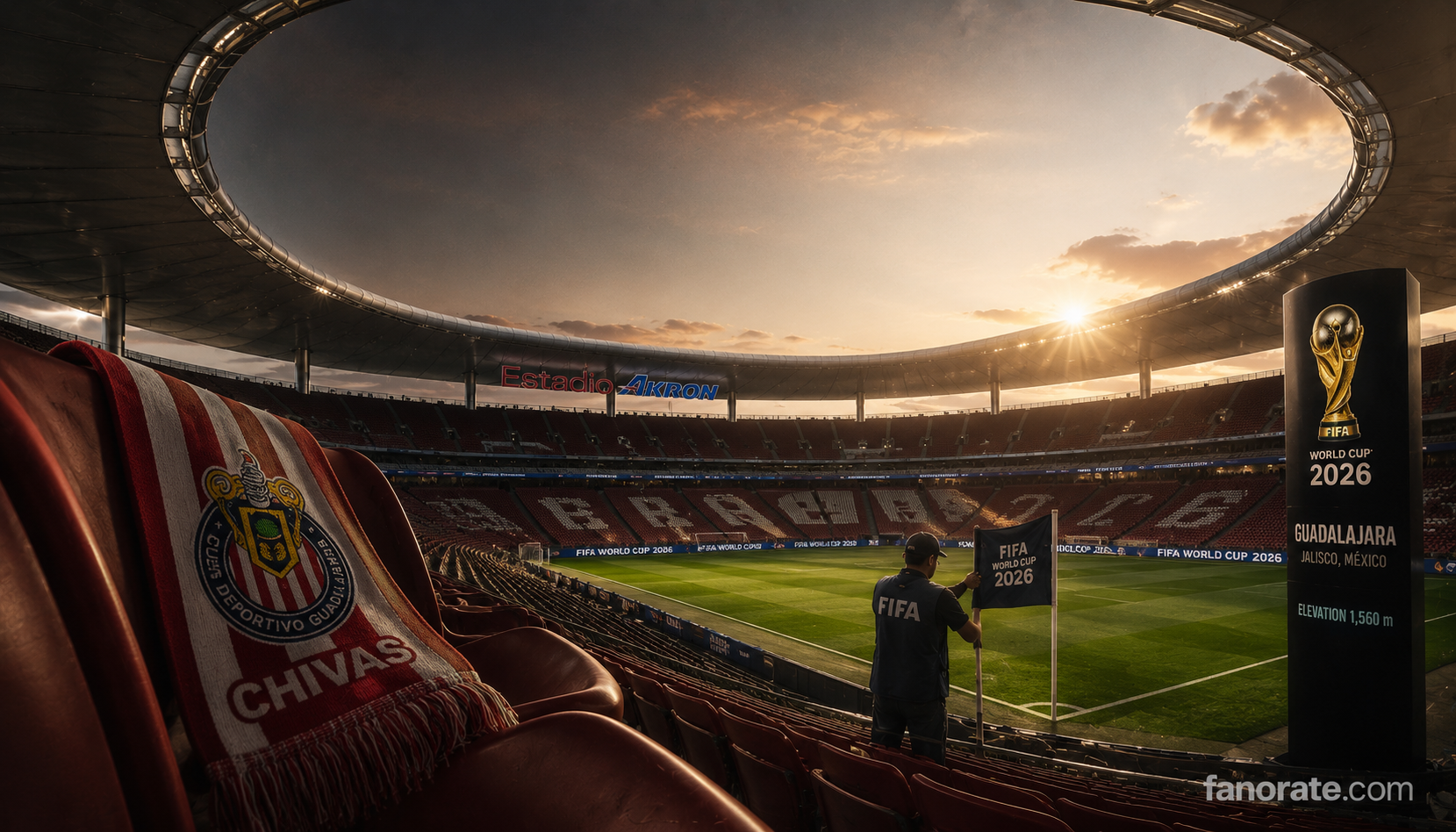
Final Thoughts
A Guadalajara World Cup is going to be one of the most authentically Mexican experiences of FIFA 2026. The mariachis. The tequila. The food. The Chivas faithful. The colonial neighborhoods. The Jalisco countryside.
If you’re going, fly into GDL. Stay in Centro Histórico or Chapultepec. Take a tequila day trip if you have time. Eat tortas ahogadas at a respected stall. Catch a mariachi performance at Plaza de los Mariachis. Get to Estadio Akron well before kickoff. Sit in the lower bowl if you can. Stand for the entire match.
Four matches in the heart of Mexico’s most traditional football city. You will not forget the experience.
FAQ
How many people does Estadio Akron hold? Approximately 46,000.
Which FIFA 2026 matches will be played at Estadio Akron? Four matches, including group-stage games.
Is the stadium covered or open-air? Open-air, with a partial canopy covering the upper tier. The pitch is open to the sky.
How do I get to the stadium from central Guadalajara? By car or rideshare. About 30–45 minutes on a matchday. Public transit options near the stadium are limited.
What’s the closest airport? Guadalajara International Airport (GDL), about 45 minutes by car.
Will the field be grass or turf? Natural grass.
What weather should fans expect? Warm, moderate-altitude climate. Daily highs around 80–85°F. Possible afternoon thunderstorms.
Is the altitude significant? Less than Mexico City but still moderate at around 1,560 meters above sea level. Most visitors adapt easily.
Where should I stay for matches? Centro Histórico, Chapultepec/Lafayette or Providencia for the best access and city experience.
Will I need a visa to attend? Many travelers can enter Mexico visa-free with a valid passport, but requirements vary by nationality. Check current Mexican immigration requirements well in advance.