NRG Stadium for FIFA World Cup 2026: Houston's Air-Conditioned Cathedral of Football
NRG Stadium hosts FIFA 2026 in Houston. Inside guide to the retractable roof, seats, transit, Tex-Mex food and matchday tips for World Cup fans.

Recherche et édition par Abdullah Mashuk. Rédigé avec une recherche assistée par IA selon notre Méthodologie.
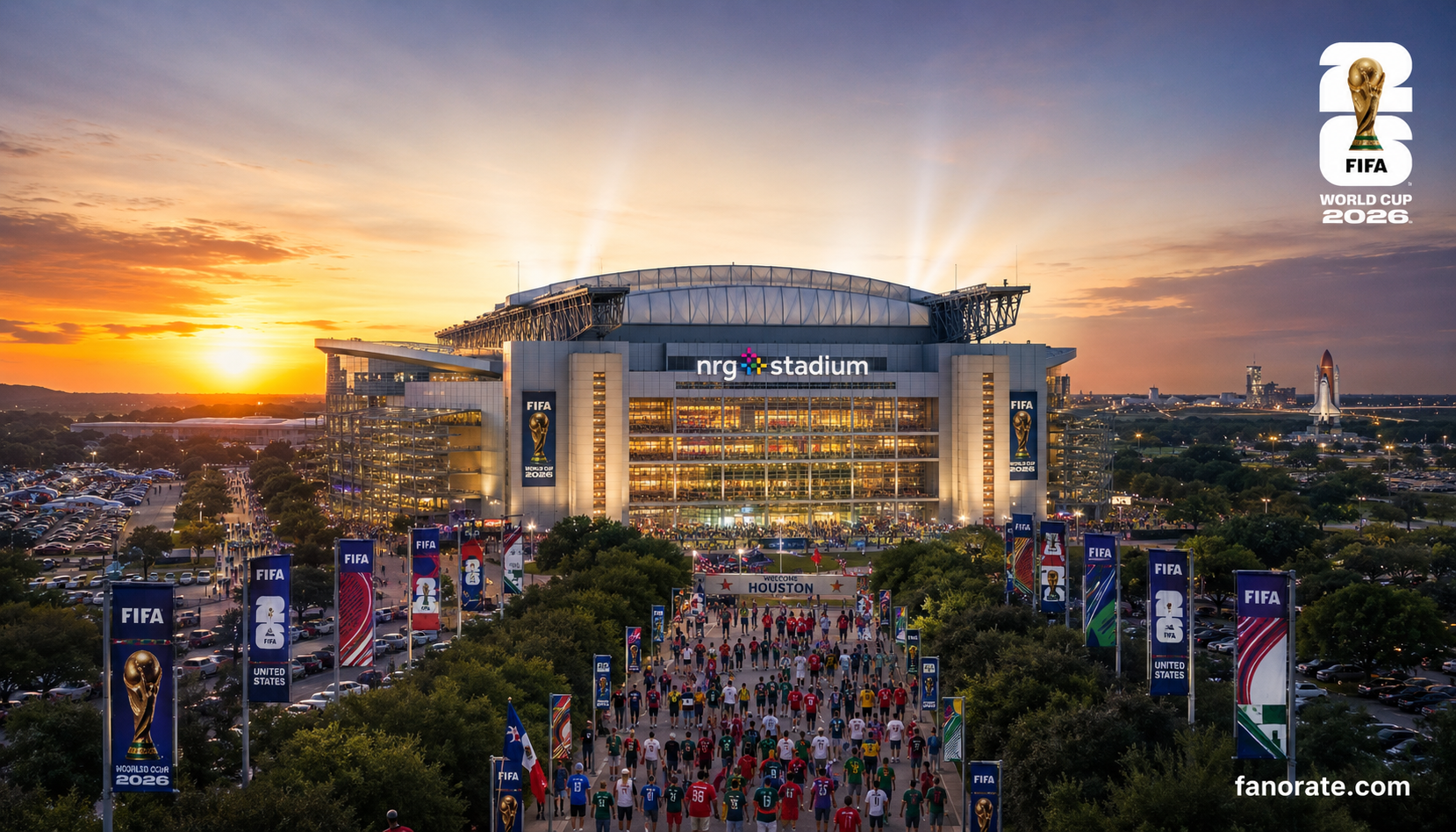
Illustration générée par IA. Il ne s'agit pas d'une photographie réelle.
NRG Stadium for FIFA World Cup 2026: Houston’s Air-Conditioned Cathedral of Football
In Houston, the joke is that there are only two seasons: hot, and waiting for hot to come back.
So when the city built NRG Stadium in the early 2000s, the design started with a single question: how do you make people forget they’re outside in July? The answer turned out to be a retractable roof that pulls back when the air cooperates and seals shut when it doesn’t. Combined with one of the most aggressive air-conditioning systems in any American venue, the result is a building where Houston’s notorious summer heat stops at the turnstile.
In the summer of 2026, that climate-controlled bowl is going to host seven matches of a 48-team FIFA World Cup — including a Round of 16 fixture that will probably draw one of the largest single-event television audiences in the city’s history.
Here’s the full guide.
Quick Venue Snapshot
- Stadium: NRG Stadium
- City / Region: Houston, Texas
- Country: United States
- Capacity: Approximately 72,000
- Opened: 2002
- Primary tenant: NFL’s Houston Texans
- FIFA 2026 matches hosted: Seven matches, including group-stage games and a Round of 16 knockout fixture
- Location: NRG Park complex, near the Texas Medical Center and roughly 11 km (7 miles) southwest of downtown Houston
- Surface for FIFA 2026: Natural grass installed for the tournament
- Roof: Retractable. Closes against heat or storms; opens for cooler evenings.
- Climate considerations: Hot and very humid. Frequent afternoon thunderstorms in June and July.
- Transit: Houston METRORail Red Line stops directly adjacent to the stadium complex.
The Story of the Stadium
When NRG Stadium opened in 2002 — originally as Reliant Stadium — it became the first NFL venue to feature a fully retractable roof. The Houston Texans had just been awarded an expansion franchise, and the new building was designed to anchor a wider sports and exposition complex called NRG Park, which already included the legendary Astrodome.
The Astrodome itself sits a few hundred yards away. When it opened in the 1960s, it was the world’s first multi-purpose domed stadium and the prototype for indoor sports environments. NRG Stadium inherited that climate-control philosophy and reinterpreted it for the 21st century. The roof, two huge panels that slide along curved rail systems, can fully expose or fully cover the bowl depending on weather and game preferences. The interior bowl seats roughly 72,000, with sightlines designed for both American football and large-format soccer.
Since opening, the building has hosted Super Bowl XXXVIII in 2004, Super Bowl LI in 2017 (the famous comeback final), college football bowl games, NCAA Final Four basketball, WrestleMania, the Houston Livestock Show and Rodeo, and a long calendar of international football friendlies. Mexico’s national team has played here repeatedly to massive crowds. The Concacaf Gold Cup has staged knockout fixtures here. The stadium’s football pedigree is, by American standards, substantial.
For FIFA 2026, the seven-match assignment confirms what Houston organizers have been arguing for years: this is one of the most fan-ready, climate-ready and culturally-ready football cities in the country.
What Makes NRG Stadium Unique
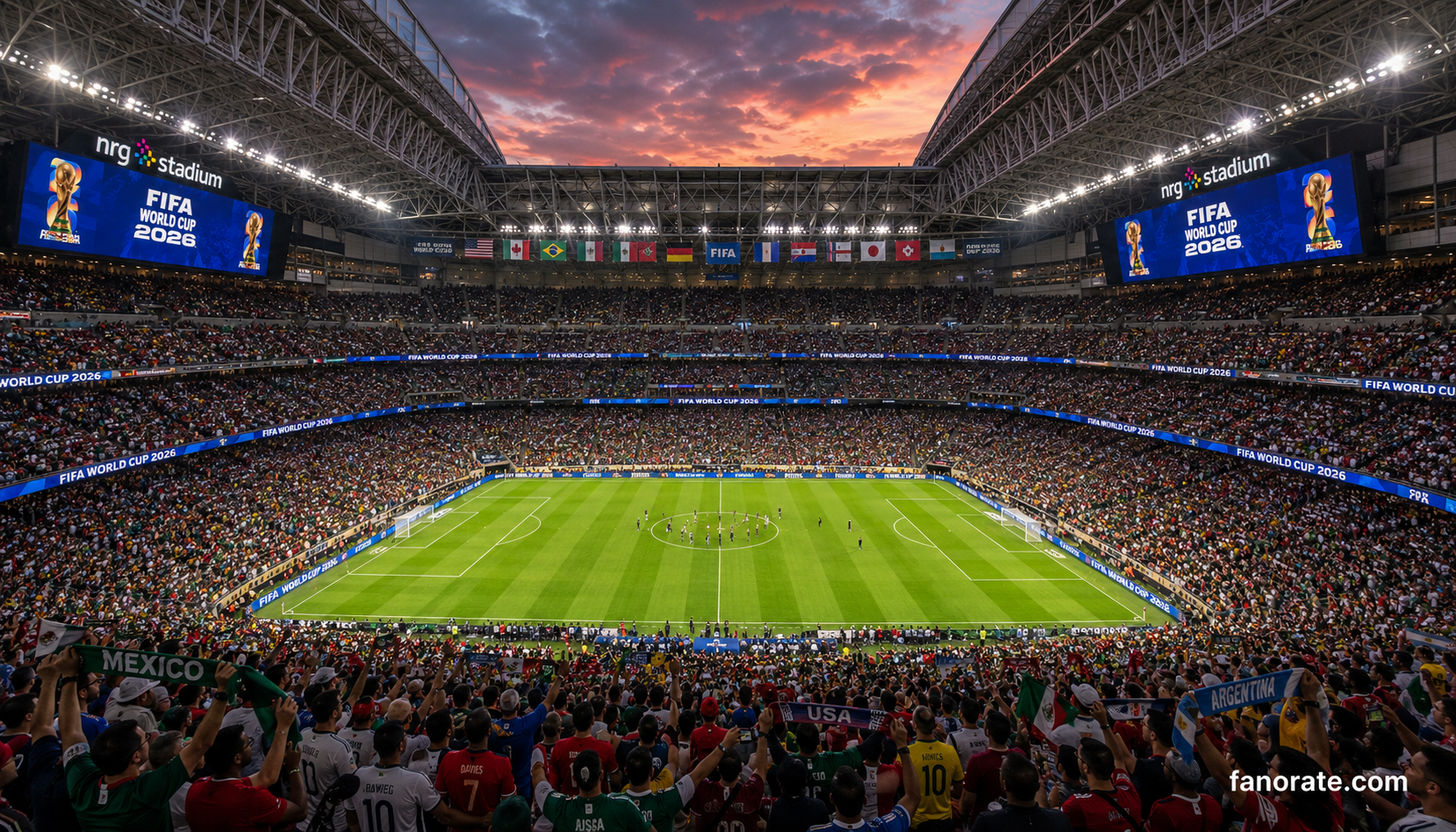
Three things define the venue: the climate-control system, the sheer geometric flexibility of the bowl, and the deep integration with one of the largest sports and exposition complexes in the southern United States.
The retractable roof was the headline at opening and remains the building’s most photographed feature. When closed, the bowl is essentially a giant air-conditioned arena. When open, it transforms into an outdoor stadium with a 21st-century sky cut into a rectangle above the playing surface. For summer matches in Houston, that flexibility is more than aesthetic. It’s a fundamental quality-of-life feature for fans and players.
Other distinctive elements:
- Wide concourses designed for high-volume crowd flow — useful for World Cup security and entry pacing.
- Multiple club levels with indoor lounges connected to seating tiers.
- A working integration with NRG Center, NRG Arena and the Astrodome footprint, which makes the surrounding precinct an unusually dense matchday environment.
- The Astrodome itself as an architectural neighbor — a heritage site that has not hosted active sports for years but stands as one of American sports’ most consequential structures.
Why FIFA Picked Houston
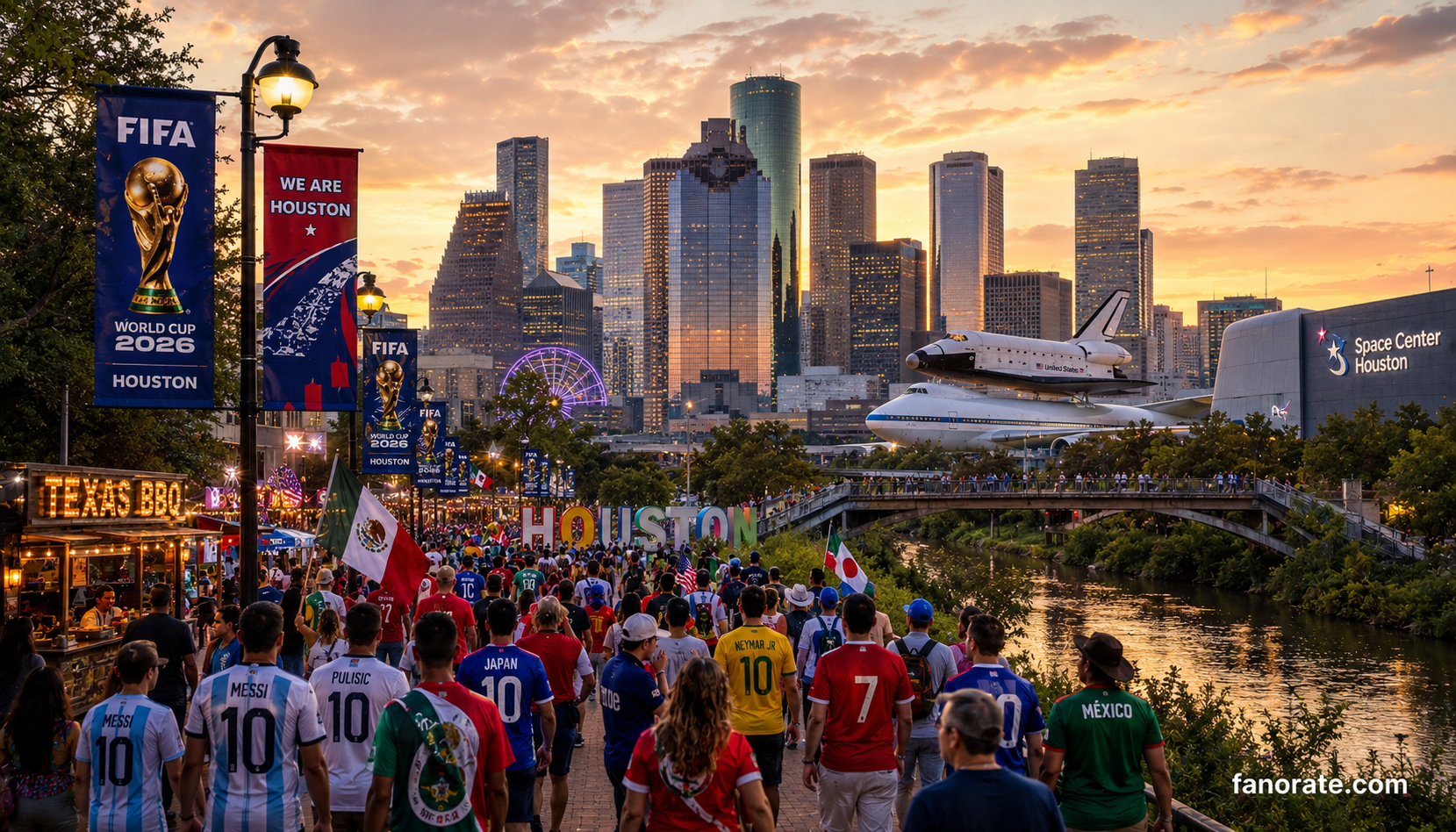
Three reasons drive the Houston selection: capacity, climate, and culture.
Capacity: NRG holds roughly 72,000, putting it among the larger venues in the 2026 host roster.
Climate: Houston’s June and July weather is brutal. The closed roof and full air-conditioning give FIFA a reliable environment for daytime matches that would otherwise risk player health concerns.
Culture: Houston is one of the most culturally diverse cities in the United States. The Latino population is enormous and concentrated in neighborhoods like Magnolia Park, the East End, Gulfton and Spring Branch. The city has substantial Mexican-American, Salvadoran, Honduran, Colombian, Venezuelan, Nigerian, Indian, Vietnamese and Chinese communities. Mexico’s national team consistently draws full-stadium crowds here. The Houston Dynamo and Houston Dash have established loyal supporter cultures. The football audience is real.
The seven-match assignment includes group-stage games and a knockout fixture. Expect Houston nights to be loud, sweaty, multilingual and unforgettable.
Iconic Matches and Historic Moments
Super Bowl LI in 2017 — the famous New England comeback — gave the building one of the most-watched single sports moments in American history. Super Bowl XXXVIII in 2004 added the venue’s first Super Bowl. The College Football Playoff National Championship Game has been hosted here. WrestleMania has set attendance records. NCAA Final Four basketball has crowned national champions on this floor.
In football specifically:
- Multiple Mexico national-team friendlies and Gold Cup fixtures with crowds approaching the venue’s full capacity.
- USMNT matches.
- Concacaf Champions Cup matches involving Liga MX powers and visiting MLS clubs.
- High-profile European club friendlies during summer tours.
The 2026 World Cup matches will sit at the top of the building’s all-time football résumé.
Football Culture in Houston
Houston is one of the most underestimated football audiences in the United States.
The Mexican-American population is enormous and footballing. Liga MX matches and Mexico national team fixtures are mainstream television in this city. The Dynamo’s supporter culture — particularly El Batallón and other organized supporter sections — has been an MLS staple for years. The Dash, in NWSL, have built a serious women’s football audience. The youth football pipeline across the metro area has been producing professional players for decades.
Beyond the Mexican-American community, Houston’s broader Latino diaspora is substantial. Watch for strong Salvadoran, Honduran, Colombian and Venezuelan supporter contingents during the World Cup. The city’s West African and Caribbean populations are also large, particularly Nigerian and Trinidadian. For some of the 2026 fixtures, expect Houston crowds to feel like they’re attending a home match for whichever team they’re cheering.
Matchday at NRG Stadium: What to Expect
A typical rhythm:
- Pre-game in downtown or Midtown Houston. Discovery Green, the Houston Aquarium, Buffalo Bayou and the Theater District are all walkable urban anchors.
- METRORail to the stadium. The Red Line connects directly to the NRG Park complex. Travel time from downtown is roughly 15–20 minutes.
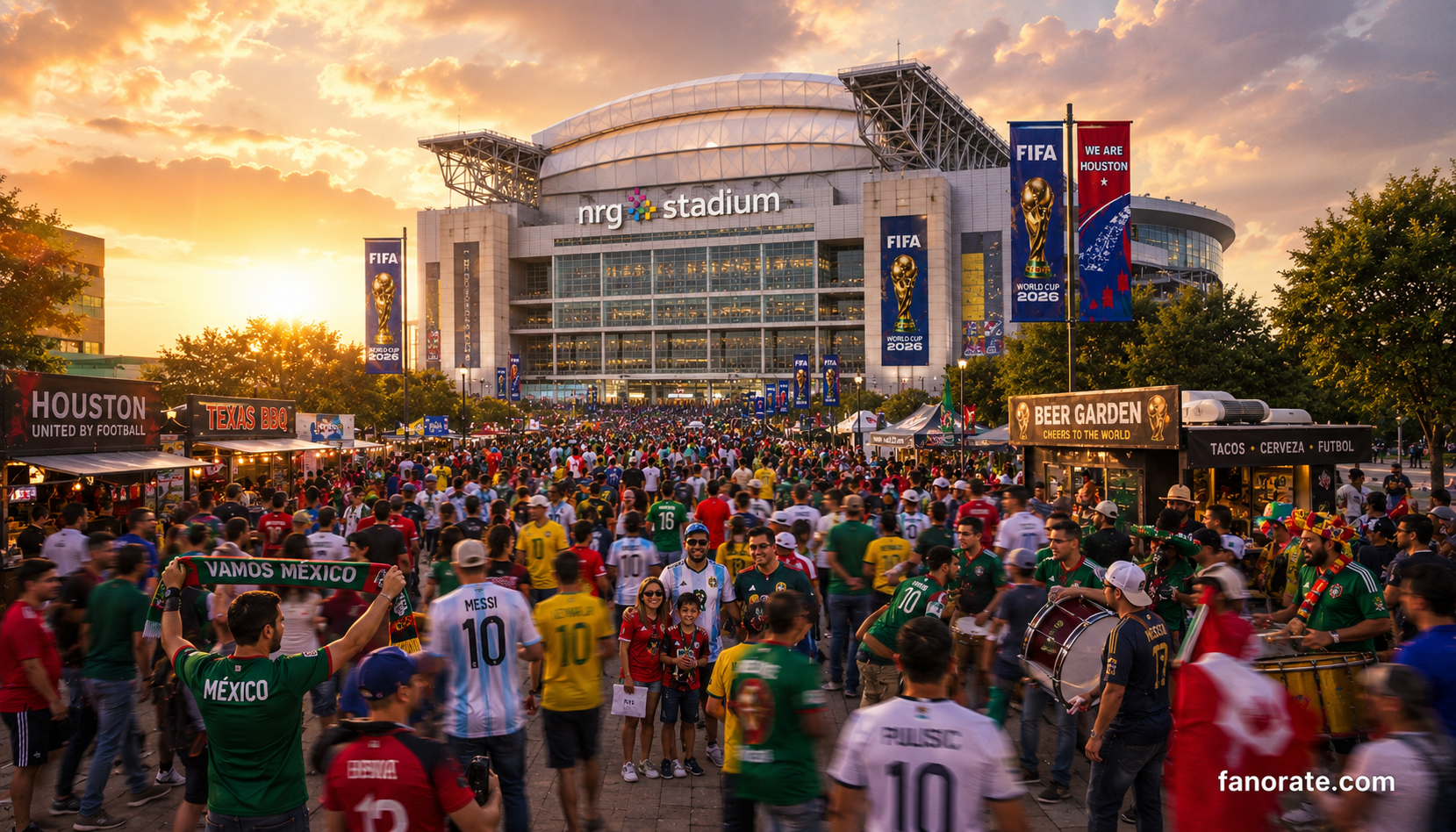
- The NRG Park complex. Pre-match plazas around the stadium, the Astrodome, and adjacent buildings. Expect tailgating, food trucks and supporter group meetups.
- Entry. Clear-bag policy. Security is efficient.
- Inside the bowl. Look up. If the roof is closed, the building feels like an enormous indoor arena. If open, you’ll see Texas sky through the rectangular skylight.
- Concessions. Standard American stadium pricing with strong Tex-Mex and Mexican food options.
- Post-match. METRORail back to downtown is the simplest path. Rideshare zones are organized but post-match surge pricing is steep.
Best Seating Guide
- For atmosphere: Lower bowl behind the goals. Supporter sections traditionally cluster here.
- For tactical viewing: Mid-tier sideline seats.
- For photography: Upper-deck corners. Catch the retractable roof, the field and the surrounding parkland in one frame.
- For families: Mid-bowl seats away from the most vocal supporter sections.
- Budget options: Upper-deck end-zone seats. Watch resale platforms in the weeks leading up to matches.
- Premium experience: Field-level clubs and indoor lounges connected to seating tiers.
Transportation and Access Guide
- From George Bush Intercontinental Airport (IAH): Roughly 30–40 minutes by car. METRORail does not run directly to IAH, but airport shuttles connect to downtown rail stations.
- From William P. Hobby Airport (HOU): Roughly 25–30 minutes by car.
- From Downtown Houston: METRORail Red Line direct to NRG Park. Travel time around 15–20 minutes.
- Driving: Multiple lots within NRG Park and surrounding streets. Pre-paid parking is recommended.
- Rideshare: Designated pickup zones at the stadium.
- Walking: Within NRG Park, walking is easy. From central neighborhoods, walking is not realistic in summer heat.
- Accessibility: ADA-compliant routes and seating. Coordinate accessibility services with FIFA in advance.
Where Fans Should Stay
- Downtown Houston: Closest to METRORail. Hotel inventory ranges from luxury to budget.
- Midtown: Walkable, dense, with strong dining and bars. Easy rail access to the stadium.
- The Galleria area: Upscale shopping and dining district.
- Museum District: Adjacent to multiple museums and Hermann Park. METRORail access.
- Medical Center: Closest to the stadium, dominated by hospital-related hotels but functional for matchdays.
- The Heights: Houston’s most walkable urban neighborhood, with boutique food and bars.
Food, Drink and Nightlife
Houston is one of the great unsung food cities in America.
- Tex-Mex and Mexican food: Both traditions are exceptional here. Breakfast tacos are a religion.
- Vietnamese food: Houston has one of the largest Vietnamese populations in the country, and the pho/banh mi scene is legendary.
- Cajun and Creole crossover cuisine: Strong influence from Louisiana.
- Barbecue: Houston has its own pitmaster tradition, including some of the most acclaimed brisket in the state.
- Korean food: Spring Branch and the Long Point corridor.
- Indian food: Hillcroft and the southwest side.
- Nigerian and West African food: Distributed across the southwest.
- Pho 24-hour spots: Late-night legend.
- Coffee and bakery scene: Strong in The Heights, Montrose and Rice Village.
Bars and viewing parties: soccer-friendly bars in Midtown, EaDo, Montrose and the Heights run early-morning international matches every weekend.
Things To Do Near the Stadium
- The Museum of Fine Arts, Houston
- Houston Museum of Natural Science
- Space Center Houston — a half-day excursion south of the city
- Buffalo Bayou Park
- Hermann Park and the Houston Zoo
- The Menil Collection
- Discovery Green in downtown
- The historic Astrodome neighborhood
- Galveston Beach as a day trip
Weather and Match Conditions
Houston is a humid subtropical climate, and June/July is the most intense expression of it.
- Temperature: Daily highs of 90–95°F (32–35°C) are routine. Heat index frequently above 100°F (38°C).
- Humidity: Very high. Air feels thicker than in inland Texas.
- Rain: Pop-up thunderstorms are common in summer afternoons.
- Inside the stadium: Air-conditioned and comfortable when the roof is closed. Even with the roof open, the AC system continues operating to manage heat exposure.
Practical kit:
- Reusable water bottle
- Electrolyte plan
- Light, breathable clothing
- High-SPF sunscreen
- Compact rain poncho
- Light jacket for the AC inside the stadium
Interesting and Fun Facts
- NRG Stadium was the first NFL stadium with a retractable roof.
- The roof panels run on curved rail systems that allow them to slide horizontally across the bowl.
- The Astrodome, a few hundred yards from NRG Stadium, was the world’s first fully enclosed sports stadium when it opened in 1965 and is one of the most architecturally significant sports buildings in American history.
- Super Bowl LI in 2017 produced one of the most famous comebacks in NFL history right here in the bowl.
- The Houston Livestock Show and Rodeo, hosted annually in the NRG Park complex, is one of the largest events of its kind in the world and routinely draws over two million visitors during its multi-week run.
- The stadium hosted the WrestleMania event with one of the largest crowds in the event’s history.
One Thing Most Fans Don’t Know
Houston has one of the longest continuously active Mexican-American football leagues in the United States. Adult amateur leagues operating in Magnolia Park, the East End and along the Telephone Road corridor have been running for decades. Some of the players in those leagues went on to play in Liga MX. Some of the kids watching from the sidelines became professionals in MLS. The 2026 World Cup matches at NRG Stadium are, in a sense, the continuation of those leagues’ weekend games — just played in a building with a retractable roof and 72,000 seats.
Photo and Social Media Spots
- Exterior of NRG Stadium with the Astrodome visible in the background. A unique architectural double-shot you can’t get anywhere else.
- Inside the bowl with the roof open at dusk. The Texas sky framed by the moving panels.
- Discovery Green during a fan-festival evening. Skyline, fountains, supporter colors.
- Galveston Beach with World Cup scarves at sunrise.
- The Heights with murals and food trucks.
Fan Experience and Atmosphere
NRG’s bowl is loud when it wants to be. With the roof closed, sound concentrates and pulses; with the roof open, it disperses into the Houston sky. The crowd is theatrical, deeply Latino in many of its supporter sections, and overwhelmingly welcoming to traveling fans. By the time the second half of any tight match starts, the noise is rolling.
For the 2026 World Cup, expect a multilingual atmosphere with strong Mexican, Central American, South American, West African and Asian-American supporter presences. Watch parties will spread across downtown, Midtown, EaDo and the Galleria.
Sustainability and Technology
NRG Stadium has incorporated incremental sustainability upgrades over its life — LED conversions, water-efficient field maintenance, recycling and composting programs. The retractable roof itself functions as a heat-management tool, reducing the building’s overall cooling load when daytime conditions permit.
On technology: high-density Wi-Fi, mobile-app ticketing and concessions, and integrated video boards that have been progressively upgraded.
Future Legacy
The 2026 World Cup is expected to accelerate Houston’s profile as one of the most consequential football cities in the United States. The Dynamo and Dash will benefit from the tournament’s promotional reach. Investment in youth football infrastructure, women’s facilities, and broader sporting tourism is likely to increase. Houston has long been a Top-5 American football media market by Liga MX viewership alone — the 2026 tournament will broadcast that fact globally.
Final Thoughts
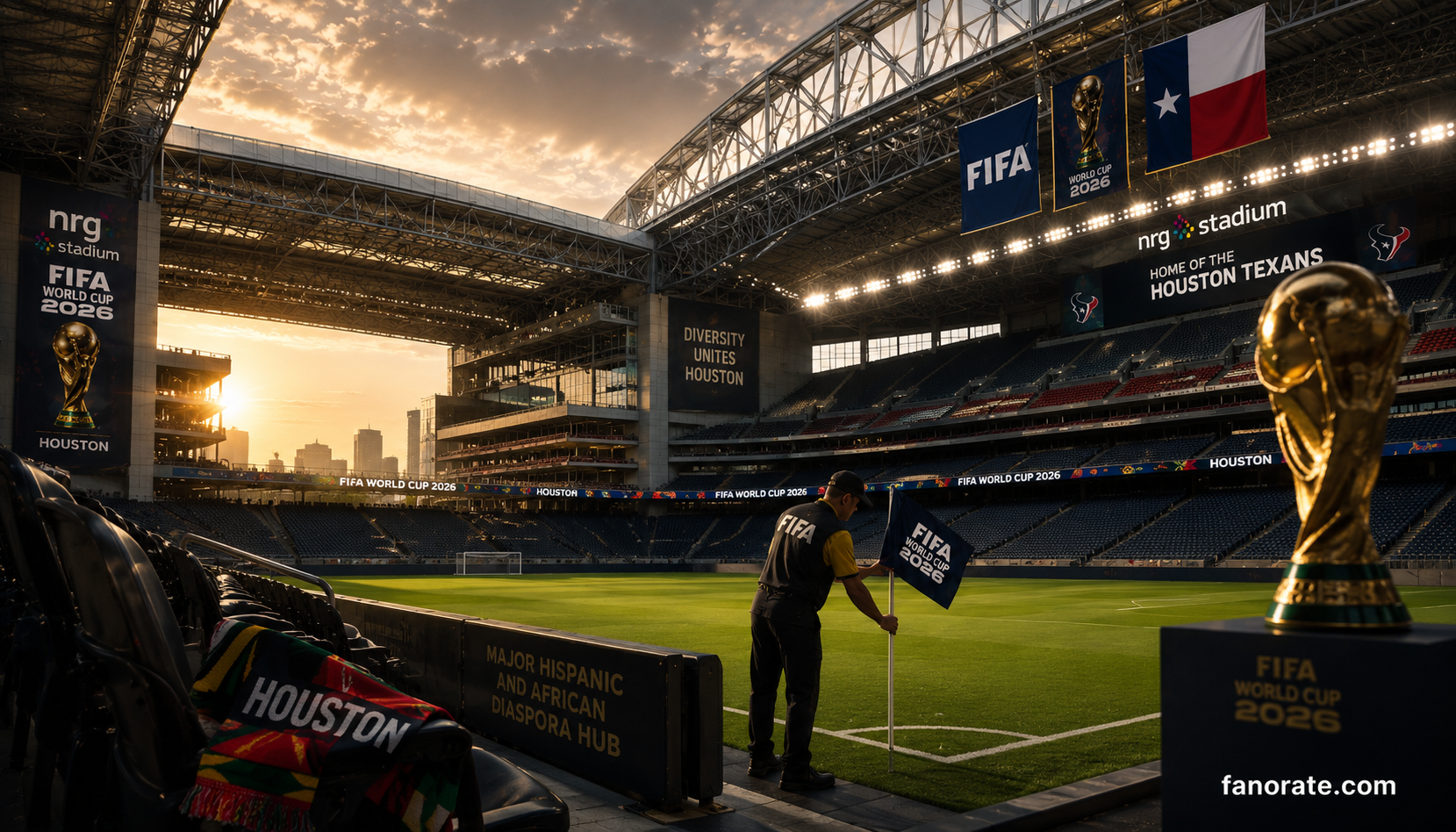
A Houston World Cup is a humid, generous, multilingual experience. Take the train. Eat the breakfast tacos. Drink the cold beer in the air-conditioned concourse. Look up when the roof is open. Look around when the bowl fills with 72,000 voices in a dozen languages.
NRG Stadium’s seven World Cup matches in 2026 are going to confirm what Houston football fans already know: this is a city that takes the game personally.
FAQ
How many people does NRG Stadium hold? Approximately 72,000 in football configuration.
Which FIFA 2026 matches will be played at NRG Stadium? Seven matches, including group-stage games and a Round of 16 knockout fixture.
Does NRG Stadium have a retractable roof? Yes. It was the first NFL stadium with a retractable roof.
How do I get to NRG Stadium from downtown Houston? METRORail Red Line connects directly. Travel time around 15–20 minutes.
What’s the closest airport? George Bush Intercontinental (IAH) is the larger international airport. William P. Hobby (HOU) is closer to the south side of the city.
Will the field be grass or turf? Natural grass installed for the tournament.
What weather should fans expect? Hot and humid. Daily highs commonly 90–95°F. Possible thunderstorms in the afternoons.
Is the bowl air-conditioned? Yes. When the roof is closed, the air conditioning runs at full operational level.
Where should I stay for matches? Downtown, Midtown or the Museum District are the most convenient bases for METRORail access.
Are there fan-festival areas nearby? Yes, primarily in downtown’s Discovery Green and additional venues across the city.