Canada’s 36-Year Wait: Toronto Finally Gets Its World Cup Moment
For decades, Canadian football played a secondary role, with the national team participating in just one prior men's World Cup, in 1986. Now, the party is finally here in Toronto.

Investigado y editado por Abdullah Mashuk. Redactado con investigación asistida por IA según nuestra Metodología.
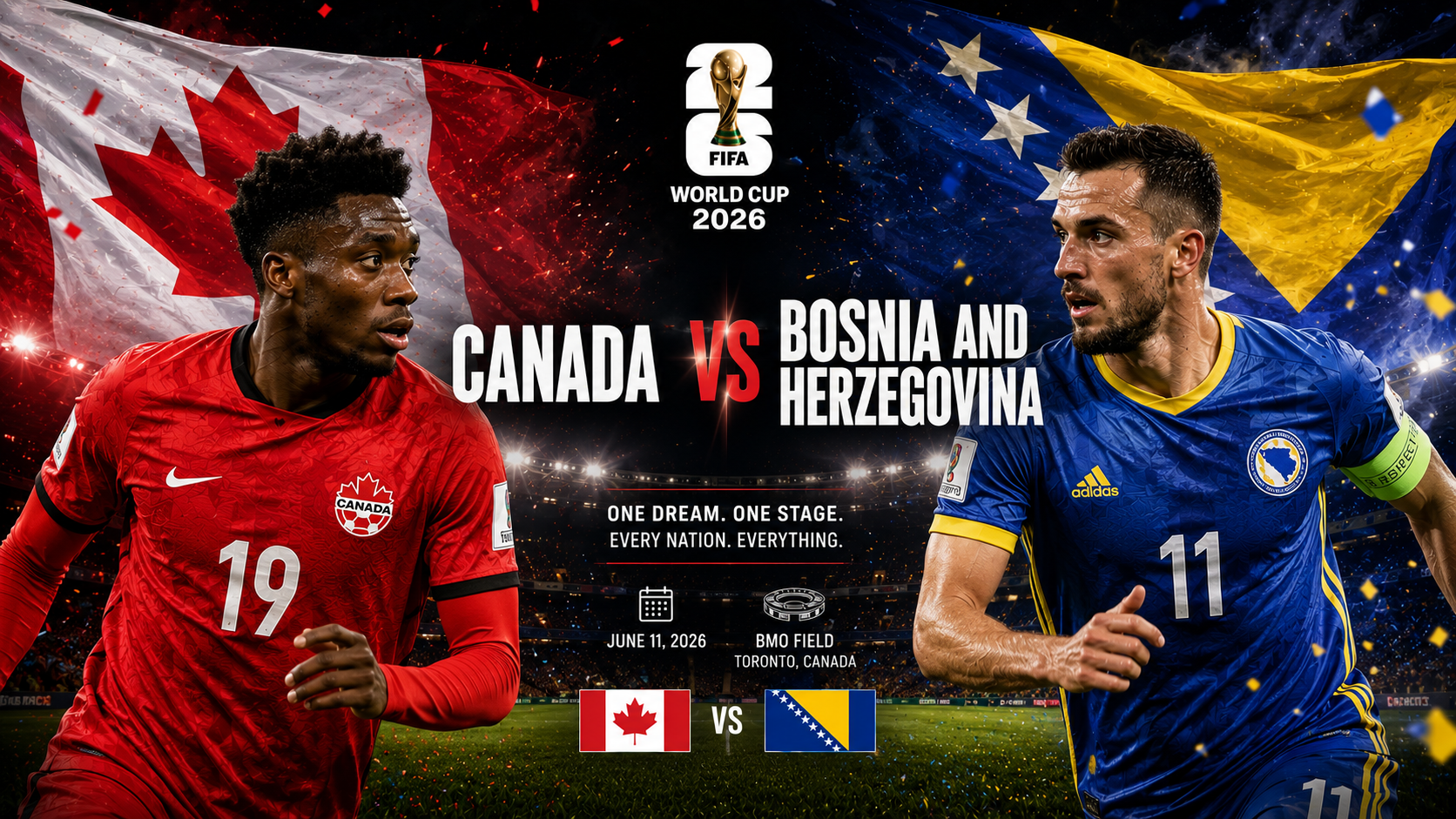
Ilustración generada por IA. No es una fotografía real.
Canada’s 36-Year Wait: Toronto Finally Gets Its World Cup Moment
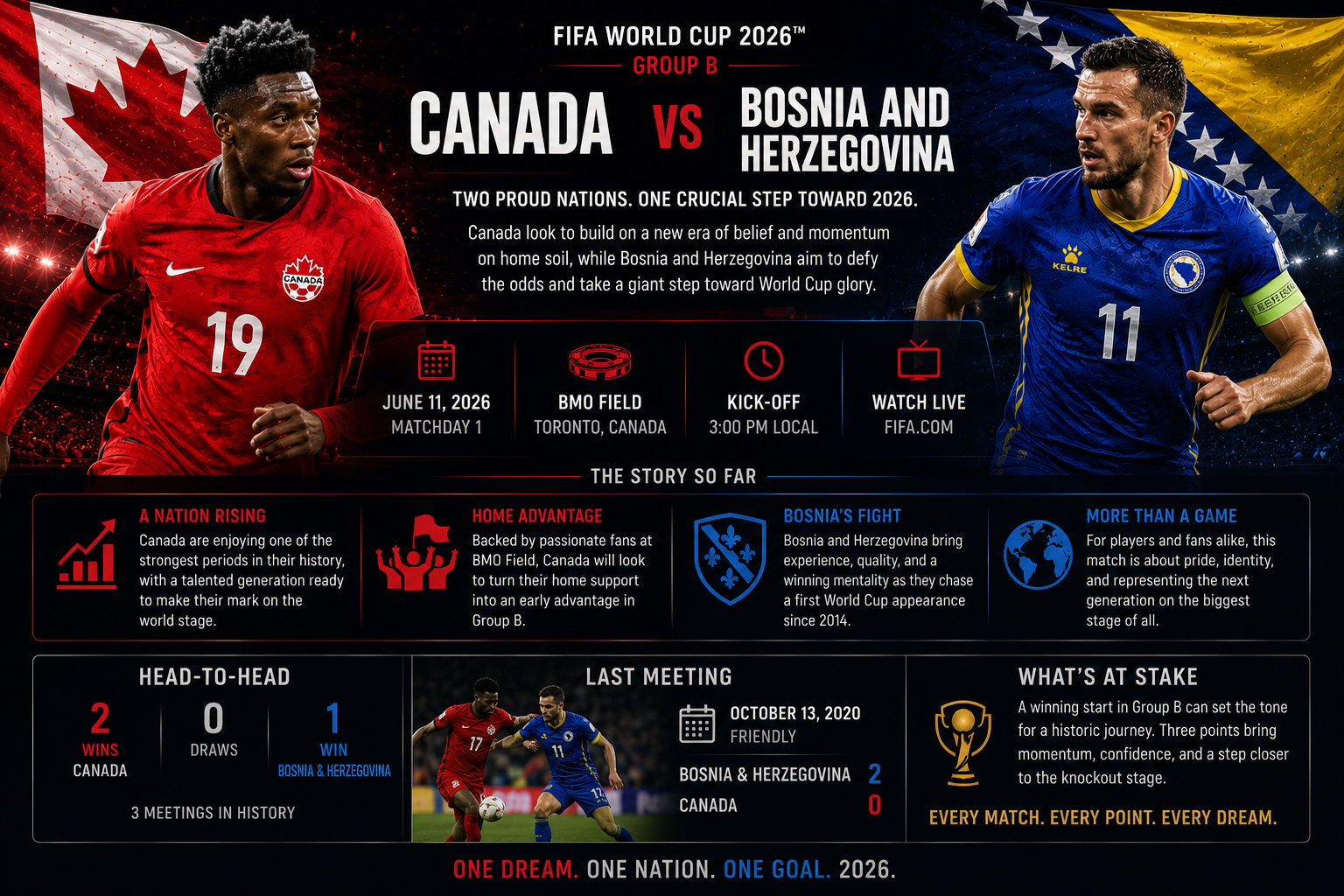
On June 12, Canada steps onto BMO Field to face Bosnia and Herzegovina—and for the first time, a men’s World Cup match will be played on Canadian soil. It’s a milestone for a country that gave the world Alphonso Davies, sparked a new generation’s love for football during the Qatar 2022 cycle, and finally ended its long wait to compete on the biggest stage. Everything has been leading to this night. Bosnia and Herzegovina return to the World Cup after missing the 2018 edition, following their only prior appearance in 2014. Their roster features experienced players and younger talent aiming to make an impact. Both teams seek to impress as Group B action begins.
Match Snapshot
Date: Friday, June 12, 2026 Kickoff (USA): Afternoon ET window (subject to FIFA confirmation) Venue: BMO Field, Toronto, Canada Group: B (Canada, Bosnia and Herzegovina, Qatar, Switzerland) Stage: Group B — Matchday 1 Capacity: Expanded to approximately 45,000 for the tournament Weather note: Toronto in June is mild, with the lake breeze sometimes turning evening matches surprisingly cool. Ideal football conditions. BMO Field has been redeveloped specifically for this tournament. Canadian fans will find themselves inside a venue that feels both familiar and entirely new — a fitting metaphor for the team they are about to watch.
Why This Match Matters
For Canada, this is their coming-out party. At the 2022 World Cup, the team exited at the group stage but showed promise—Davies’s fearless runs, a goal that almost was. Now, the roster is stronger, deeper, and competing at home. Advancing would mark a historic achievement. For Bosnia, the equation is more visceral. This is a generation that has spent its career hearing about Edin Džeko, Miralem Pjanić, and the heartbreak of failing to advance from the group stage in 2014. They have qualified for one major tournament since. Returning to the World Cup is itself an achievement; making it count is the next chapter. A result here would put them within touching distance of a Round of 16 they have never reached. Group B is balanced. Switzerland, ranked consistently in FIFA’s top 20, is tough and experienced. Qatar, the 2022 hosts, proved unpredictable and motivated. There are no automatic three points in this group. The team that wins matchday one will gain a significant early advantage.
Storyline Engine
The Davies homecoming. Alphonso Davies grew up in Edmonton after his family escaped a refugee camp in Ghana. There is no equivalent narrative anywhere else at this tournament. He plays the World Cup at home. Jesse Marsch’s project. The American manager took over Canada with a clear mandate: turn potential into points. His high-pressure, vertical philosophy has reshaped how the team approaches games. Bosnia’s generational handoff. Veterans like Džeko continue to lead, while a new wave of attacking talent finally appears ready to deliver on long-promised potential. A managerial chess match. Bosnia’s tactical staff have spent months studying Marsch’s MLS and Bundesliga teams. Familiarity cuts both ways. The diaspora factor. Toronto is one of the most multicultural cities on earth. Both nations will have substantial supporter presence in the stadium — and outside it. This has the hallmarks of a memorable World Cup opener—the type that kickstarts a tournament’s major story, especially with Toronto hosting its first-ever men’s World Cup match.
Team A Analysis — Canada
Recent form: Canada has evolved meaningfully since 2022. The Concacaf Nations League cycle produced a mix of impressive results and frustrating draws, but the trajectory is upward. Tactical discipline has improved. The squad is deeper than ever. Tactical identity: Under Marsch, Canada plays a 4-2-3-1 or shifts to a 4-2-2-2 in attack. Their game is built on vertical passing, aggressive counter-pressing, and fullback overlaps. When effective, they’re dangerous; when pressed, they expose defensive gaps. Strengths: A genuine world-class wing-back in Alphonso Davies, capable of changing a match alone. A growing physicality and athletic profile that travels well across continents. Counter-attacking pace that can punish high lines. A goalkeeper in Milan Borjan or Dayne St. Clair (depending on selection) with major-tournament experience. Weaknesses: Canada sometimes struggles to break down teams that defend with disciplined, compact shapes, making it difficult to generate clear chances or quick ball progression in buildup play. Set-piece defending remains a challenge; Canada sometimes loses track of opponents on corners and free kicks, leading to high-quality chances conceded and inconsistent marking in both attacking and defending zones. The team relies heavily on a few key players to make a difference. If Alphonso Davies is neutralized, Canada sometimes lacks a clear alternative attacking route or creative spark to consistently generate offense. Set-piece threat: Direct, aerial deliveries to the back post; runners arriving late from midfield. Expected formation: 4-2-3-1 with Davies pushed advanced on the left and a double pivot anchoring the midfield.
Team B Analysis — Bosnia and Herzegovina
Recent form: Bosnia’s qualifying campaign was unfussy and effective. They will arrive in North America with a clear plan and a settled spine. Tactical identity: Bosnia typically uses a 4-3-3, sometimes transitioning to a 3-5-2 via midfield rotation. They favor central buildup but will absorb pressure and counter through Džeko’s presence up front. Strengths: A center-forward in Džeko whose World Cup experience and aerial threat remain elite even in the autumn of his career. Technical midfielders capable of unlocking compact defenses. A defensive structure that doesn’t fall apart under counterattacks. Set-piece quality — Bosnia scores from dead-ball routines more often than most national teams of a similar profile. Weaknesses: Bosnia’s central defense lacks pace, making them vulnerable to quick and direct attacking moves, such as fast Canadian transitions or runs in behind the back line. Bosnia’s squad has limited depth at fullback positions. Injuries or suspensions could force less experienced or out-of-position players into key roles, reducing defensive solidity and options in the wide areas. Bosnia is still undergoing a generational change; if veterans underperform or struggle to link up with new players, the team risks appearing disjointed and losing attacking threat or midfield control. Set-piece threat: Inswinging corners to Džeko remain a long-running specialty. Expected formation: 4-3-3 in possession, dropping into a more compact 4-5-1 out of it.
Tactical Battle
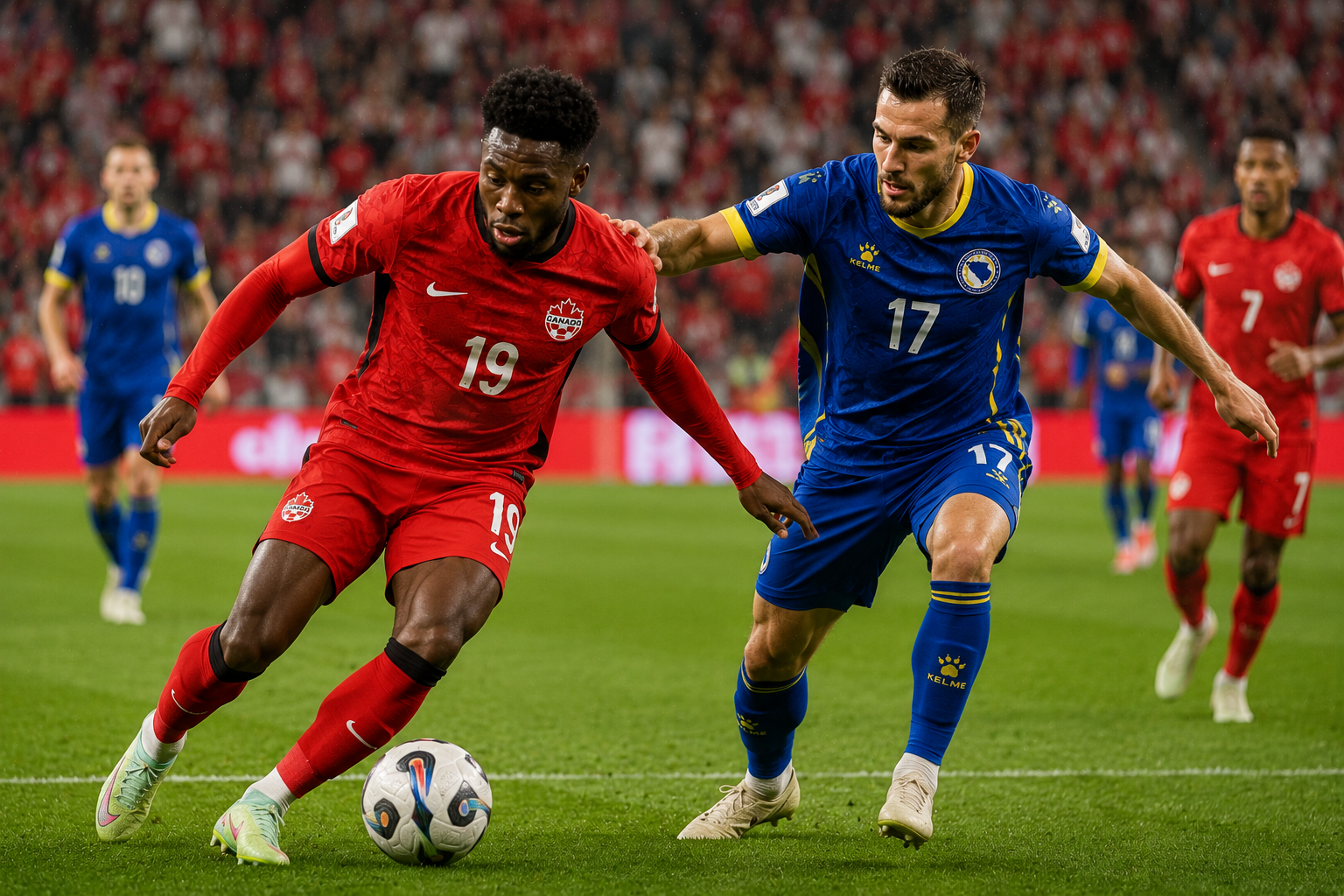
The most fascinating tactical sub-plot is positional: Canada wants to play vertical, transition football; Bosnia wants to slow the game down and play through midfield. Whichever team imposes tempo will likely take the points. Key questions for the night: Can Bosnia trap Davies? If Bosnia’s right back, with cover from a right-sided midfielder, can double-team Davies and force inside passes, Canada loses their most dangerous outlet. If Davies isolates a defender one-versus-one repeatedly, expect chaos. Can Canada press without bleeding spaces? Marsch will want his side high. Bosnia’s central midfielders are press-resistant. If Canada’s first wave is bypassed cleanly, Bosnia gets to attack a back four with numbers. Who wins the second ball in the middle third? Bosnia likes to use Džeko as a flick-on outlet for direct play. Canada must dominate those duels or get punished. The center of the pitch is where this match is decided. Both teams have midfielders with character. The first 15-minute battle for rhythm will likely set the tone for everything that follows.
Key Players to Watch
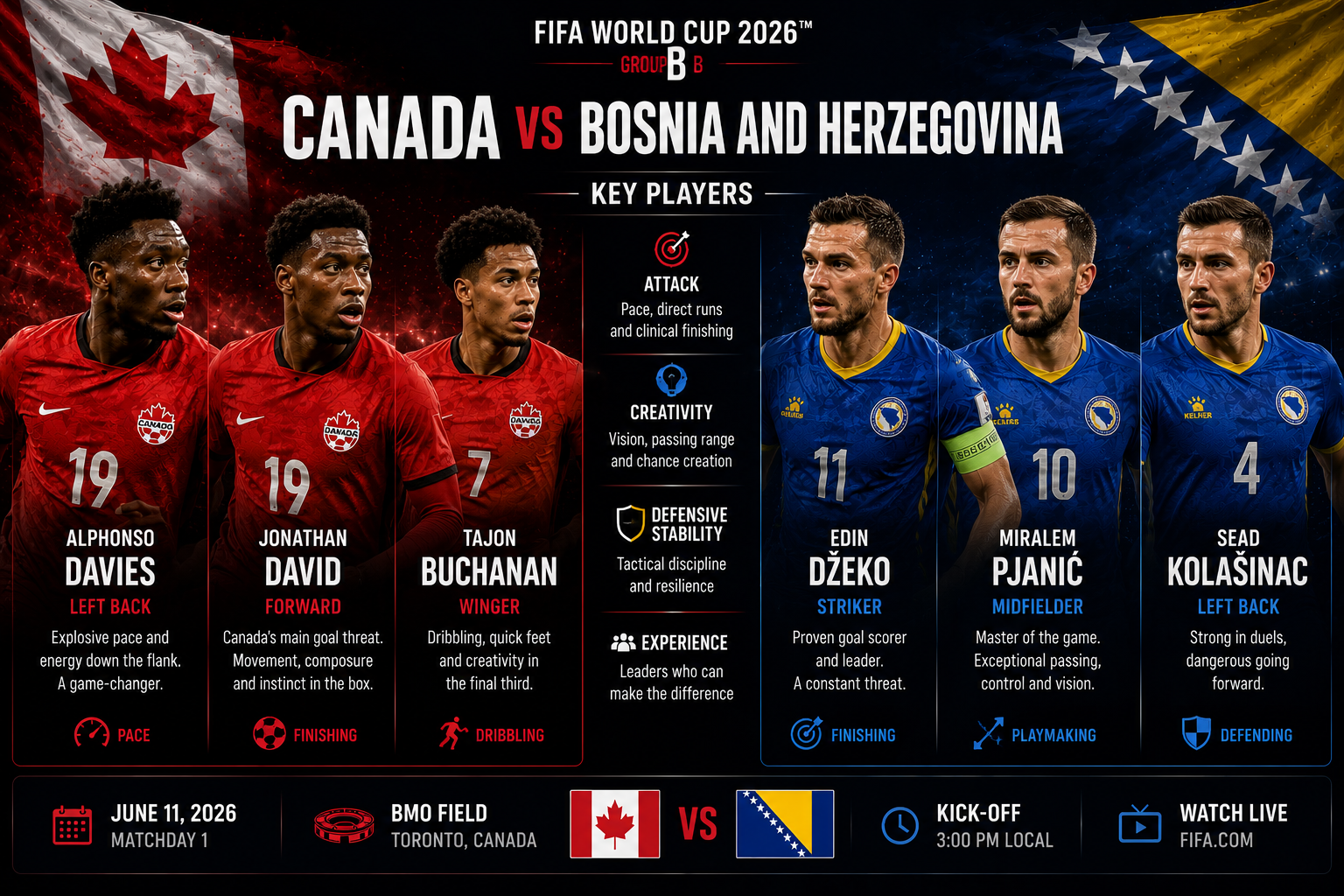
Canada
Alphonso Davies (Left back / Wing back). Generational talent, electric pace, and increasingly mature decision-making. The marquee player on the field by reputation, and capable of carrying the load on the night. Jonathan David (Striker). A complete center-forward — runs the channels, finishes with both feet, and presses intelligently. His club performances have made him one of the most coveted forwards in Europe. Stephen Eustáquio (Midfielder). The metronome. Press resistant, two-footed, capable of dropping between center-backs to start attacks. Tajon Buchanan (Winger). A direct, dribbling threat who has matured in Europe and will be entrusted with attacking the Bosnian right flank. Cyle Larin (Striker). Whether starting or coming off the bench, his ability to score scruffy goals from the six-yard box matters in tight games.
Bosnia and Herzegovina
Edin Džeko (Striker). Still here, still relevant, still capable of a single defining moment. A captain in every sense. Miralem Pjanić (Midfielder). If selected, his game intelligence and ability to slow tempo when his team needs control would be invaluable. Sead Kolašinac (Defender / Left back). Experience, physicality, and a willingness to commit forward when Bosnia needs width. Edin Višća (Winger). A creator who can deliver from set pieces and open play, the kind of player who quietly racks up assists. A breakout young attacker. Bosnia’s next-generation forward depth is genuinely promising; one of them is likely to introduce themselves to the world here.
Rising Stars & Breakout Candidates
Canada: Tani Oluwaseyi, Niko Sigur, Ismaël Koné — depending on selection, any of them could grab the moment. Younger MLS-developed names also figure in Marsch’s contingency plans. Bosnia: A new generation of Bundesliga and Serie A regulars carries scoring potential and pace that Bosnia has historically lacked. Watch the second half for an introduction.
Historical & Fun Facts
First-ever World Cup match on Canadian soil. That is not a small footnote. It is the kind of historical line that gets reread for decades. Bosnia’s only previous World Cup. 2014 in Brazil — a campaign best remembered for Edin Džeko’s goal against Argentina and a controversial offside call that helped doom them. Davies and Bosnia. A curiosity worth noting — Davies, like several Bosnian internationals, was born after his family experienced displacement and war. The shared humanity beneath this fixture is real. BMO Field’s transformation. The stadium has been expanded and upgraded specifically for this tournament, and its capacity is well above its standard MLS configuration. Toronto’s football culture. Toronto FC’s “South End” supporters have been a model of MLS fandom for years; on June 12, that fan culture grew up.
Fan Experience & Atmosphere
The streets around BMO Field will be unrecognizable. Expect: A fan festival along the harbor with both nations’ food trucks side by side. Canadian Maple Leaf jerseys outnumber everything else by a wide margin, but a substantial pocket of Bosnian fans in iconic blue and yellow. Pre-match drum circles from supporter groups. A Toronto skyline lit up in red. A diaspora element from Bosnian-Canadian fans, of which Toronto has a meaningful community. For visiting American fans, Toronto offers everything a great football weekend should: walkable neighborhoods, world-class food, and a city that will be wearing red for two weeks straight.
Fantasy Football & Betting Angle (Informational Only)
A few storyline-following angles: Davies cards/assists/yards: If your fantasy format rewards crosses and chances created, his ceiling is sky-high. Džeko anytime scorer: veteran strikers have a habit of grabbing one in their first match. Clean sheet probability: modest. Both teams have attacking tools and questionable defensive depth at speed. Wager responsibly. Football fantasy is meant to deepen enjoyment, not replace it.
Predicted Lineups
Canada (4-2-3-1)
GK: Crépeau DEF: Johnston, Vitória, Cornelius, Davies MID: Eustáquio, Koné AM: Buchanan, Hoilett, David (or Larin starting wide) FWD: Larin / David
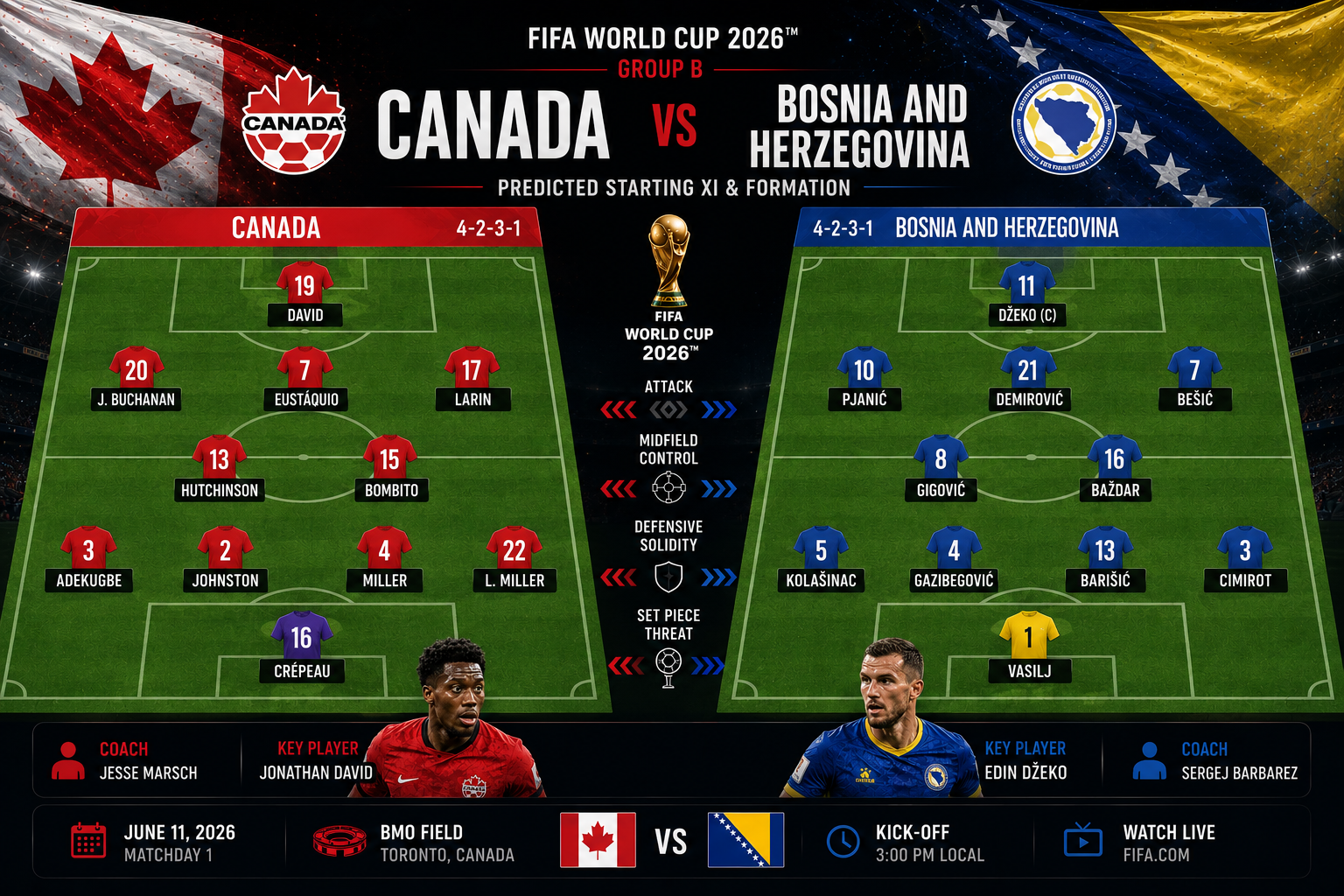
Bosnia and Herzegovina (4-3-3)
GK: Šehić DEF: Kolašinac, Ahmedhodžić, Šunjić, Burnić MID: Pjanić, Hadžiahmetović, Tahirović FWD: Višća, Džeko, Demirović These are best-guess based on recent form and friendly patterns; final selections are subject to manager preference and any late fitness updates.
One Bold Prediction
Alphonso Davies registers two assists — neither from open play. One arrives from a long throw-in he hurls into the box; the other from a short corner routine that catches Bosnia napping. He doesn’t score, but he’s the man of the match.
One Player Nobody Is Talking About
Bosnia’s deepest-lying central midfielder. Pjanić, if he plays, or his understudy if not. Their job will be to slow Canada’s tempo, draw fouls, and force the press to break in frustration. If they succeed, Bosnia stays in the game. If they fail, it gets messy quickly.
Match Prediction
Canada 2, Bosnia and Herzegovina 1. Canada struck early through a Davies-instigated counter, Bosnia responded via a Džeko set-piece equalizer, and the hosts settled it in the second half with a late breakaway. The crowd inside BMO Field has the kind of release moment Canadian football has been waiting for since the early 1990s.
Final Thoughts
Some matches pass quietly; others change a country’s story with football. June 12 in Toronto is the second kind. For thirty years, Canadian fans have waited for this. Now, the flags are waving, the anthems echo, and Toronto welcomes football like never before. Bosnia won’t be an easy opponent. They’re smart, experienced, and won’t be fazed by the moment. But Canada has the talent, the tactics, and the timing. Maybe, just maybe, football finally gives Canada the night it’s been waiting for.
FAQ
When is Canada vs Bosnia and Herzegovina? Friday, June 12, 2026, at BMO Field in Toronto. The exact kickoff is confirmed for the afternoon ET window. Is this the first men’s World Cup match held in Canada? Yes. Canada has never previously hosted a men’s senior World Cup fixture. Where can U.S. fans watch the match? Coverage in the United States is expected via FOX Sports (English) and Telemundo (Spanish), with streaming partners also offering access. Who are Canada’s most important players? Alphonso Davies, Jonathan David, and Stephen Eustáquio are widely considered the spine of the team. Has Bosnia ever played in a World Cup before? Yes — Bosnia made their debut at the 2014 tournament in Brazil. This is their second appearance. Which team is favored? Canada is a slight favorite at home, but neutrals will expect a tight game. What is BMO Field’s capacity for the tournament? The stadium has been expanded to a tournament capacity of roughly 45,000. What happens if the match ends in a draw? Both teams take a point. Group standings then turn on Matchday 2 and 3 results.