BC Place for FIFA World Cup 2026: Vancouver's Mountains-Meet-Football Cathedral
BC Place hosts FIFA 2026 in Vancouver. Inside guide to the retractable roof, seats, SkyTrain, Pacific Northwest culture and matchday tips for World Cup fans.

Recherchiert und redigiert von Abdullah Mashuk. Verfasst mit KI-gestützter Recherche gemäß unserer Methodik.
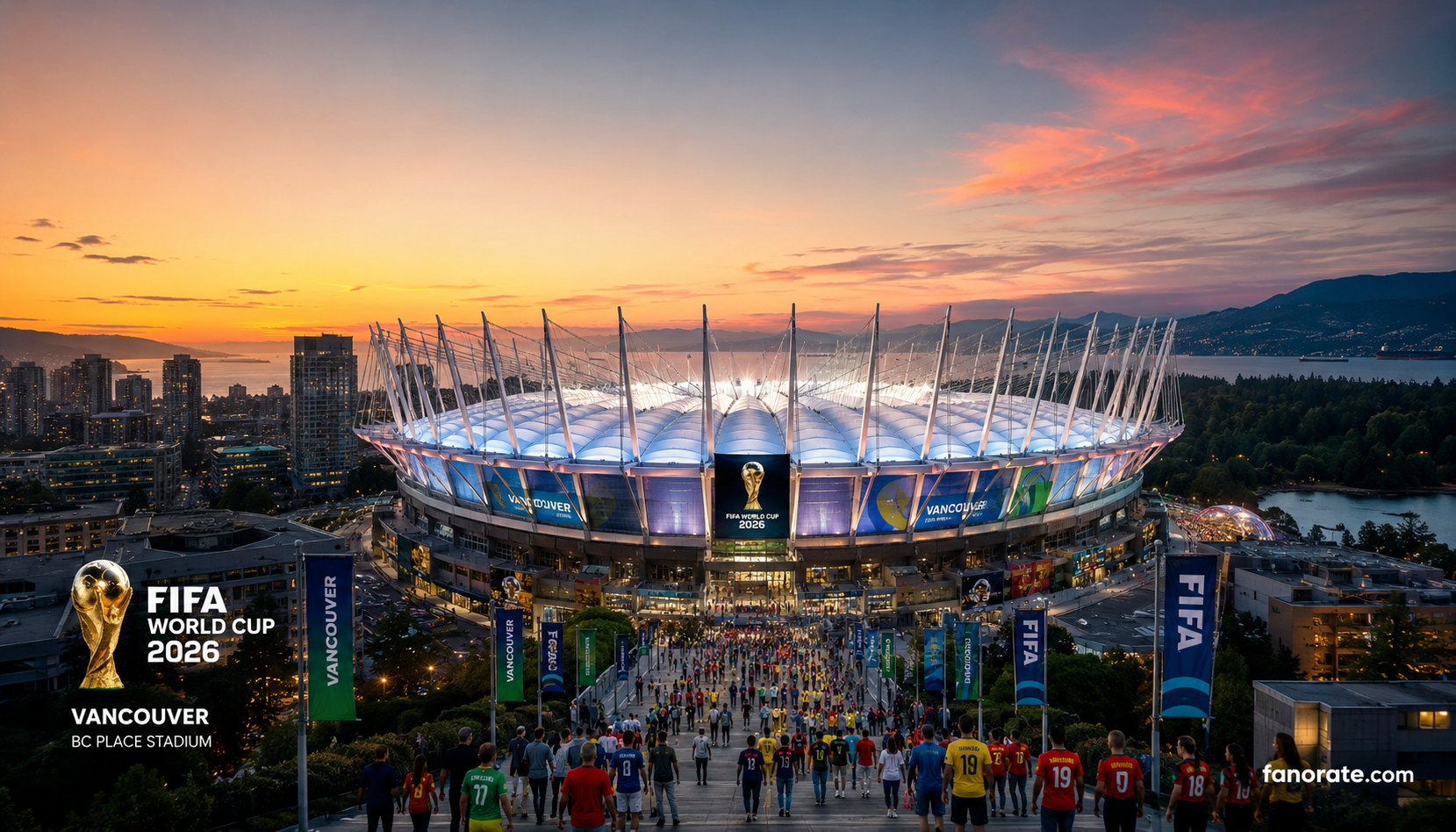
KI-generierte Illustration. Keine echte Fotografie.
BC Place for FIFA World Cup 2026: Vancouver’s Mountains-Meet-Football Cathedral
There’s a sentence you hear from first-time Vancouver visitors more than any other: “The mountains are right there.”
They are. From almost anywhere in downtown Vancouver, you can see the North Shore peaks rising out of the harbor like the city’s permanent skyline. From BC Place — the cable-supported retractable-roof stadium just south of the central business district — those mountains are part of the matchday view. The bowl opens up to the sky on clear evenings. The seawall is a five-minute walk from the south entrance. The SkyTrain pulls in steps from the gates. The entire matchday experience feels like it was designed by someone who really, really wanted World Cup visitors to fall in love with the Pacific Northwest.
In the summer of 2026, BC Place will host seven matches of the FIFA World Cup, including group-stage and knockout fixtures. Vancouver’s deep, well-organized, internationally connected football culture is about to host the world.
Here’s the full guide.
Quick Venue Snapshot
- Stadium: BC Place
- City / Region: Vancouver, British Columbia
- Country: Canada
- Capacity: Approximately 54,500
- Opened: 1983 (with a complete renovation and roof replacement in 2011)
- Primary tenants: MLS’s Vancouver Whitecaps FC; CFL’s BC Lions; Canadian men’s and women’s national team matches
- FIFA 2026 matches hosted: Seven matches, including group-stage games and knockout-round fixtures
- Location: Downtown Vancouver, immediately adjacent to False Creek and the Yaletown district
- Surface for FIFA 2026: Natural grass installed for the tournament
- Roof: Retractable. A cable-supported fabric roof opens or closes depending on weather.
- Climate considerations: Mild Pacific Northwest summer. Light rain possible. Comfortable temperatures.
- Transit: SkyTrain stops directly at Stadium-Chinatown station.
The Story of the Stadium
BC Place opened in 1983 as Canada’s first major covered stadium — at the time, the world’s largest air-supported domed structure. The original “marshmallow roof” became a Vancouver icon, holding the bowl in shape with internal air pressure. For nearly three decades, the building hosted the BC Lions of the CFL, the Vancouver Canadians (briefly), major concerts, the closing ceremonies of Expo ‘86, and countless major events.
After Expo and through the 2000s, the air-supported roof had become aging infrastructure. The 2010 Winter Olympics were a turning point — BC Place hosted the opening and closing ceremonies — and the building underwent a massive renovation immediately afterward. The original inflated roof was replaced with a cable-supported retractable fabric roof, one of the most ambitious stadium retrofits in North American history. New seating, new technology, new concessions, and new architectural identity all followed.
Since the renovation, BC Place has hosted the 2015 FIFA Women’s World Cup Final (Canada vs. multiple opponents through the tournament, including the iconic final between the U.S. and Japan), Vancouver Whitecaps MLS matches since their 2011 league debut, BC Lions CFL games, the 2015 Pan American Games and a long calendar of major concerts.
For FIFA 2026, the seven-match assignment will give BC Place its biggest men’s World Cup role to date.
What Makes BC Place Unique
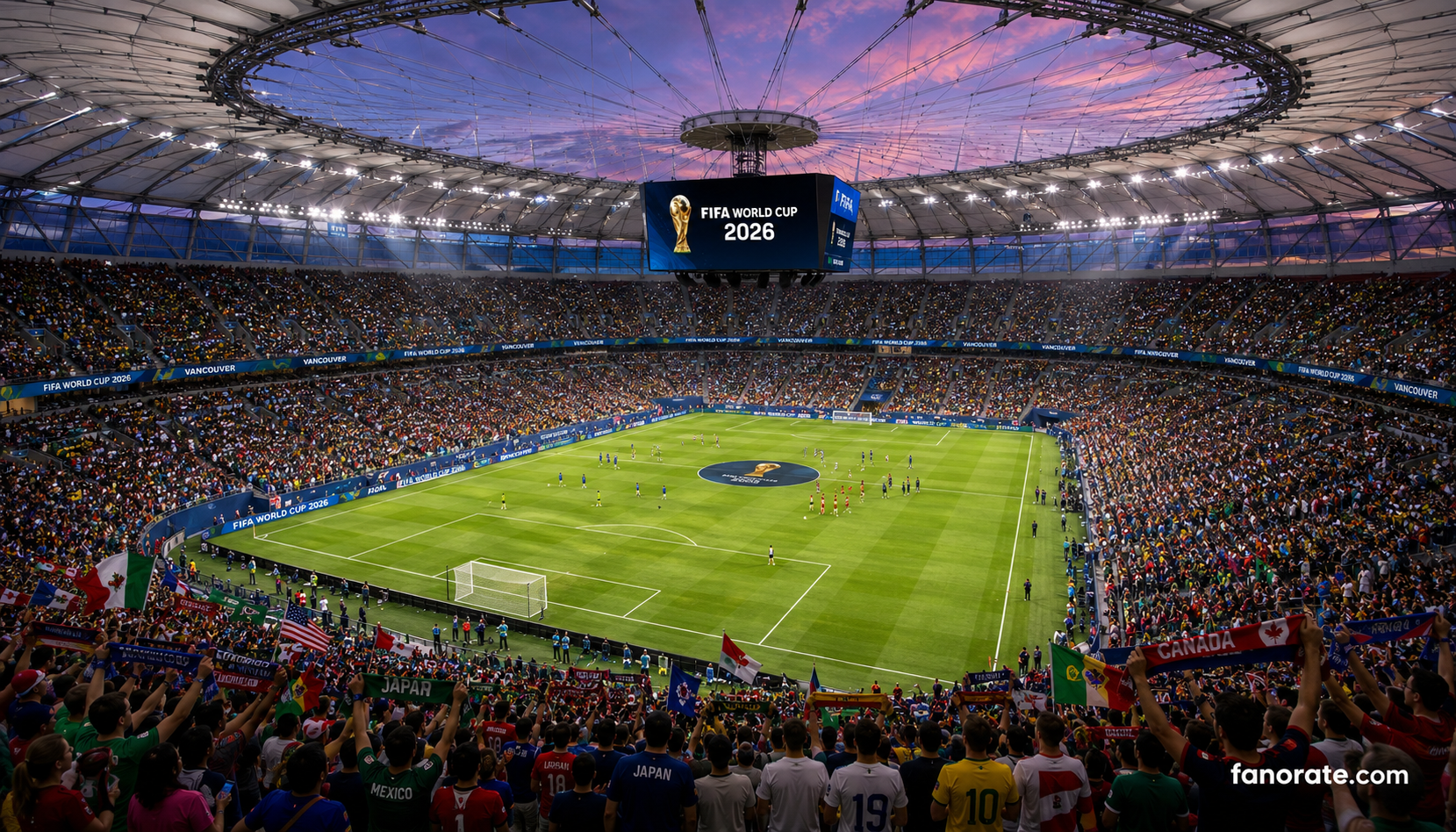
The retractable roof is the most distinctive feature. The cable-supported fabric system opens or closes depending on weather. The opening process takes roughly 20 minutes. The visual effect from inside — a slow reveal of the Pacific Northwest sky — is one of the most theatrical roof openings in any modern stadium.
Other distinctive features:
- The view from inside includes the North Shore mountains, the downtown skyline and False Creek if seating sections are positioned correctly.
- The downtown location means the stadium is genuinely walkable from much of Vancouver’s central core.
- Wide concourses with views into the surrounding city.
- The integrated SkyTrain access at Stadium-Chinatown station provides one of the simplest stadium-rail experiences in North America.
- Premium clubs and indoor lounges connect directly to the seating bowl.
- The B.C. Sports Hall of Fame is located within the stadium complex.
The building has a distinct personality that combines Pacific Northwest design sensibility with major-event capability.
Why FIFA Picked Vancouver
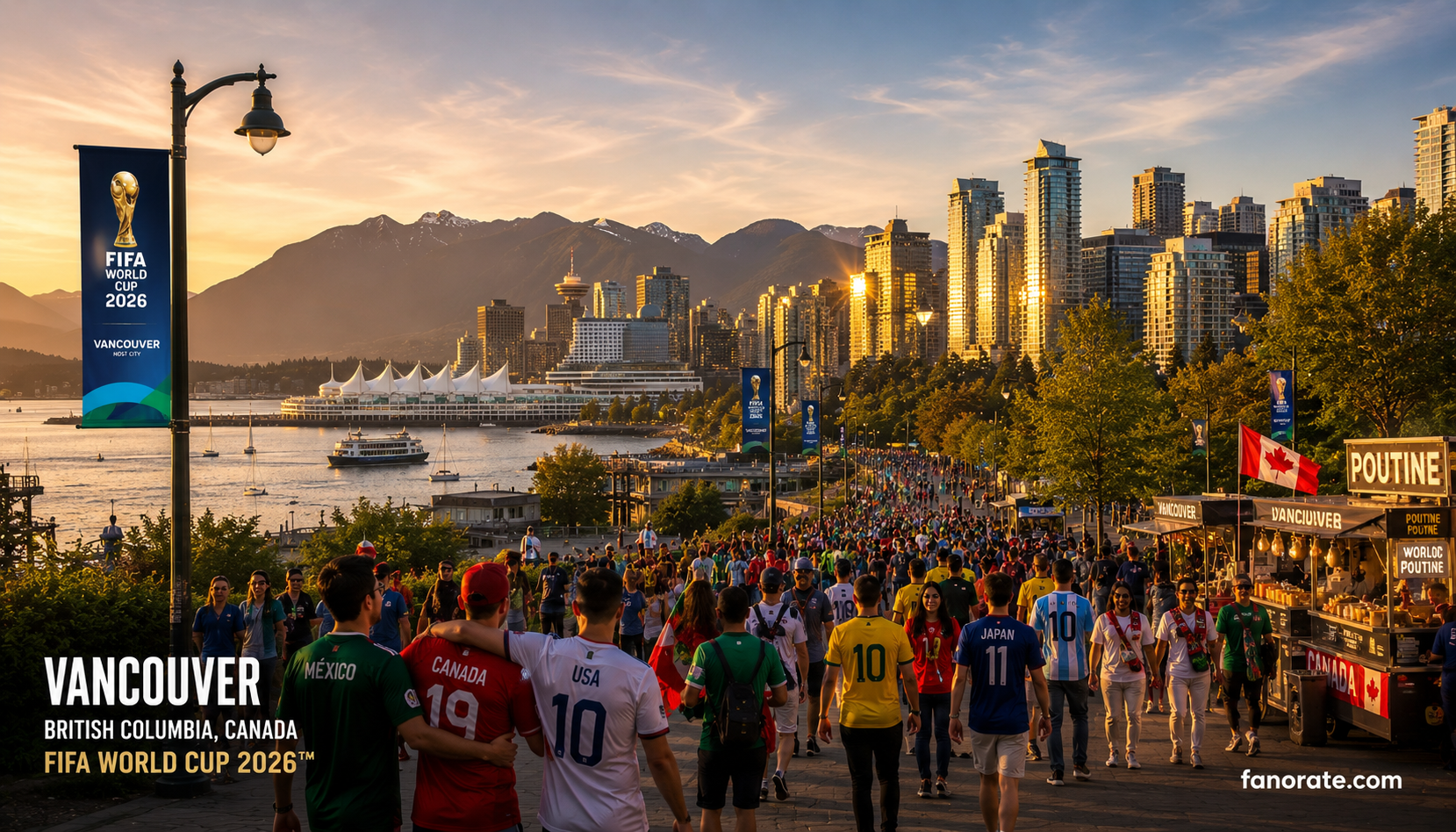
Three reasons.
First, Canada is co-hosting FIFA 2026, and Vancouver is one of the country’s two largest cities and its primary Pacific gateway.
Second, the venue. BC Place is one of the most adaptable major stadiums in North America. The retractable roof gives FIFA flexibility for weather management. The capacity supports significant attendance. The operational track record for major football events — including the 2015 Women’s World Cup — is exceptional.
Third, the cultural and geographic fit. Vancouver is one of the most internationally connected Pacific Rim cities, with substantial East Asian, South Asian, Latin American, European and African diaspora populations. The city serves as the primary gateway for fans traveling from Asia, the U.S. Pacific Northwest and broader Western Canada.
The seven-match schedule will give Vancouver a substantial role in the tournament. Expect BC Place matches to feel international, comfortable, well-organized and visually spectacular.
Iconic Matches and Historic Moments
- The 2015 FIFA Women’s World Cup Final between the United States and Japan, won by the U.S. in front of a packed BC Place. One of the most-watched women’s football matches in history.
- Multiple Canadian men’s and women’s national team World Cup qualification matches.
- 2010 Winter Olympics opening and closing ceremonies.
- Vancouver Whitecaps MLS matches since 2011.
- BC Lions CFL playoff and Grey Cup games.
- High-profile international friendlies featuring major European clubs and South American national teams.
The 2026 World Cup matches will add to a deeply international event résumé.
Football Culture in Vancouver
Vancouver’s football identity is one of the most genuinely international in North America.
The city’s East Asian community — particularly Chinese-Canadian and Korean-Canadian — has been growing for over a century and brings strong football fan cultures. The South Asian (Indian, Pakistani, Bangladeshi) community is among the largest in North America and supports the Premier League and Champions League with substantial weekly viewership. The Latino community has been growing rapidly and supports Liga MX, Brazilian and Argentine football. The Filipino community is one of the largest in Canada. The Italian, Portuguese, Iranian, Persian, Eastern European and East African (Ethiopian, Eritrean, Somali) communities all bring their own football audiences.
The Vancouver Whitecaps, since their MLS expansion in 2011, have built a respected supporter culture. The Southsiders, Curva Collective and other supporter groups have created sustained vocal traditions. The Whitecaps’ women’s history is particularly significant — the club’s name and identity trace back to one of North America’s earliest women’s professional soccer programs.
For 2026, Vancouver will host one of the most multilingual, cosmopolitan and well-traveled World Cup audiences.
Matchday at BC Place: What to Expect
A typical rhythm:
- Morning in downtown Vancouver. Coffee in Yaletown, breakfast in Gastown, walk along the seawall.
- Travel to BC Place. SkyTrain to Stadium-Chinatown station, or a short walk from most central neighborhoods.
- Pre-match in Yaletown or Gastown. Bars, restaurants, supporter group meetups.
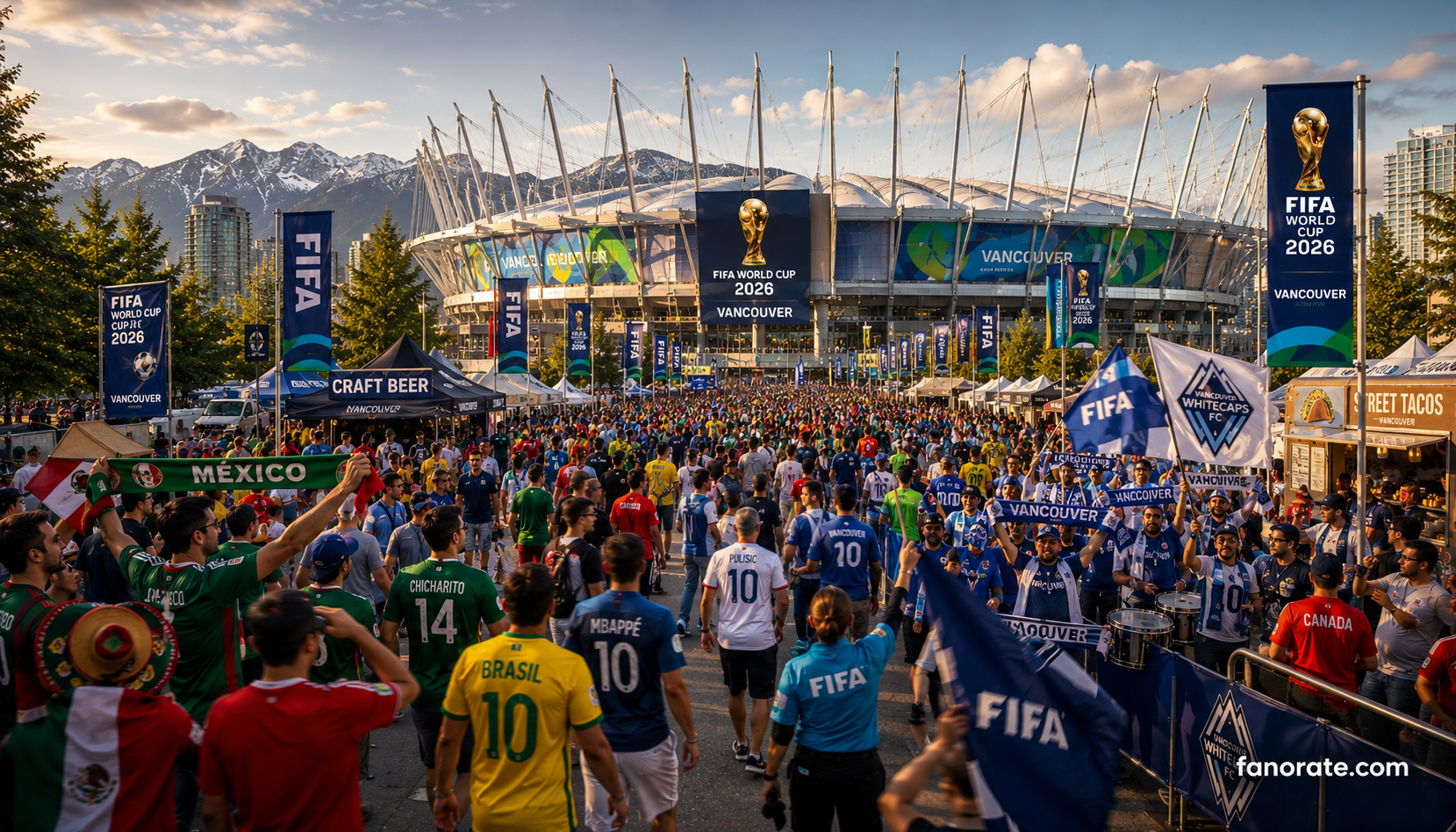
- Stadium plaza. Pre-game activations in the Terry Fox Plaza and surrounding areas.
- Entry. Clear-bag policy. Security is efficient.
- Inside the bowl. If the roof is open, look up — the sky is part of the show.
- Concessions. Vancouver’s strong food scene is reflected in upgraded stadium options.
- Post-match. SkyTrain back to your hotel, or walk along the seawall on a nice evening.
Best Seating Guide
- For atmosphere: Lower bowl behind the goals, where the Southsiders and Curva Collective traditionally cluster.
- For tactical viewing: Mid-tier sideline seats.
- For photography: Upper-deck corners with the open-roof view of downtown Vancouver and the mountains beyond.
- For families: Mid-bowl seats away from the most vocal sections.
- Budget options: Upper-deck end-zone seats.
- Premium experience: Field-level clubs and indoor lounges.
A BC Place-specific tip: certain upper-deck sections offer views of the North Shore mountains when the roof is open. Worth asking about specific section orientation when buying tickets.
Transportation and Access Guide
- From Vancouver International Airport (YVR): Canada Line SkyTrain direct to Stadium-Chinatown station. About 25 minutes.
- From Downtown Vancouver: SkyTrain or short walk. About 5–15 minutes.
- From the U.S. (Seattle): Amtrak Cascades direct to Vancouver’s Pacific Central Station, walking distance from the stadium. About 4 hours.
- From Whistler: Multiple bus services and ski-shuttle operators run between Whistler and Vancouver. About 2 hours.
- Driving: Limited downtown parking. Pre-paid parking is highly recommended.
- Rideshare: Designated zones at the stadium. Surge pricing post-match is moderate.
- Walking: From most central Vancouver neighborhoods, walking is practical.
- Cycling: Vancouver’s bike-share system and seawall network make cycling to the stadium feasible.
- Accessibility: ADA/CSA-compliant routes and seating. Coordinate accessibility services with FIFA in advance.
Where Fans Should Stay
- Downtown Vancouver: Closest to BC Place. Walkable, with deep hotel inventory.
- Yaletown: Trendy, walkable, with strong dining and waterfront access.
- Gastown: Historic, cobblestone streets, bars and restaurants.
- Coal Harbour: Upscale, waterfront, walking distance to the stadium.
- West End: Adjacent to Stanley Park, walkable, with diverse hotel options.
- Mount Pleasant and South Granville: Quieter neighborhoods with SkyTrain access.
- North Vancouver: Across the harbor, with stunning views of the city. SeaBus ferry connects to downtown.
If you’re staying for multiple matches, downtown Vancouver is the most practical base.
Food, Drink and Nightlife
Vancouver is one of the great food cities in North America.
- Asian food: One of the deepest Asian dining scenes in the Western Hemisphere. Cantonese, Sichuanese, Northern Chinese, Korean, Japanese (especially sushi), Vietnamese, Thai, Filipino, Malaysian, Indonesian.
- South Asian food: Indian, Pakistani, Bangladeshi and Sri Lankan restaurants of high quality across the metro.
- Latin American food: Strong Mexican, Salvadoran, Honduran, Brazilian and Peruvian scene growing rapidly.
- Pacific Northwest cuisine: Salmon, foraged ingredients, local craft beverages.
- Iranian and Persian food: Vancouver has one of the largest Iranian populations outside Iran, with restaurants concentrated in North Vancouver and West Vancouver.
- Italian food: Italian-Canadian community concentrated in Commercial Drive.
- Sushi: Vancouver is often regarded as one of the best non-Japan cities for sushi.
- Vegan and vegetarian: Strong scene.
- Coffee: Vancouver has its own thriving third-wave coffee culture.
Bars and viewing parties: bars in Yaletown, Gastown, Mount Pleasant and Main Street run early-morning international matches.
Things To Do Near the Stadium
- Stanley Park and the seawall
- Granville Island Public Market
- Gastown’s historic district
- Yaletown’s converted warehouse district
- Vancouver Art Gallery
- Museum of Anthropology at UBC
- Capilano Suspension Bridge
- Grouse Mountain
- The Sea-to-Sky Highway to Whistler
- Vancouver Aquarium
- Chinatown
- Commercial Drive
- Day trip to Victoria via ferry
- Day trip to Whistler or Squamish
Weather and Match Conditions
Vancouver’s summer weather is mild and comfortable.
- Temperature: Daily highs in June and July commonly 70–80°F (21–27°C). Heat waves above 90°F (32°C) happen but are uncommon.
- Humidity: Moderate.
- Rain: Light rain is possible even in summer. The retractable roof manages weather effectively.
- Wind: Generally mild.
- Daylight: Long. Pacific Northwest summer has very late sunsets.
Practical kit:
- Reusable water bottle
- Light, breathable clothing
- Light rain shell or packable jacket
- Comfortable walking shoes
- Hat and sunglasses
Interesting and Fun Facts
- BC Place’s original 1983 air-supported roof was, at the time, the world’s largest of its kind.
- The 2011 renovation produced one of the largest cable-supported retractable fabric roofs in the world.
- BC Place hosted the opening and closing ceremonies of the 2010 Winter Olympics.
- The 2015 FIFA Women’s World Cup Final at BC Place was one of the most-watched women’s football matches in history at the time.
- The Vancouver Whitecaps’ name and identity trace back to one of the earliest women’s professional soccer programs in North America.
- The B.C. Sports Hall of Fame is located within the BC Place complex.
- The stadium is part of an integrated downtown precinct that includes False Creek and the seawall, one of the longest uninterrupted urban waterfronts in North America.
One Thing Most Fans Don’t Know
Vancouver’s Indo-Canadian (Punjabi, Sikh) community in Surrey and across the Lower Mainland is one of the largest in North America. The football culture in this community is deeply European-focused, with significant followings of Premier League and Champions League clubs. The 2026 World Cup will see Vancouver host a significant English, Spanish, Portuguese, French, Italian and German diaspora audience — but also one of the most active South Asian football fan bases on the continent. Watch for substantial Surrey and Richmond-based supporter activations during the tournament.
Photo and Social Media Spots
- Stadium exterior at golden hour with the North Shore mountains behind.
- Inside the bowl with the retractable roof open and the Vancouver skyline above.
- The seawall at Stanley Park.
- Granville Island Public Market.
- Gastown’s steam clock and historic buildings.
- The Capilano Suspension Bridge.
- English Bay at sunset.
Fan Experience and Atmosphere
Vancouver matchday culture is generous, multilingual and unmistakably Pacific Northwest. The Whitecaps’ supporter sections have built strong organized chants and tifo traditions. International fixtures at BC Place have historically produced full bowls and high-energy atmospheres.
For 2026, expect every visiting team to have a substantial supporter base in Vancouver. The Asian-Pacific Rim audience will be particularly visible. The North American media spotlight on Canadian World Cup matches will be intense.
Sustainability and Technology
BC Place implemented major sustainability upgrades during the 2011 renovation, including a much more energy-efficient roof system, LED lighting throughout the venue, water-efficient field maintenance and integrated recycling and composting programs. The retractable roof itself reduces energy consumption compared to a permanently enclosed building.
Technology: high-density Wi-Fi, mobile-app ticketing, modernized broadcast infrastructure, and integrated digital experience platforms.
Future Legacy
The 2026 World Cup matches will deepen Vancouver’s status as one of the most internationally connected football cities in North America. The Vancouver Whitecaps will benefit from the tournament’s promotional reach. Investment in youth football, women’s football and broader soccer-specific infrastructure across British Columbia will accelerate. Vancouver’s role as a Pacific Rim football capital will become more visible.
Final Thoughts
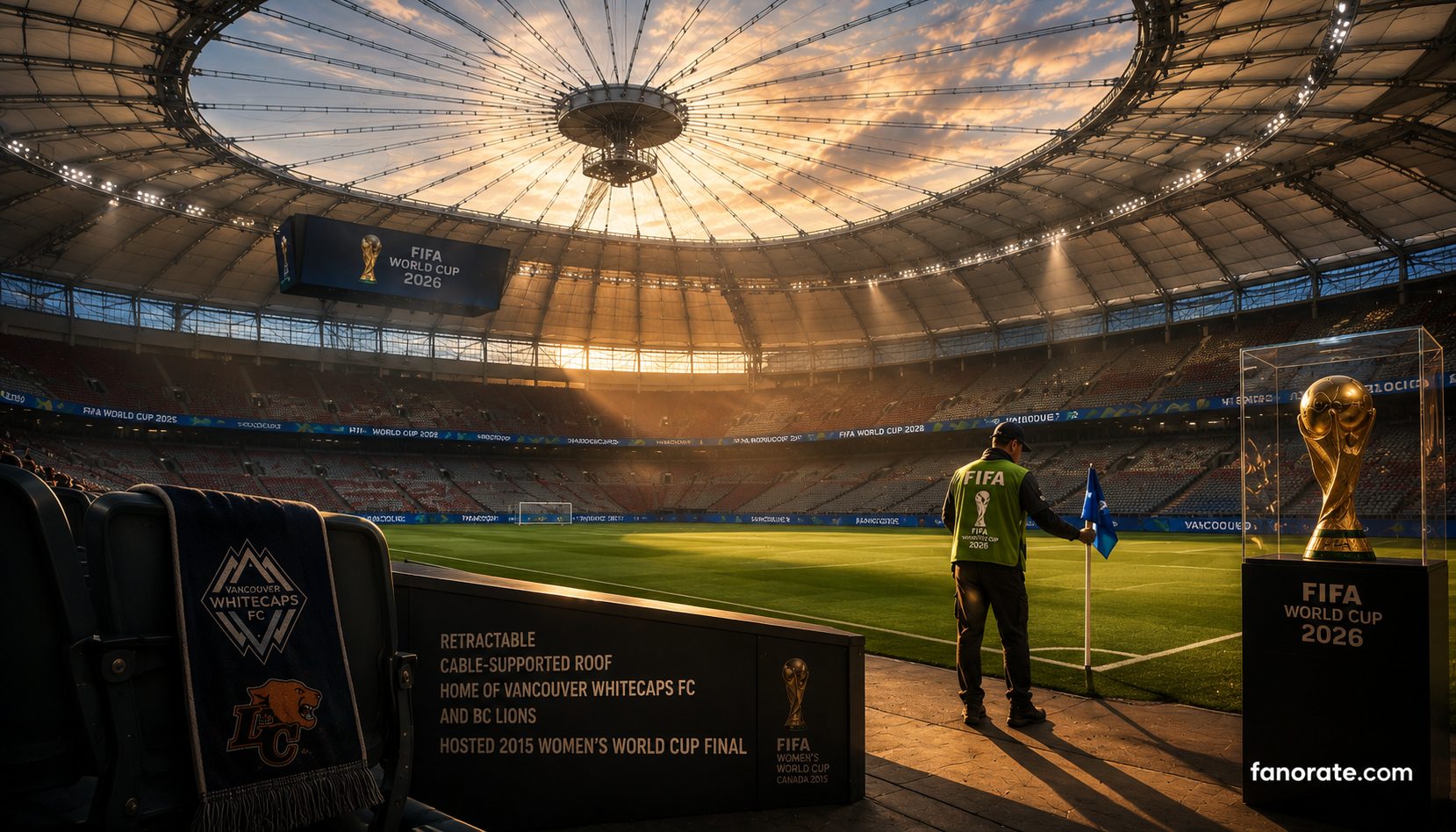
A Vancouver World Cup is going to be one of the most visually spectacular experiences of FIFA 2026. The retractable roof. The mountains. The seawall. The fresh sushi at midnight. The polite-but-passionate fan culture. The Asian-Pacific multilingual atmosphere.
If you’re going, take the Canada Line from the airport. Stay downtown. Walk the seawall. Eat at a respected sushi restaurant. Ride the SeaBus to North Vancouver for a different angle on the city. Sit anywhere in the bowl when the roof is open.
Seven matches at BC Place. Possibly the most beautiful World Cup matchday environment in North America.
FAQ
How many people does BC Place hold? Approximately 54,500.
Which FIFA 2026 matches will be played at BC Place? Seven matches, including group-stage games and knockout-round fixtures.
How does the retractable roof work? A cable-supported fabric roof opens or closes depending on weather. The opening process takes roughly 20 minutes.
How do I get to the stadium from Vancouver International Airport? Canada Line SkyTrain direct to Stadium-Chinatown station. About 25 minutes.
What’s the closest airport? Vancouver International (YVR), about 25 minutes by SkyTrain.
Will the field be grass or turf? Natural grass installed for the tournament.
What weather should fans expect? Mild Pacific Northwest summer. Daily highs in the 70s Fahrenheit. Possible light rain.
Can I take Amtrak from Seattle? Yes. Amtrak Cascades runs direct from Seattle to Vancouver’s Pacific Central Station, about a 4-hour ride.
Where should I stay for matches? Downtown Vancouver, Yaletown, Gastown or Coal Harbour for the best access.
Will I need a visa to attend? Most international travelers will require either a Canadian visa or an Electronic Travel Authorization (eTA). Check current Canadian immigration requirements well in advance.